That awkward moment when you are balancing on the top steps of a stepladder, one hand on the hatch and the other reaching for a Christmas box, is exactly when loft storage stops being useful and starts becoming risky. Knowing how to safely access loft storage is not just about getting up there – it is about protecting yourself, your belongings and the structure of your home every time you use it.
A loft can be one of the most practical storage areas in the house, but only when it has been set up properly. Many accidents happen because homeowners make do with an old ladder, poor lighting or unsupported areas between joists. The loft itself may also be unsuitable for regular use until the access, flooring and insulation have been addressed.
What safe loft access really means
Safe access is not simply having a hatch in the ceiling. It means you can get into the loft without overreaching, climbing unsafely or stepping onto unstable surfaces. It also means the loft has been prepared to carry stored items in the right places, without crushing insulation or causing damage to the ceiling below.
This is where many homes fall short. Older properties may have narrow hatches and no fitted ladder, while some newer homes have deep insulation and roof trusses that make casual storage more complicated than people expect. In both cases, the principle is the same: if access feels awkward, dark or uncertain, it is worth improving before the loft becomes part of your everyday storage routine.
Start with the loft hatch and ladder
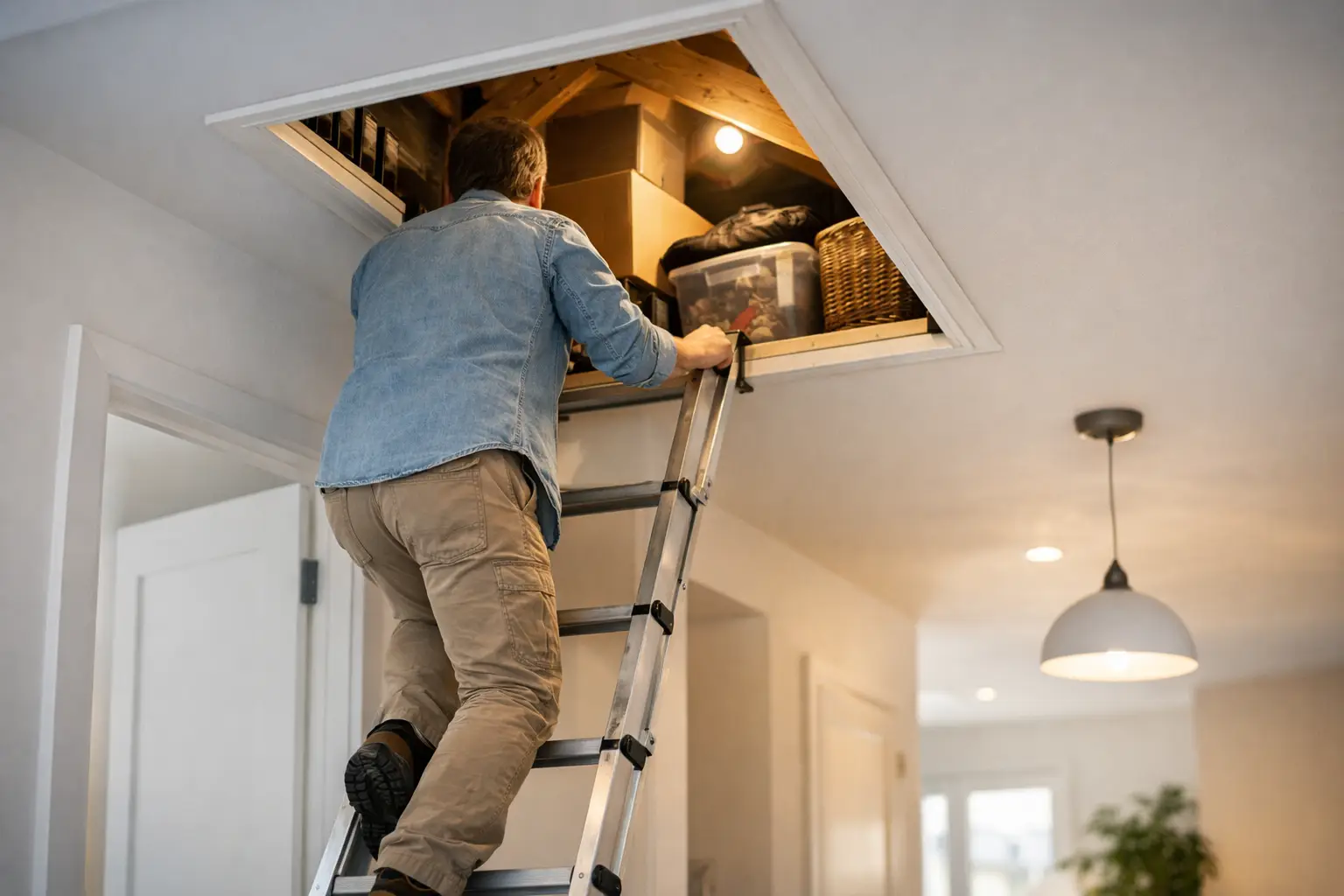
If you are asking how to safely access loft storage, the first answer is straightforward: use a proper loft ladder and a suitable hatch. Pull-down ladders and fixed loft access systems are designed to give you stable, repeatable access. A chair, a set of kitchen steps or a basic DIY stepladder is not.
A well-fitted loft ladder should open smoothly, sit securely on the floor and suit the height available in your landing or hallway. There is no single best option for every property. Timber ladders can work well in some homes, while aluminium folding or sliding systems may be better where space is tighter or more frequent use is expected.
The hatch matters too. If it is too small, lifting boxes through it becomes awkward and encourages twisting, overreaching and poor footing. A larger hatch can make a significant difference, especially for family homes where loft storage is used regularly for suitcases, seasonal items or children’s equipment.
Choose the right access for how often you use the loft
If you only enter the loft once or twice a year, a basic but professionally installed ladder may be enough. If you expect to use the space every month, convenience becomes part of safety. A flimsy system that people avoid using properly often leads to shortcuts, and shortcuts are where injuries happen.
For households with growing storage needs, easier access usually means the loft gets used as intended rather than as a last resort. That can make the investment in a better hatch and ladder worthwhile long before you consider the added convenience.
Never store items on bare joists alone
One of the biggest misunderstandings around loft storage is the floor itself. Joists are not the same as a finished storage platform. In many homes, simply laying boards directly over joists creates problems because it compresses insulation and can reduce energy efficiency.
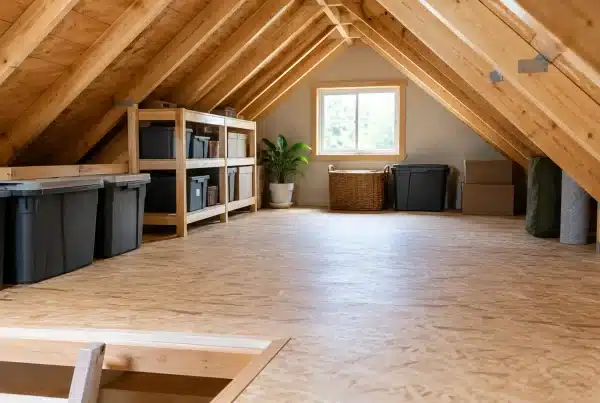
That is why safe loft storage often relies on a raised boarding system. This creates a secure deck above the insulation, allowing air flow and helping the home retain thermal performance. It also gives you defined, load-bearing storage areas instead of a patchwork of boards and gaps.
This point is especially important in newer homes. New-build properties can have specific requirements around loft alterations, and poorly installed boarding may affect warranty conditions. In those cases, a system designed to maintain insulation depth and comply with relevant standards is not just sensible – it helps avoid expensive mistakes.
Lighting changes everything
A surprising number of lofts are accessed with nothing more than a torch or the light from the landing below. That might feel manageable for a minute or two, but poor visibility increases the chance of a misstep, a dropped box or a fall through the ceiling.
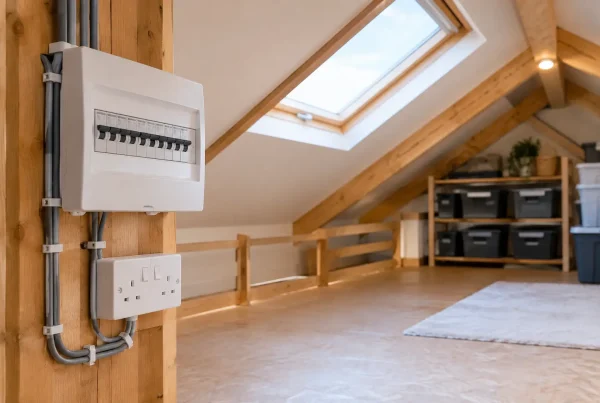
Proper loft lighting turns the space into something you can use with confidence. Even a simple, well-positioned light fitting can help you see where the boarded area ends, where cables run and where roof timbers narrow the available headroom. If you have to duck, twist and search in the dark, the loft is not yet set up for safe storage use.
Watch for head height and obstructions
Lofts are rarely comfortable spaces. Sloping rafters, low beams and awkward corners are part of the reality. The aim is not to make the space perfect but to make movement predictable. Good lighting helps you judge where to stand, where to place boxes and when to stop before you move into an unsafe area.
If your loft has very limited head height, that does not always rule out storage. It may simply mean the layout needs to be planned more carefully, with designated boarding routes and storage zones that can be reached without crawling across insulation.
Think about what you are carrying
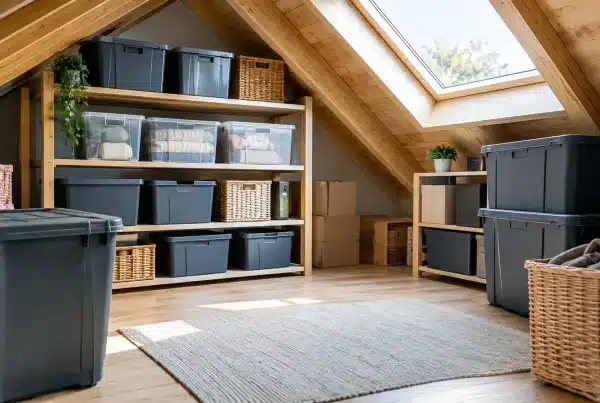
Even with the right ladder and flooring, carrying bulky or heavy items into a loft needs care. The safest approach is to store lighter, less frequently used belongings overhead and keep heavy everyday items elsewhere in the house. A loft is ideal for decorations, keepsakes, bedding and suitcases. It is far less suitable for regularly shifting dense boxes of books or gym equipment.
The issue is not just the final weight sitting in the loft. It is also the act of lifting and manoeuvring that weight through a hatch and up a ladder. If an item needs two hands, blocks your view or throws you off balance, it may not belong in the loft at all.
It also helps to organise the space before it fills up. Leave a clear boarded walkway, keep heavier items near the access point where appropriate, and avoid stacking boxes so high that you need to reach above shoulder level in a cramped roof space. Safe storage is as much about layout as installation.
Check the loft before you rely on it
Not every loft is ready for use the moment a ladder goes in. The roof structure, insulation depth, wiring and existing boarding all need a proper look. Some homeowners discover old patch repairs, exposed cables or signs of condensation only after they start using the loft more often.
This is where a professional survey adds real value. It can confirm whether the current setup is suitable for storage, what loading the space is designed for, and whether improvements are needed to the hatch, ladder, boarding or insulation. For homes across Cardiff, Newport, Swansea and nearby areas, this is often the difference between a loft that is technically accessible and one that is genuinely safe and practical to use.
If your property is older, there may be quirks in the roof construction that call for a tailored approach. If it is a newer build, protecting insulation performance and staying within warranty-friendly installation methods becomes more important. Either way, safe access is never one-size-fits-all.
Signs your loft access needs upgrading
There are a few warning signs that should not be ignored. If the ladder wobbles, the hatch is hard to open, the loft feels too dark to move around safely, or you can only store items by stepping off boarded areas, the setup needs attention. The same applies if you notice insulation being flattened or boxes resting directly on cables.
Sometimes the clue is behavioural. If everyone in the house avoids the loft because it feels awkward or risky, that usually tells you something useful. Well-designed loft access should feel straightforward, not like a balancing act.
A safer loft is a more useful loft
When the hatch opens properly, the ladder feels secure, the boarding is raised above the insulation and the lighting lets you see exactly where you are going, loft storage becomes far more than extra space for clutter. It becomes a practical part of the home that supports day-to-day life without adding risk.
That is why the safest approach is rarely the quickest DIY fix. A loft may look simple from below, but using it safely depends on how all the details work together. Get those right, and you will use the space more often, with more confidence and far less worry each time you climb up.