Anyone who has tried to balance storage boxes on loft joists knows how quickly a simple tidy-up turns into a bad idea. In many homes, the loft looks like wasted space, but using it properly is not as simple as laying a few boards. That is why raised loft boarding Bristol has become such a practical upgrade for homeowners who want more storage without causing problems with insulation, ventilation or ceilings below.
For many Bristol households, the loft sits in an awkward middle ground. It is too useful to ignore, but not designed to act as a floor in its original state. Older properties often have uneven structures and limited insulation depth. Newer homes may have deeper quilt insulation and stricter warranty considerations. In both cases, boarding directly onto joists can create issues that are easy to miss at first and expensive to put right later.
What raised loft boarding actually does
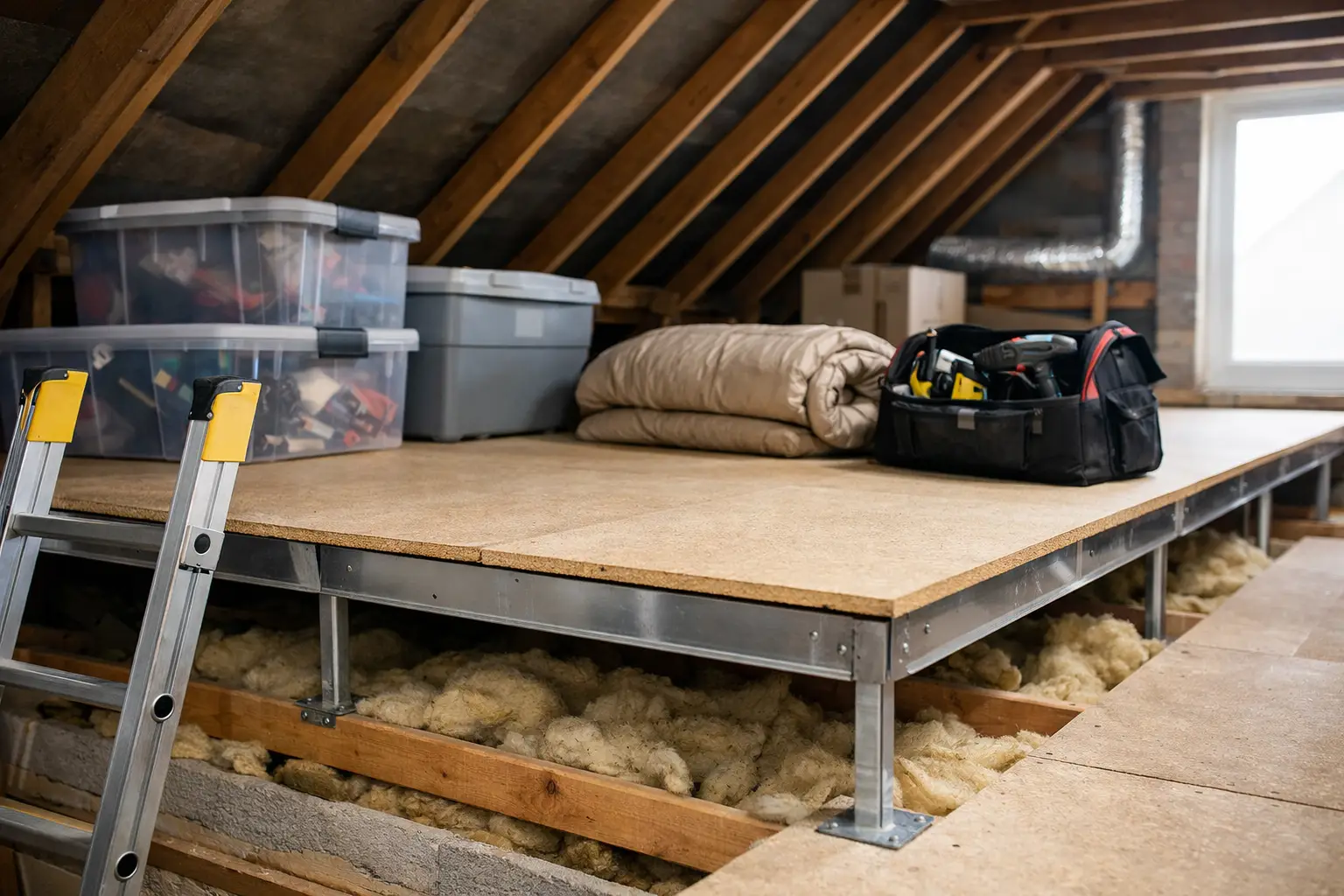
Raised loft boarding creates a platform above the existing joists, leaving space for insulation to perform properly underneath. Instead of compressing the insulation with boards laid flat across the timbers, a raised system lifts the storage deck so the material can keep its intended depth.
That detail matters more than many people realise. Loft insulation needs thickness to work efficiently. When it is squashed, it loses effectiveness, which can affect heat retention and energy bills. A properly installed raised system allows you to gain usable storage while preserving the thermal performance your home relies on.
There is also a structural reason to do it properly. Standard ceiling joists are not the same as floor joists. They are usually designed to support the ceiling below, not heavy domestic storage spread carelessly across a large area. A specialist installer will assess what your loft can safely accommodate and recommend a boarding layout that suits the property.
Why raised loft boarding in Bristol is in demand
Bristol has a broad mix of housing stock, and that makes loft work highly property-specific. Victorian terraces, 1930s semis, post-war housing and modern estates all come with different access points, roof shapes and insulation standards. A one-size-fits-all approach rarely works well.
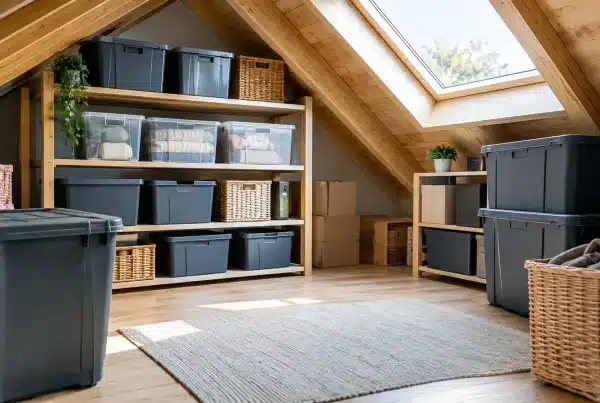
In practical terms, homeowners in Bristol tend to be looking for the same outcome. They want clean, safe and accessible storage without the cost and disruption of a full loft conversion. Seasonal items, family keepsakes, suitcases, decorations and paperwork all need a proper home. When the cupboards are full and the garage is damp or cluttered, the loft becomes the obvious answer.
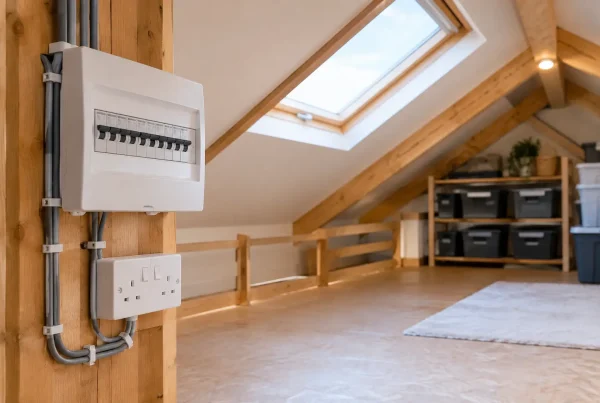
Raised loft boarding is often the best fit because it delivers useful space quickly. It can also be paired with loft ladders, hatches, lighting and insulation upgrades, turning an awkward void into a part of the house that is genuinely easy to use.
Raised loft boarding Bristol homeowners should not treat as a DIY shortcut
There is a reason specialist systems exist. The common DIY route – buying boards from a merchant and fixing them straight to the joists – can create three separate problems at once. It may compress insulation, reduce airflow in the roof space and encourage people to overload an area that was never assessed for regular storage.
That does not mean every loft needs a major specification, but it does mean every loft needs the right specification. Some homes need only a modest boarded area around the hatch for light storage. Others can accommodate a much larger platform with upgraded access and lighting. The right solution depends on the loft structure, insulation depth, head height and what you actually plan to store.
This is also where newer properties need extra care. Some new-build homeowners are rightly cautious about changes that could affect warranty terms. Using a professionally installed, approved raised boarding system can help protect against the kind of alterations that create avoidable issues later.
What a good installation should include
A quality raised loft boarding job is not just about fitting boards. It starts with a survey of the loft itself. The installer should look at joist layout, insulation condition, access, available height and any limitations around water tanks, pipework, wiring or ventilation.
From there, the system should be designed to suit the property, not forced to match a standard package. In some homes, deeper legs are needed to clear modern insulation depths. In others, the shape of the roof means storage works best in the central section only. A dependable installer will explain the usable area honestly rather than overpromise.
The boarding itself should be secure, stable and fitted neatly enough to support regular use. If the loft is difficult to access, a proper ladder and hatch make a major difference. Good lighting matters too. There is little value in creating storage space if using it still means balancing on a step ladder with a torch in your mouth.
Cost, value and where the trade-offs sit
Cost is usually one of the first questions, and understandably so. Raised loft boarding is more expensive than basic DIY boarding because it uses a specialist support system and professional installation. But the comparison should be fair. You are not paying simply for boards. You are paying for safe access, retained insulation performance, a cleaner finish and a solution matched to your property.
The real value tends to show up in day-to-day life. A well-boarded loft can free up bedrooms, cupboards and airing cupboards almost immediately. It can delay the need for larger, more disruptive home changes. For growing families especially, that can make it one of the more sensible home improvements available.
That said, it is not always the right answer for every household. If your loft has very limited height, poor access or structural constraints, the usable storage may be smaller than you hoped. In those cases, a reputable specialist should say so. Good advice is not about selling the biggest possible job. It is about recommending the option that will actually work in the long term.
Choosing the right installer in Bristol
If you are comparing providers, look beyond headline prices. Ask what system is being used, whether the loft will be surveyed first and how insulation depth will be handled. Check whether the company also installs ladders, hatches, lighting and insulation, because a complete service usually leads to a better finished result.
It is also worth asking about guarantees and approvals. Those details matter because loft boarding is hidden once complete. You need confidence that the materials and methods are built to last. A lifetime guarantee, where offered, is a strong sign that the installer stands behind the work.
Local experience has value too. A company that regularly works on homes in Bristol is more likely to understand the quirks of the area’s housing types and the practical expectations of homeowners who want the job done properly with minimal disruption.
Is raised loft boarding right for your home?
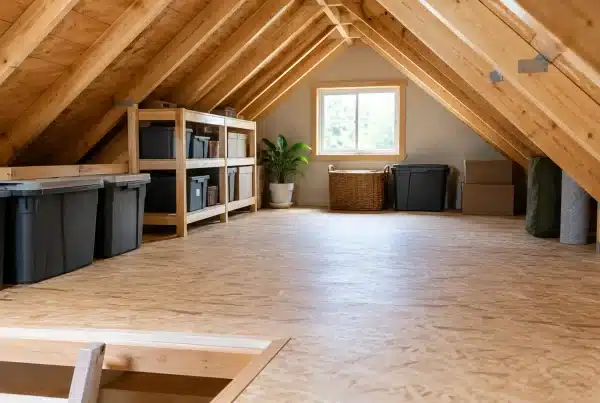
If your main goal is to create convenient storage, rather than to build a habitable room, raised boarding is often the most cost-effective route. It suits households that need more space but do not want the cost, planning considerations or timescale of a loft conversion. It is especially useful when the loft is currently underused because access is poor or the floor area feels unsafe.
The strongest results usually come when the project is treated as a complete loft upgrade rather than a single product. Boarding, insulation, access and lighting all work together. Get one part wrong and the whole space can remain frustrating to use.
That is why many homeowners prefer a specialist approach from the outset. Companies such as Loft Ins Space focus on making lofts safer, more practical and easier to use without unnecessary upheaval. For Bristol homeowners, that often means turning a neglected space into one of the most useful storage areas in the house in a matter of days, not months.
A loft does not need to become a new room to add real value to your home. Sometimes the smartest improvement is simply making the space you already have properly usable.