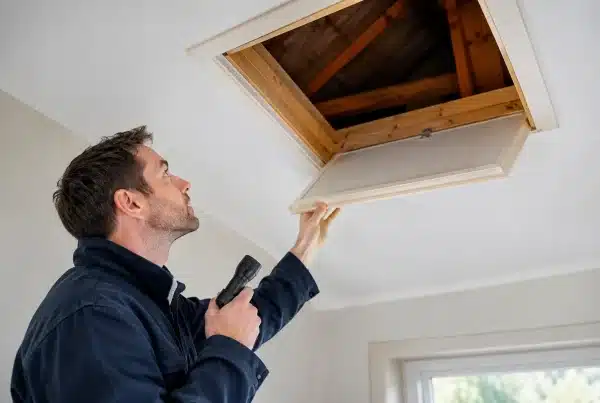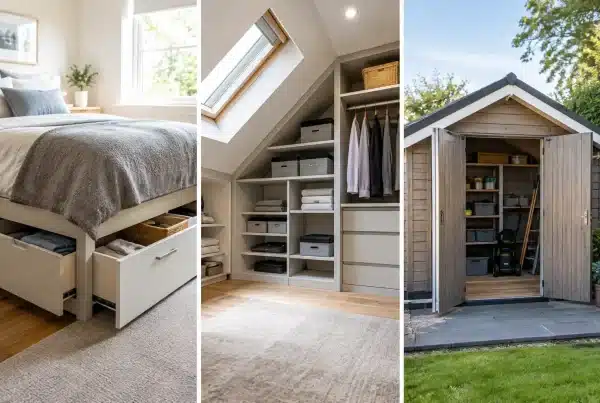
A lot of loft problems start with good intentions. Someone needs a bit more storage, lays a few boards directly over the insulation, stacks up boxes, and only later realises the loft feels awkward, cramped, and not especially energy efficient. So, can loft insulation be compressed? In most cases, no – not if you want it to perform properly.
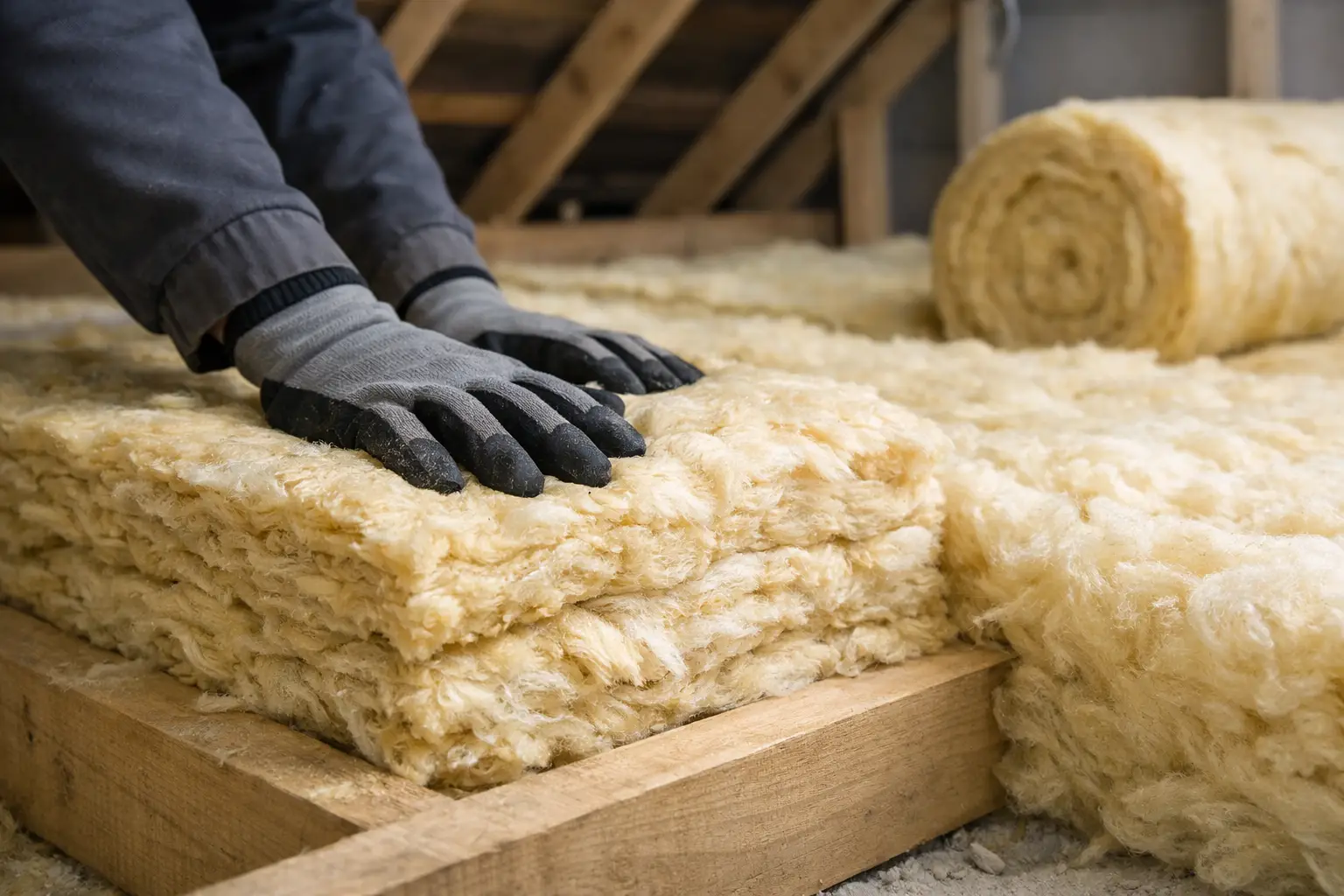
Loft insulation works by trapping air within its structure. That trapped air slows down heat loss from the rooms below. When insulation is squashed, the air pockets reduce, and so does its ability to hold back heat. The result can be poorer thermal performance, a colder home, and in some cases condensation risks if the loft is no longer ventilated as intended.
Why compressed insulation is a problem
Most mineral wool loft insulation is designed to sit at its full lofted depth. Current recommendations often mean a much deeper layer than many older homes were originally fitted with, which is one reason storage becomes an issue. If you press that insulation down under chipboard or stored belongings, you are effectively reducing the thickness that does the insulating work.
There is a simple way to think about it. Insulation is not there just to fill a gap. It is there to keep its shape and hold air. Flatten it, and it becomes less effective. That does not always mean it stops working entirely, but it will rarely work as well as intended.
The amount of damage depends on the type of insulation, how much it is compressed, and whether the compression is localised or spread across a larger area. A light touch from a raised platform system is very different from heavy boards laid directly on joists with boxes piled on top.
Can loft insulation be compressed under boards?
This is the question most homeowners are really asking. They do not usually want to squash insulation for the sake of it. They want to know whether they can board the loft and still keep the insulation doing its job.
If boards are fitted directly onto joists where the insulation depth is higher than the joist height, then yes, the insulation underneath will be compressed. That is the common problem. Many loft joists in older homes were never intended to provide deep insulation and practical storage at the same time.
For example, if your joists are around 100mm deep but your insulation is 270mm deep, boarding directly on top leaves nowhere for much of that material to go. It gets flattened. You gain a storage surface, but you lose thermal performance.
That trade-off is usually avoidable. A raised loft boarding system creates a platform above the insulation instead of crushing it. That allows the insulation to remain at the correct depth while still giving you usable storage space.
When compression is unavoidable – and what that means
There are some situations where a degree of compression happens, even in a well-planned loft. Around access points, service runs, or awkward roof shapes, insulation may need adjusting to fit safely and neatly. The key point is that minor, localised disturbance is not the same as flattening large sections of the loft to make boarding easier.
If compression is limited and carefully managed, the overall effect may be small. If most of the loft floor area is compressed, the impact becomes much more significant. That is why a proper survey matters. The right solution depends on joist height, insulation depth, roof structure, ventilation, and what you want from the space.
This matters even more in newer homes, where warranty considerations can come into play. Some homeowners in areas such as Cardiff, Newport and Bristol are rightly cautious about making changes that could affect compliance or create future issues. A raised system is often the safer route because it works with the insulation depth rather than against it.
Different insulation types behave differently
Not all loft insulation responds to pressure in exactly the same way. Mineral wool is the most common and the most obviously affected by compression because it relies heavily on trapped air. Squashing it generally reduces performance.
Rigid insulation boards are different. They are manufactured to a set thickness and designed to resist compression better, but they are usually used in different applications and need careful detailing to avoid gaps and thermal bridging. They are not simply a drop-in answer for every storage loft.
Natural insulation materials, such as sheep wool or wood fibre, also have their own properties and installation requirements. Some recover shape better than others after light pressure, but none are improved by being unnecessarily compressed.
The practical point for most homeowners is straightforward. If your loft has soft roll insulation between and over the joists, it should not be treated as something you can press flat without consequences.
The storage mistake homeowners make most often
The mistake is not wanting storage. That is perfectly reasonable, especially for growing families or homes short on cupboard space. The mistake is assuming the loft floor should work like any other floor.
A loft is usually a balance between insulation, ventilation, access, and structural limits. The joists beneath a typical loft floor are often designed for the ceiling below, not for heavy loading. So there are often two issues at once: compressed insulation and unsuitable storage boarding.
That is why a professional loft storage solution does more than fit boards. It considers how to preserve insulation depth, distribute loads appropriately, and maintain safe access. If any one of those parts is ignored, the loft may become less useful rather than more so.
How to board a loft without compressing insulation
The best approach is to raise the boarding above the insulation using a suitable support system. This creates a void between the top of the insulation and the underside of the boards, allowing the material to stay lofted and effective.
That gap is not wasted space. It is what protects the insulation’s performance. It also reduces the temptation to strip insulation out just to make room for storage, which is another shortcut that costs more in heat loss over time.
A well-designed raised boarding system can also help keep the loft tidy and accessible. Instead of balancing boxes on narrow joists or worrying about where not to step, you have a stable area built for practical household use.
This is especially helpful where homeowners want a proper loft ladder, safer access, and a storage area they can use regularly rather than cautiously. The loft becomes functional without compromising the energy efficiency of the home.
Signs your insulation may already be compressed
You do not always need to lift every board to suspect a problem. If your loft was boarded years ago and the boards sit low, almost flush to the joist line, there is a fair chance the insulation beneath has been pressed down. Uneven boarding, musty smells, awkward cold spots upstairs, or visible insulation squeezed tightly around the edges can all suggest the setup is not ideal.
Older installations are particularly worth checking because insulation standards have changed over time. What once seemed acceptable may now be underperforming. If storage has gradually expanded over the years, with more items added and more pressure on the loft floor, the effect can be greater than expected.
Is it ever worth replacing compressed insulation?
Sometimes, yes. If the insulation has been badly flattened for a long period, is patchy, contaminated, or poorly fitted around the eaves, replacing or topping it up can make sense. But replacement on its own is not the full answer if the boarding method stays the same. New insulation that is immediately squashed under boards will simply repeat the problem.
The better approach is to look at the loft as a whole. Access, boarding height, insulation condition, ventilation and intended use all need to work together. That is where specialist advice tends to save time and money, because it avoids partial fixes.
For homeowners who want storage without sacrificing warmth, the answer is usually not less insulation. It is a better way of building above it.
A loft should make life easier, not create hidden problems above the ceiling. If you are wondering whether your current setup is compressing insulation, it is worth checking before another winter does the measuring for you.