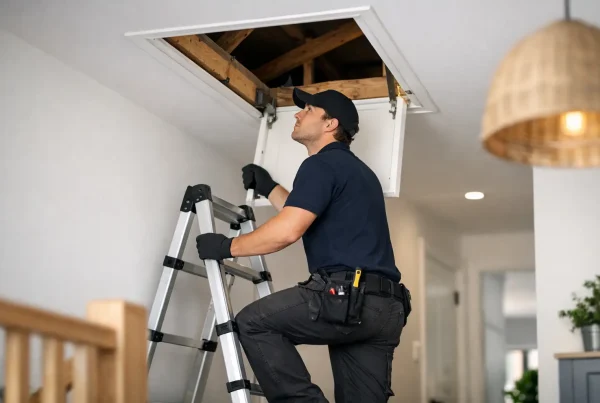
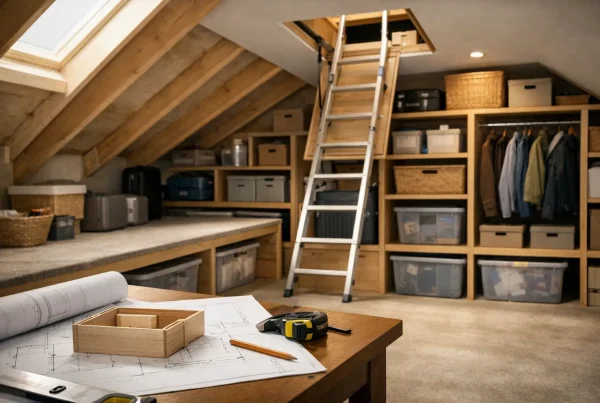
A loft can hold far more than Christmas decorations, but only if getting into it does not feel like a balancing act. The best loft ladders for homeowners are not simply the cheapest option that fits through the hatch. They should make regular access safer, suit the available headroom and loft opening, and work properly alongside insulation and loft boarding.
For many households, a professionally fitted ladder turns an awkward roof space into storage that is genuinely useful. The right choice depends on how often you will use the loft, who will use it, and whether the existing hatch is large enough to allow safe, comfortable access.
What makes a loft ladder right for your home?
A good loft ladder should feel secure underfoot, be easy to operate and leave the landing clear when it is folded away. It also needs to match the height from the landing floor to the loft floor. This sounds straightforward, but older homes can have uneven ceiling heights, narrow landings or small original hatches that limit the options.
Start with the purpose of the space. If the loft is only visited once or twice a year, a simple sliding ladder may be perfectly suitable. If you plan to use boarded storage every week, a sturdier folding ladder with wider treads and a handrail will usually be a better long-term investment.
The hatch matters just as much as the ladder. A ladder can only be used safely if you can step through the opening without twisting, ducking excessively or carrying boxes at an awkward angle. Enlarging or replacing a loft hatch is often part of creating practical access, particularly in older properties where the original opening was designed for maintenance rather than storage.
The best loft ladders for homeowners by type
There is no single best ladder for every property. The most suitable design comes down to access frequency, room around the hatch and the standard of finish you want.
Aluminium sliding loft ladders
Aluminium sliding ladders are a popular, cost-effective choice for occasional loft access. They are lightweight, durable and generally straightforward to use. Most slide in two or three sections, allowing them to retract into the loft when not needed.
They work well where the loft is mainly used for lighter seasonal storage. The trade-off is comfort: the rungs are narrower than timber steps, and the ladder can feel less substantial when carrying bulky items. A model with a handrail and non-slip rungs is worth considering, especially for households where confidence on ladders is a concern.
Timber folding loft ladders
Timber folding ladders are often the preferred option for homeowners who want regular, dependable access. They normally fold in three sections and sit above the hatch when closed. Wider treads provide a more stair-like feel than aluminium rungs, making them more comfortable for repeated use.
A timber ladder can also create a neater, more integrated finish in a family home. It is particularly well suited to a boarded loft used for boxes, luggage, hobby equipment or household paperwork. Although it may cost more than a basic sliding ladder, the improved stability and usability can make a noticeable difference over time.
Concertina loft ladders
Concertina ladders fold compactly in a zig-zag pattern, making them useful where there is limited loft space above the hatch or restricted clearance on the landing. They are commonly made from aluminium and can be a practical answer for tight layouts.
However, their narrow steps and steeper angle mean they are rarely the first choice for frequent trips into a storage loft. They are best viewed as a space-saving solution where a conventional sliding or folding ladder cannot be accommodated.
Telescopic loft ladders
Telescopic ladders extend section by section and retract into a compact unit. This can be useful in properties with very limited storage space near the hatch. They can also be convenient where a hatch is smaller than ideal, although the opening should still allow safe entry and exit.
The compromise is that telescopic ladders tend to offer less underfoot comfort than timber folding designs. They may suit occasional use, but homeowners planning a proper loft storage upgrade should compare them carefully with more substantial alternatives.
Loft ladders with an insulated hatch
Where heat loss is a concern, a ladder-and-hatch package with an insulated hatch door can be the most sensible option. The loft hatch is a break in the ceiling insulation, so a poorly fitting or uninsulated door can allow warm air to escape into the loft.
An insulated hatch, properly sealed and fitted, helps support the performance of the surrounding insulation. This is especially relevant when improving a loft that has previously had a draughty, loose-fitting hatch. For new-build homes, the work should also be planned carefully to avoid compromising the construction or warranty requirements.
Choose for safety, not just convenience
The safest ladder is one that is correctly sized, securely installed and appropriate for its intended use. Weight rating is one factor, but it should not be considered in isolation. Look at tread depth, handrails, non-slip surfaces, the angle of the ladder and how securely it locks into position.
Landing space is another issue that can be missed when buying a ladder online. A ladder that projects too far into a narrow hallway can block a door, create a trip hazard or make it difficult to position safely. A survey allows measurements to be taken properly and identifies whether the hatch location itself is suitable.
It is also worth thinking about what you will carry. A ladder may be safe for one person climbing empty-handed, yet impractical for transporting storage boxes. A well-boarded loft, a generous hatch opening and a stable timber ladder make everyday use much easier than trying to manage large items through a small opening on narrow rungs.
Why professional fitting makes a difference
Loft ladders are connected to the ceiling structure, hatch frame and surrounding finishes. Incorrect installation can lead to a poor fit, damaged plasterboard, unreliable operation or a hatch that does not close properly. More seriously, it can leave the ladder without the support required for safe use.
Professional installation is particularly valuable where a new hatch is needed. The opening may need to be enlarged without affecting structural members, then trimmed and finished neatly. The ladder must be aligned correctly, adjusted to the floor-to-loft height and tested before it is handed over.
For homeowners considering loft boarding at the same time, combining the work gives a much better result. Raised boarding can protect the depth and effectiveness of existing insulation, while suitable lighting and safe access mean the loft becomes usable storage rather than an area that is difficult to reach. Loft Ins Space can assess these elements together and recommend a tailored approach rather than treating the ladder as an isolated job.
Questions to ask before choosing a loft ladder
Before committing to a design, establish the floor-to-loft height, the size of the existing hatch, the available landing clearance and the headroom inside the loft. Ask whether the ladder includes a handrail, whether the hatch is insulated, and how much weight the system is designed to support.
If your home is a new build, ask how the work will be carried out with warranty considerations in mind. If it is an older property, ask whether the existing ceiling and hatch framing need attention before installation. These details are often where the difference lies between a ladder that merely reaches the loft and one that gives years of reliable access.
A useful loft should never require a wobbly step stool, a precarious climb or a reluctant trip through a tiny hatch. Choose a ladder around the way your household will actually use the space, and safe access will make every square foot of storage above the ceiling far easier to enjoy.