A loft ladder usually gets attention only when it wobbles, sticks, or feels awkward underfoot. That is exactly why homeowners ask how to fit a loft ladder safely before they start cutting into a ceiling or fixing anything overhead. Done properly, it gives you reliable access to valuable storage space. Done badly, it can damage the hatch opening, put strain on the frame, or create a genuine fall risk.
For many homes, fitting a loft ladder is not just about convenience. It is part of making the loft usable without turning a quick storage solution into an unsafe one. The safest approach depends on the type of property, the loft opening, the ladder design, and whether the surrounding loft area is actually ready to be used.
What matters before you fit a loft ladder
The first check is not the ladder itself. It is the opening. A loft ladder must suit the hatch size, the floor-to-ceiling height, and the amount of landing space available below. If the ladder is too short, too steep, or clashes with a wall or door, it will never feel secure in daily use.
You also need to assess the loft structure around the hatch. In some homes, especially older properties, the existing opening may be undersized or uneven. In newer homes, the opening might be more regular, but you still need to make sure any work does not compromise insulation, airtightness, or the surrounding finish. If the hatch frame is weak or poorly fixed, a new ladder will only expose the problem.
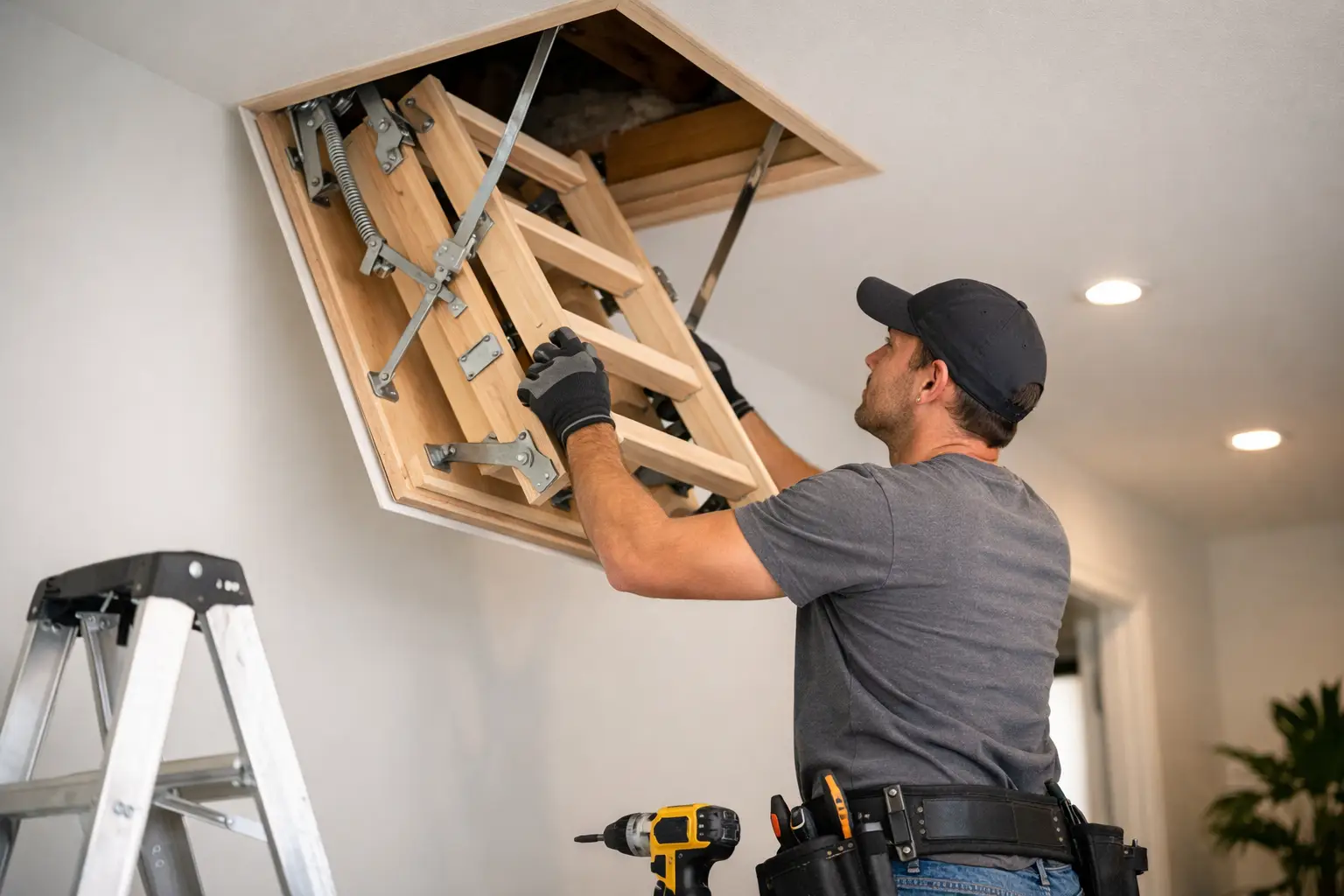
This is also the stage to check the manufacturer’s load rating and fitting requirements. Not all loft ladders install in the same way. Folding timber ladders, concertina ladders and telescopic ladders all have different fixing points, operating clearances and user weight limits.
How to fit a loft ladder safely – step by step
Start by reading the manufacturer’s instructions in full before lifting a tool. That sounds obvious, but many installation problems come from assuming all loft ladders fit the same way. The fixing method, minimum opening size and required clearances can vary quite a bit.
Measure the opening and the floor height carefully
Take several measurements, not just one. Measure the loft hatch opening length and width, the ceiling height, and the available swing space below. If the ladder is a folding model, check the full arc of movement when opening and closing. A ladder that technically fits the opening can still be impractical if it lands too close to a wall, banister or doorway.
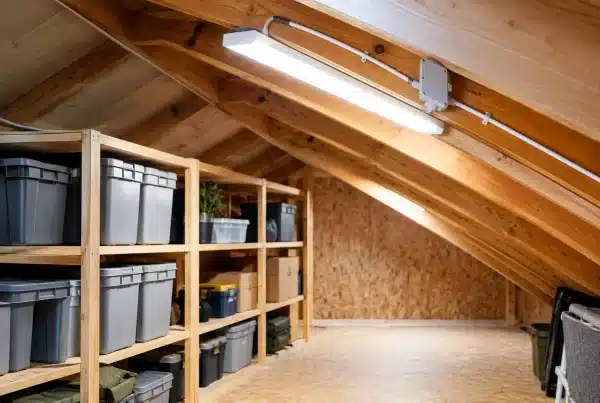
It is worth checking the loft floor area directly above the hatch as well. You need safe footing at the top of the ladder, not just enough room to squeeze through the opening. If there are only ceiling joists and no boarded access area, using the ladder safely becomes much harder.
Prepare a stable working area
Fitting a loft ladder involves overhead work, lifting, and accurate alignment. Use a secure platform or suitable stepladder rather than stretching from an awkward position. The area below should be clear, well lit and free from trip hazards.
If the ladder unit is heavy, do not try to fit it alone. Many loft ladder systems are awkward rather than impossibly heavy, but the combination of weight, height and positioning makes solo installation risky. A second person helps support the unit while it is aligned and fixed.
Fix the frame square and level
This is where many issues begin. The frame must sit square within the opening and be fixed to sound timber. If it is twisted or out of level, the ladder may not close properly, the hatch may bind, and the treads may sit unevenly under load.
Temporary support battens can help hold the unit in place while you position it. Check for level, check diagonals if needed, and only then secure the frame with the specified fixings. Do not rely on light screws or whatever happens to be in the toolbox. The correct screws or coach bolts, fitted into solid timber, matter here.
If the opening edges are damaged or irregular, repair them before installation rather than packing excessively and hoping for the best. Too much makeshift adjustment can weaken the overall fit.
Adjust the ladder to the correct length and angle
Some ladders need trimming to suit floor height. This must be done precisely. If you cut too much off the feet, the ladder may sit at the wrong angle or fail to bear weight properly. If it is too long, it can force against the floor and strain the hinges or frame.
The right angle matters for comfort and safety. Too steep and climbing becomes awkward, especially while carrying light items. Too shallow and the ladder can feel unstable or occupy too much floor space. Follow the angle guidance given for your specific model and test the ladder fully once adjusted.
Test operation and load before regular use
Once fitted, open and close the ladder several times. It should move cleanly without catching, twisting or dropping suddenly. Check the locking points, hinges and handrail if included. Then test it progressively under load, keeping within the stated user rating.
This is also the time to inspect the landing area in the loft. If stepping off the top puts you straight onto exposed joists, the installation is only half finished from a safety point of view.
Common mistakes that make a loft ladder unsafe
The most common problem is treating the loft ladder as a standalone product instead of part of a wider loft access system. A good ladder fitted to a poor hatch frame or opening will still feel unreliable.
Another mistake is underestimating clearance. Homeowners sometimes choose a ladder based on hatch size alone, then realise the folded sections hit a wall, light fitting or door swing. Others fit the ladder correctly but ignore the approach space, leaving too little room to climb comfortably.
Over-cutting adjustable ladders is another regular issue. Once material has been removed, it cannot be put back. Small errors can affect stability far more than expected.
Then there is the loft itself. If the area above has inadequate boarding, poor lighting or compressed insulation, safe ladder access does not solve the full problem. In practice, access, storage surface and insulation protection all need to work together.
When a DIY installation may not be the right choice
Some homeowners are capable of basic fitting work, but loft ladder installation is not always a straightforward DIY job. It depends on the condition of the hatch opening, the ladder type and the standard of finish you want.
If the opening needs enlarging, if electrics are nearby, or if the ceiling construction is uncertain, professional installation is often the safer route. The same applies if you want an integrated loft hatch and ladder system with a neat finish and consistent operation over time.
This matters even more in new-build homes, where preserving insulation performance and avoiding unnecessary alterations can be a priority. A professionally planned installation can help ensure the loft remains practical without creating issues elsewhere.
For households in areas such as Cardiff, Newport or Bristol, where property styles range from modern estates to older housing stock, there is no one-size-fits-all solution. The safest fit is usually the one designed around the property, not just the cheapest ladder available.
Safety after installation matters too
Knowing how to fit a loft ladder safely is only part of the picture. You also need to use it properly. Always maintain three points of contact when climbing, avoid carrying bulky loads by hand, and never exceed the stated weight limit. If children are in the home, make sure the hatch operation is controlled and not treated as a toy.
Regular checks are sensible. Look for loose fixings, worn hinges, cracked treads or signs that the frame has shifted. A loft ladder should feel predictable every time you use it. Any new movement, creaking or sticking deserves attention before the next climb.
If your loft is being used regularly for storage, good lighting and proper boarding near the hatch make a real difference. They reduce the temptation to overreach or step onto unsupported plasterboard edges. That is often where accidents happen – not on the ladder itself, but immediately before or after using it.
A well-fitted loft ladder should make access feel simple, solid and routine. If the job involves guesswork, compromised fixings or a loft area that is not properly prepared, stepping back and getting specialist advice is the safer decision. Extra storage is only worth having when you can reach it with confidence.