That moment when the Christmas decorations, suitcases and baby keepsakes start taking over spare rooms is usually when the loft comes back into the conversation. A proper homeowner guide to loft boarding starts with one simple point – not every loft should be boarded in the same way, and getting it wrong can crush insulation, reduce energy efficiency and create avoidable problems later.
Loft boarding sounds straightforward because, on the surface, it is just about creating storage space. In practice, the right approach depends on how your loft is built, how much insulation is already in place, whether you have pipework or electrics running through the area, and how often you plan to use the space. For many households, the best result is not just more storage, but easier access, better lighting and a cleaner, safer area that feels usable rather than awkward.
What this homeowner guide to loft boarding should make clear
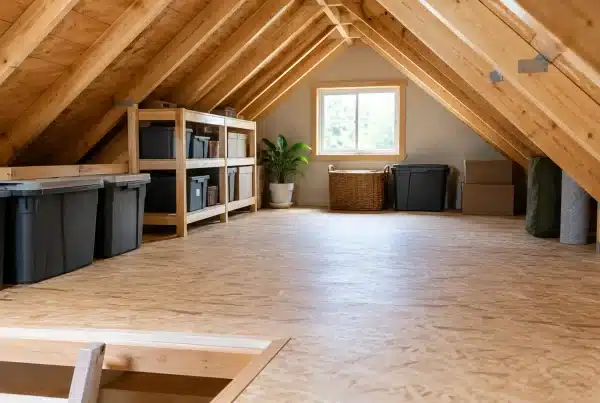
The main reason homeowners board a loft is practical – they need storage without the cost and disruption of a full loft conversion. That makes sense, especially in family homes where wardrobes, cupboards and garages are already full. Boarding can turn wasted roof space into organised storage surprisingly quickly.
But there is a trade-off. If boards are fitted directly on top of joists where insulation needs depth above that level, the insulation gets compressed. Once that happens, it cannot perform as intended. In other words, you may gain storage but lose thermal efficiency. In some homes, particularly newer properties, there can also be warranty considerations if unsuitable boarding methods are used.
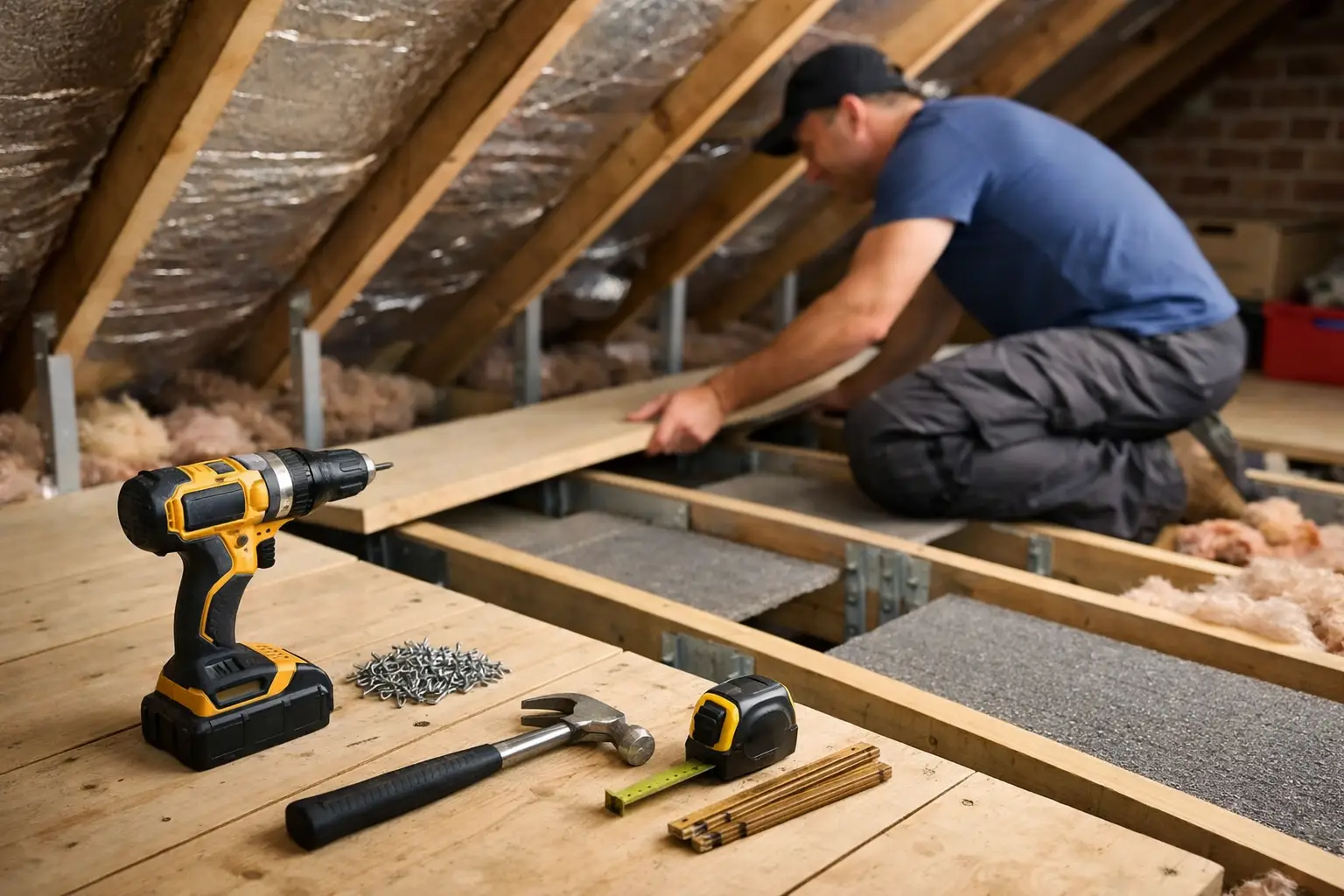
That is why raised loft boarding systems are often the preferred option. They lift the deck above the insulation, allowing airflow and preserving performance while still giving you a stable storage platform. It is a more considered solution than simply laying chipboard across the joists, and for most modern homes it is the safer long-term choice.
Is your loft suitable for boarding?
Most lofts can be improved in some form, but suitability is never just a yes or no question. It depends on the structure, the intended use and the existing condition of the space.
If your loft is only going to hold light domestic items used a few times a year, a boarded storage area may be ideal. If you are hoping to create a room that can be occupied regularly, that is a different project entirely and usually moves into loft conversion territory, with structural and regulatory implications. Good loft boarding is about storage and access, not turning the loft into a habitable room by the back door.
Older properties can be excellent candidates, but they often need a more tailored approach. Joist spacing, roof shape and historic alterations may all affect what can be done. New-build homes bring their own considerations. These often include deeper insulation requirements and, in some cases, the need to protect warranty conditions by using an approved raised system rather than improvised boarding.
A professional survey matters here because assumptions are expensive. What looks like a large, simple loft from the landing hatch can hide uneven joists, restricted head height, poorly installed insulation or cables running exactly where you would want to board.
Raised loft boarding vs direct-to-joist boarding
This is where many homeowners make their key decision. Direct-to-joist boarding can be cheaper at first glance, but it is often a false economy if it squashes insulation or creates a less stable finish over time.
Raised loft boarding uses a supporting system to create a gap above the joists. That gives the insulation enough room to work properly and allows boards to be fitted level and securely. For households that want a storage solution that supports both practicality and energy efficiency, this is usually the better route.
Direct boarding may still be seen in older installations or in lofts with very limited insulation depth, but current expectations are different. Insulation standards have changed, and so have homeowner priorities. People want storage, but they also want lower heat loss and fewer worries about whether the job has been done properly.
The point is not that one method is always wrong and the other always right. It is that the structure and insulation depth need to be assessed together. A good installer should explain why a particular system suits your property, rather than offering a one-size-fits-all package.
Loft access matters as much as the boarding
There is little value in creating storage space if getting into the loft remains awkward or unsafe. Many households still rely on a stepladder and a small hatch, which makes even simple tasks inconvenient.
Adding a proper loft ladder changes how often the space gets used. It also makes access safer, especially for families who are lifting boxes up and down rather than just storing a few forgotten items once a year. In some homes, enlarging the hatch is just as important as fitting the ladder itself. A cramped opening can make storage frustrating, no matter how well the loft is boarded.
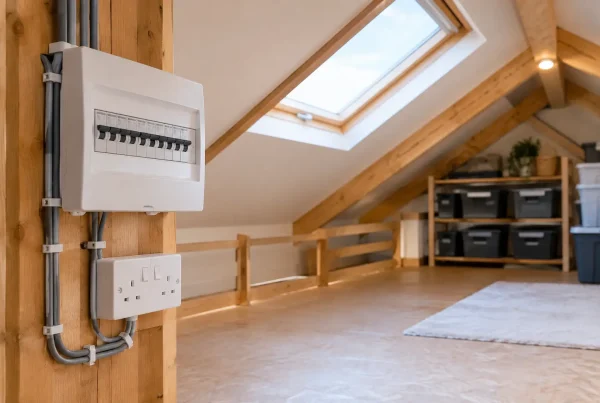
Lighting is another detail that tends to be underestimated. A boarded loft without lighting is still difficult to use. Even a simple lighting installation can make the area feel cleaner, more secure and much more practical. If you are investing in loft storage, it makes sense to consider the whole experience of using the space, not just the floor beneath your feet.
What can safely be stored in a boarded loft?
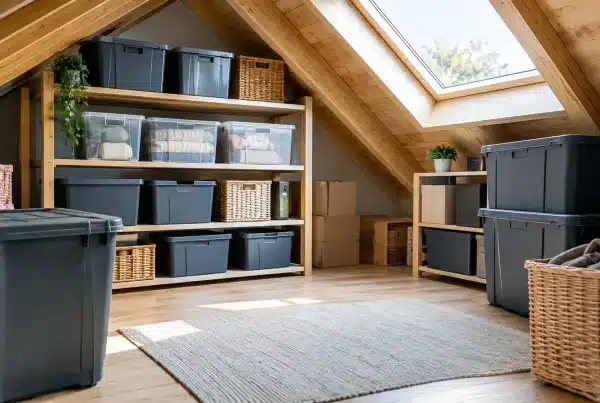
A boarded loft is ideal for many household items, but it should not become a dumping ground for everything with no plan. Suitcases, seasonal decorations, archived paperwork, clothing, toys and lightweight household goods are common choices. These are all sensible as long as the weight is spread appropriately and the system installed is designed for domestic storage.
What should give you pause are very heavy items, concentrated loads or anything damp-sensitive in a poorly ventilated loft. Boxes of books, gym equipment and old furniture can add up quickly. Water tanks, pipework and electrical fittings also need to remain accessible and protected.
This is another area where expectations should stay realistic. Loft boarding improves storage, but it does not remove structural limits. A professional installer should be clear about intended use and loading rather than letting homeowners assume the space can take anything they can carry upstairs.
A homeowner guide to loft boarding costs and value
Cost is always part of the decision, but price alone is not the best way to compare options. The cheapest quote may cover only basic boards over a limited area, with no allowance for raised supports, insulation improvements, hatch enlargement, ladder installation or lighting. A more complete quote may look higher initially, but offer far better day-to-day value.
For most homeowners, the real question is whether the work solves the storage problem properly. If the loft becomes easy to access, safe to use and suitable for long-term storage, it can free up bedrooms, cupboards and garages almost immediately. That practical gain is often what makes the investment worthwhile.
There is also value in choosing systems and workmanship that are built to last. Guarantees, approved products and experienced installation are not just selling points. They reduce the risk of paying twice because the first solution was rushed or unsuitable.
Choosing the right installer
A loft is one of those areas where specialist knowledge shows. Any contractor can say they can lay boards, but that is not the same as understanding insulation depth, airflow, property type and access requirements.
A good installer will survey the loft, explain what is suitable for your home, and recommend a solution based on how you actually plan to use the space. They should also be comfortable discussing newer homes, warranty-sensitive installations and the difference between storage boarding and structural conversion work.
For homeowners in places such as Cardiff, Newport, Swansea and Bristol, where housing stock ranges from new-build estates to older terraced and detached properties, that adaptability matters. Different homes call for different methods, and the best results come from tailored recommendations rather than standard packages.
If a company talks clearly about approved systems, insulation protection, safe access and guarantees, that is usually a sign they are treating the loft as part of the home rather than just another quick job.
When loft boarding is the right move
Loft boarding is often the smartest option when you need more storage but do not need another room. It is faster, less disruptive and more cost-effective than a full conversion, while still making a meaningful difference to how your house functions.
The key is to do it in a way that respects the building. Protect the insulation, make access safe, plan the storage area around the structure and think about how you will use the space in real life. That is where specialist advice earns its place.
A well-boarded loft should not feel like a compromise. It should feel like your home has finally started using the space it already had.