You only notice how useful a loft could be when the cupboards are full, the garage is crowded, and the spare room has turned into a storeroom. At that point, a very common question follows – can you board over loft insulation? The short answer is yes, but not by laying boards straight on top of the insulation. If you do that, you can reduce its performance, limit ventilation, and create problems that cost more to put right later.
That is why loft boarding needs a bit more thought than simply adding a few chipboard panels and calling it done. A loft can absolutely become practical storage space, but the boarding has to work with the insulation, not against it.
Can you board over loft insulation without causing problems?
Yes, but the key detail is how the boards are supported. Modern loft insulation is usually laid between and often across the ceiling joists to meet current depth recommendations. That extra thickness helps keep heat in the home, but it also means the top of the insulation often sits higher than the joists themselves.
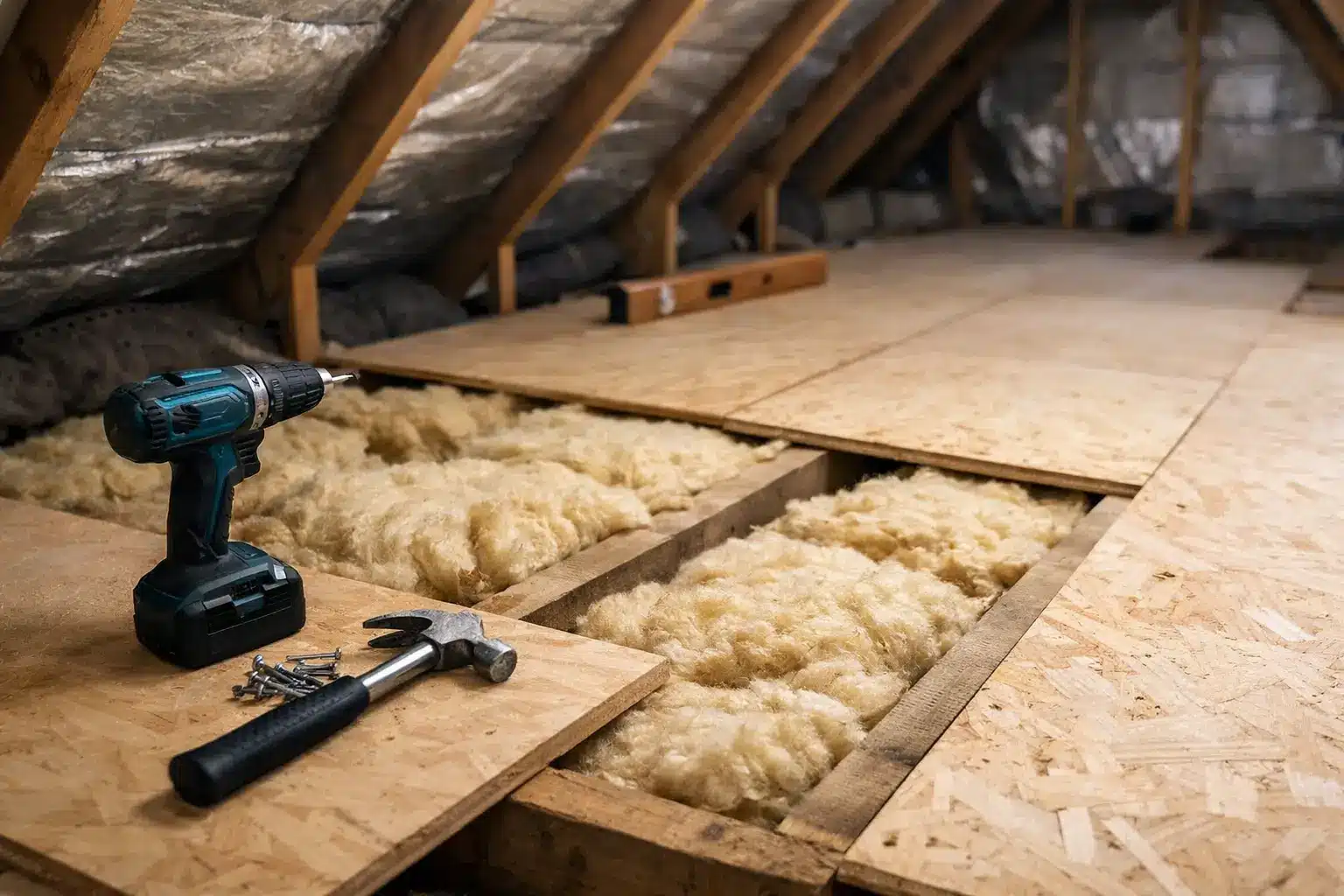
If you screw boards directly onto those joists, the insulation gets compressed underneath. Compressed insulation traps less air, and trapped air is what helps it perform properly. In simple terms, squash it down and it stops doing the job you paid for.
There is another issue as well. Loft spaces need airflow. When boarding is done badly, ventilation paths can be reduced, which may contribute to condensation problems. That is particularly relevant in roofs that already have limited ventilation or where the property has seen changes over time, such as upgraded windows or improved draught-proofing.
So the real answer is this: yes, you can board over loft insulation, but only when the loft is raised correctly to preserve the insulation depth and allow the roof space to breathe as intended.
Why direct boarding is usually the wrong approach
For many homeowners, the temptation is understandable. The loft looks empty enough, the joists are visible, and standard loft boards are easy to buy. The problem is that older lofts were not designed with today’s insulation standards or storage expectations in mind.
Years ago, a shallow layer of insulation between joists was common. In that situation, direct boarding may have looked workable, even if it was not ideal. In many homes now, insulation depth is far greater. That is good for energy efficiency, but it changes the way the loft should be boarded.
Direct boarding can lead to reduced thermal performance, pressure on ceiling plasterboard, and an uneven or unstable storage surface. If the loft is then loaded with boxes, suitcases, decorations, or household overflow, the stress on the structure increases. What starts as a quick weekend job can become a poor long-term solution.
For newer properties, there can be an added concern around warranty compliance. Some new-build homeowners are rightly cautious about making alterations in the loft that could affect the home’s warranty position. In those cases, the boarding system used matters, and a specialist approach is often the safer route.
The right way to board a loft with insulation
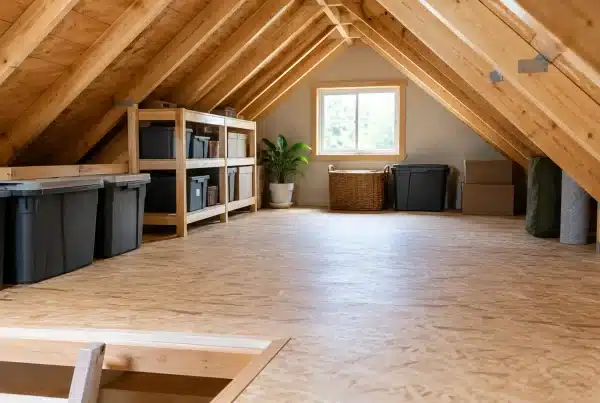
The usual answer is a raised loft boarding system. Rather than fixing boards directly onto the existing joists, the system creates a new level above them. This leaves the insulation at its proper depth while providing a solid deck for storage.
That extra height is what makes the difference. It protects the performance of the insulation and gives you usable storage space at the same time. Done properly, it also produces a more secure and more even platform than piecemeal boarding.
A professional installer will normally assess the loft structure, insulation depth, access, and the type of items you plan to store. Not every loft should be boarded wall to wall. In some homes, a partial boarded area is the best option because it gives enough storage without overloading the space or blocking important access points.
This is where tailored advice matters. A Victorian terrace, a 1980s family home, and a modern new-build may all need different solutions, even though the homeowner is asking the same question.
What about insulation depth and loft height?
This is often where expectations need to be realistic. Raising the boarding above the insulation takes up vertical space. If your loft already has limited headroom, the finished area may be excellent for storage but not especially comfortable to stand in.
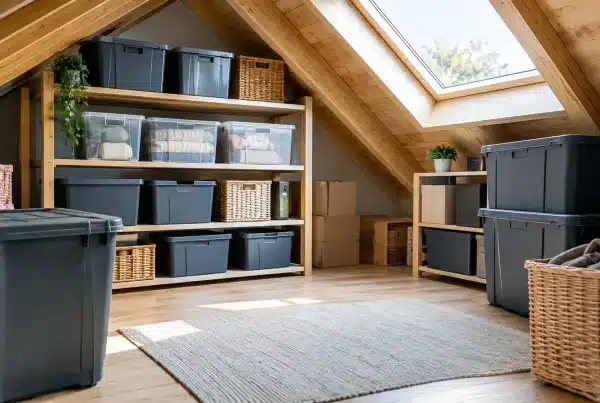
That does not mean the project is not worthwhile. For many households, the goal is clean, accessible, safe storage rather than a fully habitable room. In that case, a raised boarded area, proper loft ladder, and lighting can transform how useful the loft feels without the cost and disruption of a loft conversion.
It is also worth knowing that adding more insulation before boarding can be sensible if the loft is below current recommendations. The boarding should be designed around the insulation target, not the other way round. It rarely makes sense to keep insulation thinner than it should be just to gain a little extra clearance.
Can every loft be boarded?
Not always, and this is where honest advice is important. Most lofts can be improved for storage, but the extent of boarding depends on the construction of the property and the condition of the roof space.
Some lofts have trussed roofs, awkward layouts, low pitch angles, water tanks, pipework, cables, or limited access. Others may show signs of condensation, historic leaks, or poorly installed insulation. Those issues do not always prevent boarding, but they should be dealt with properly before any boards go down.
There is also the question of loading. Loft joists in many homes are designed primarily to support the ceiling below, not to act like a floor in a living room. That is why a loft boarded for light domestic storage is different from a structural floor built for regular occupancy. Knowing that difference protects both the home and the homeowner from unrealistic expectations.
Signs your loft boarding plan needs a rethink
If your current plan involves pushing insulation aside, flattening it down, or cutting boards to fit around random obstacles without an overall design, it is worth pausing. The same applies if you are unsure whether the loft has enough ventilation, whether the joists are suitable, or whether your property warranty could be affected.
A good loft storage setup should feel stable underfoot, preserve the insulation, and leave the space tidier and easier to use. It should not create hidden compromises that reduce energy efficiency or increase the risk of moisture issues.
This is often why homeowners choose a specialist rather than treating loft boarding as a standard joinery job. The loft may look simple, but the details matter.
Why professional loft boarding often pays off
A professionally designed system usually gives you more than just boards. It brings together access, safety, insulation protection, and practical storage in one plan. That may include raised boarding supports, a suitable loft ladder, a larger hatch, and lighting so the area is genuinely easy to use.
For busy households, that joined-up approach is often what turns the loft from an awkward void into valuable storage. It is also what helps avoid the common regret of paying for boarding once, then paying again to correct it.
In areas such as Cardiff, Newport and Bristol, many homes have a mix of older construction and newer insulation expectations, so there is rarely a one-size-fits-all answer. The best result usually comes from surveying the loft properly and matching the system to the property.
If you are asking can you board over loft insulation, the better question is really how to do it without undermining the insulation you already have. In most cases, the answer is raised boarding installed with the loft’s structure, ventilation and intended use in mind.
That way, the loft becomes what most homeowners actually want it to be – safe, tidy, accessible storage that works for the long term, not just until winter arrives and the house starts losing heat.