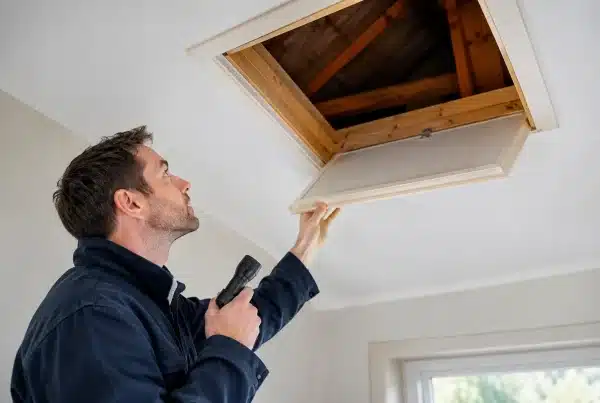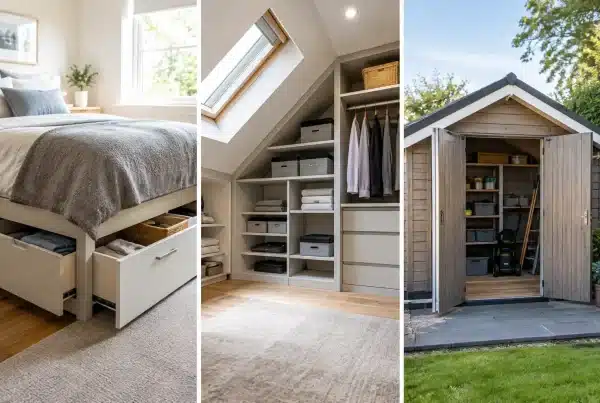
If you have ever lifted your loft hatch, looked at the insulation between the joists and wondered whether boards can simply go straight on top, you are asking exactly the right question. Does loft boarding need to be raised? In many homes, yes – and not because it is an upsell, but because modern insulation standards, safe storage, and the condition of the roof space all need to work together.
This is one of those jobs where the right answer depends on the loft you have, not the loft you wish you had. A raised boarding system is often the best way to create practical storage without compressing insulation or causing problems later.
Why loft boarding is not always as simple as laying boards
Years ago, many lofts were boarded directly onto the ceiling joists. That approach can still be found in older properties, and at first glance it seems sensible enough. The joists are there, the boards sit on top, and you have a storage platform.
The issue is that most ceiling joists were not designed with modern storage expectations in mind, and they were certainly not designed around today’s recommended insulation depths. Current insulation levels are typically much deeper than the joists themselves. If you lay boards straight onto them, you compress the insulation underneath.
Compressed insulation does not perform as it should. That means more heat escaping through the ceiling, reduced energy efficiency, and a loft that works against the rest of the home rather than helping it. For households trying to keep heating bills under control, that matters.
Does loft boarding need to be raised for insulation?
In a large number of properties, the answer is yes. If the insulation depth is greater than the joist height, the boarding needs to sit above it rather than squash it down.
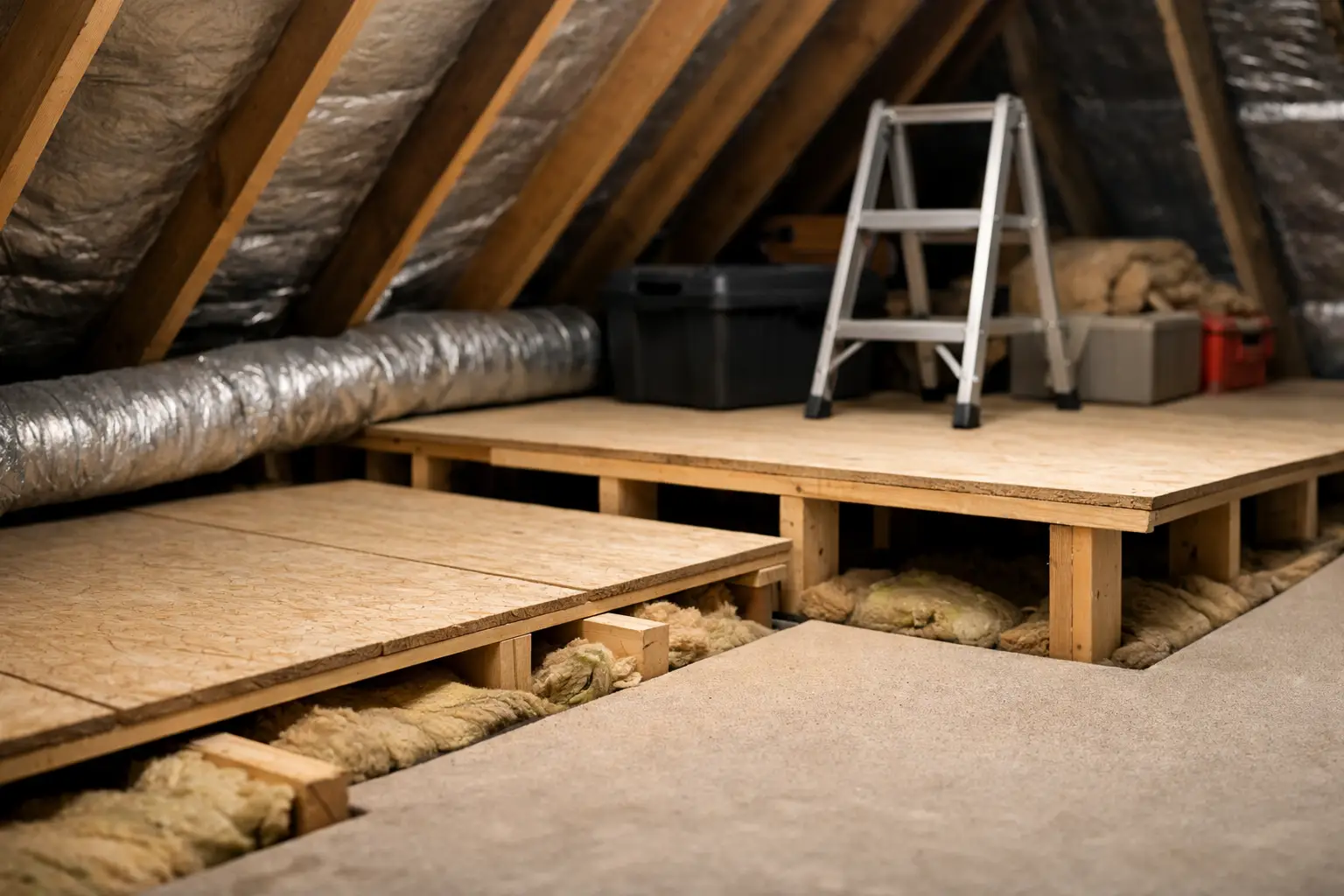
A raised system creates a gap between the insulation and the loft boards. That allows the insulation to keep its full depth and do its job properly. It also gives you a stable deck for storage, rather than a compromise that saves space in one sense while costing you in another.
This is especially relevant in homes where insulation has been topped up to meet modern expectations. Many homeowners in places such as Cardiff, Newport and Bristol are surprised to find that their loft insulation is doing the right thing, but their existing boarding is the part causing the problem.
When raised loft boarding is essential
There are some cases where raised boarding is less of a recommendation and more of a sensible requirement.
When insulation is deeper than the joists
This is the most common reason. If your insulation sits proud of the joists, direct boarding will compress it. Raised loft legs or a raised boarding system solve that by lifting the deck above the insulation layer.
When you want to protect new-build warranty conditions
In newer homes, there can be added pressure to follow approved methods. Some new-build properties have specific requirements around loft alterations, especially where changes could affect ventilation, insulation performance or warranty compliance. In those cases, a properly specified raised boarding system is not just about convenience. It is about avoiding the kind of shortcut that could create questions later.
When the loft needs to remain ventilated
A loft is not meant to be packed tight with boards, boxes and insulation in a way that traps moisture. Good airflow matters. A professionally planned raised system helps create usable storage while respecting how the loft space needs to breathe.
When ceiling joists are not suitable for heavy loading
Not every loft is designed for the same use. Boarding for light household storage is one thing. Treating the loft like another room is another. A survey helps establish what the structure can safely support and whether additional considerations are needed.
When loft boarding may not need to be raised
There are lofts where raising the boarding is not strictly necessary, but they are less common than many people think.
If the insulation is shallow enough to sit below joist level and the loft is only being boarded in a limited area, direct fixing may be physically possible. The question is whether it is still the best option for the long term. If insulation standards are upgraded later, that simple boarded area can quickly become outdated.
There are also older homes where previous boarding was installed before loft insulation was improved. In those cases, what was once acceptable may no longer be the right setup. The fact that boards are already down does not automatically mean the arrangement is sound by today’s standards.
So while the answer is not always yes, it is often yes once the loft is looked at properly.
The real trade-off: storage now or performance later
The temptation with any loft is to get boards down quickly and start reclaiming space. That is understandable. Families need storage, and the loft is often the biggest unused area in the house.
But there is a clear trade-off if the boarding is not raised where it should be. You gain a platform, but you reduce insulation performance. You may also make future upgrades more awkward, and in some homes you increase the risk of condensation or create unnecessary strain on the setup.
A proper raised system avoids that false economy. It gives you storage and protects the thermal performance of the home at the same time.
What a raised loft boarding system actually does
A raised loft boarding system uses supports fixed to the joists to lift the new deck above the insulation. Loft boards are then installed on top of that framework, creating a solid storage surface.
The important point is that the insulation stays largely undisturbed and uncompressed beneath it. Done properly, this allows the loft to remain functional without undermining one of the main reasons for insulating it in the first place.
Better systems are also designed to provide a reliable, long-lasting platform rather than a patchwork of makeshift boarding. For homeowners, that means confidence when storing seasonal items, suitcases, decorations or archived paperwork.
Raised boarding and older properties
Older homes often need a little more thought. Roof spaces can be uneven, joists may vary, access can be awkward, and previous DIY work may have left a mix of old boards, thin insulation and blocked pathways.
In those properties, the question is not only does loft boarding need to be raised, but how the whole loft should be organised safely. Sometimes the best result comes from combining raised boarding with upgraded insulation, improved access and better lighting. That turns the loft from an awkward void into something genuinely useful.
Raised boarding and new-build homes
New-build owners tend to be especially cautious, and rightly so. They want more storage, but they do not want to jeopardise warranty protection or interfere with the way the loft was meant to perform.
That is where approved systems and professional installation matter. A raised boarding solution can provide storage while respecting insulation depth and the practical limits of the roof space. It is a more careful approach than simply screwing boards to joists and hoping for the best.
How to tell what your loft needs
The only reliable answer comes from the loft itself. You need to look at joist depth, insulation thickness, ventilation, access, and what you plan to store.
If you are only storing a few light items and the insulation sits below joist level, the answer may be different from a loft with deep quilt insulation and a family hoping to use the space every week. The age of the property matters too, as does whether the boarding is being installed for a small central walkway or a larger storage area.
That is why a survey is so valuable. It turns a general internet question into a specific answer for your home.
So, does loft boarding need to be raised?
Most of the time, if you want to board a loft properly without compromising insulation, yes. Raised loft boarding is usually the right choice where insulation depth exceeds joist height, where energy efficiency matters, or where you want a storage solution that is safe, tidy and built to last.
It is not about overcomplicating a simple job. It is about avoiding a simple mistake.
If you are planning to use your loft for storage, the best outcome is a setup that works with your home rather than against it. A well-designed raised system gives you that extra space without undoing the benefits already sitting beneath your roof.