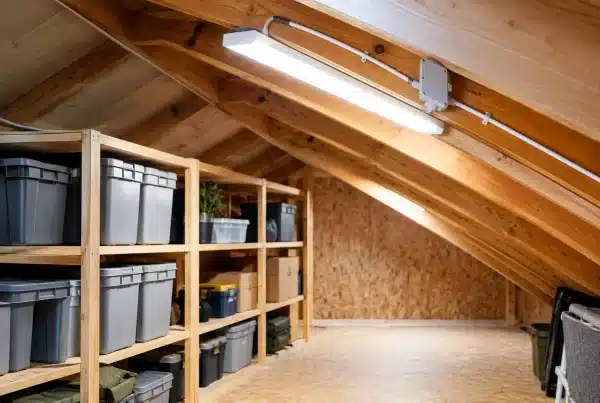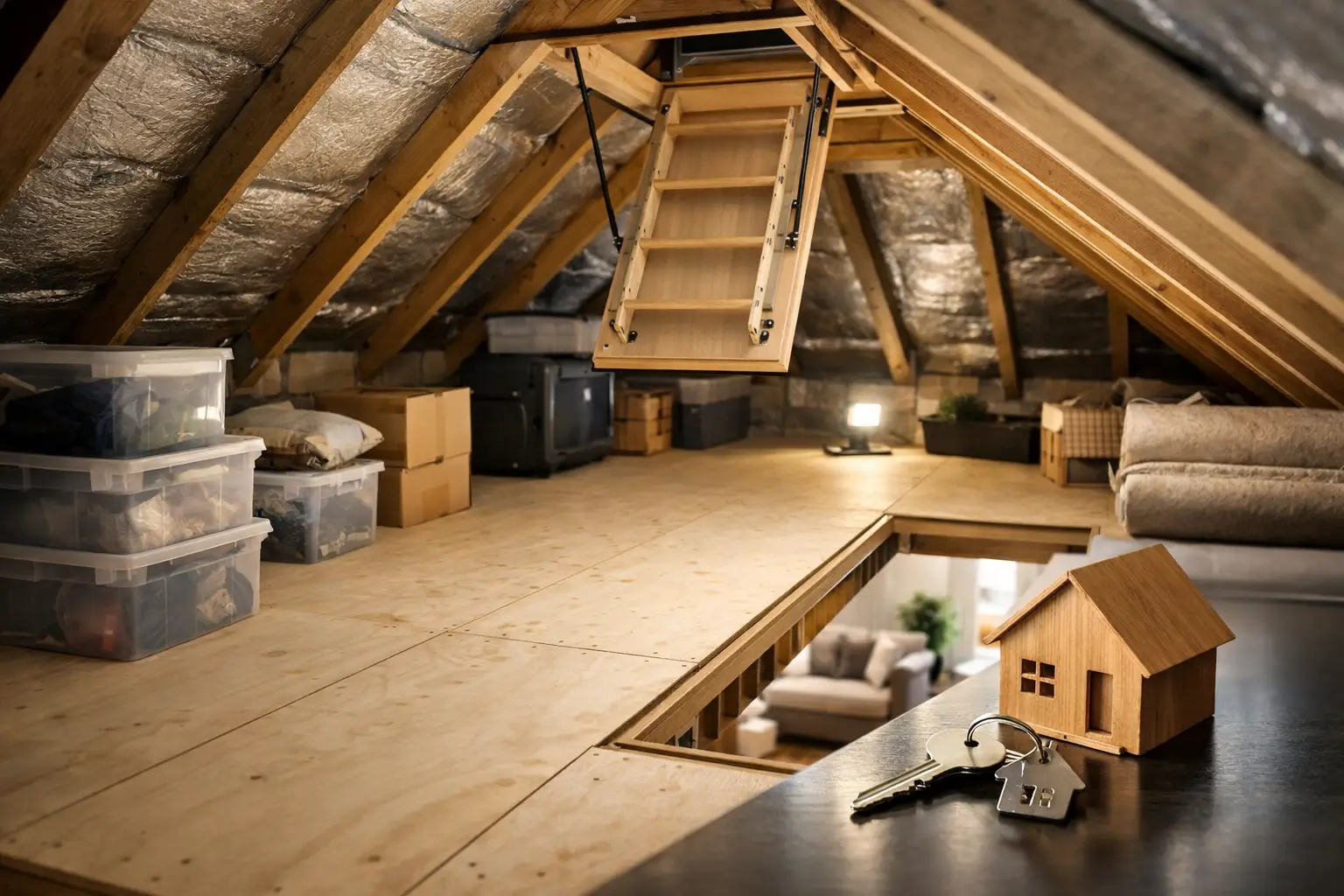
If your loft is currently a cold, awkward void full of insulation rolls and the odd suitcase, the question usually comes up at the point when storage starts running out elsewhere – does loft boarding add value, or is it simply a convenience upgrade? For most homeowners, the honest answer is that it can do both, but the value it adds is usually practical first and financial second.
A well-boarded loft rarely transforms a property price in the way a full kitchen renovation or extension might. What it can do, however, is make a home easier to live in, easier to present to buyers, and more attractive in a market where usable storage matters far more than many people expect.
Does loft boarding add value in real terms?
In real terms, loft boarding adds value when it turns wasted space into safe, accessible storage without creating problems elsewhere. Buyers do notice practical improvements. A loft that is properly boarded, easy to access and safe to use feels like part of the home rather than a neglected cavity above the ceiling.
That matters because storage is one of the first pressure points in family homes. Cupboards fill up, garages become mixed-use spaces, and spare rooms start doing too many jobs at once. If a property offers clean, usable loft storage, it can feel more organised and better maintained overall.
That does not always translate into a neat pound-for-pound increase in valuation. Surveyors and estate agents are unlikely to price loft boarding as if it were extra habitable square footage. Still, it can support the sale price by improving buyer perception, and it may help a property sell faster because the home works better day to day.
Where the value really comes from
The strongest value often comes from function rather than headline resale figures. Loft boarding gives homeowners more storage capacity without the cost and disruption of a full loft conversion. That is especially useful in properties where moving house would be far more expensive than making better use of existing space.
It also helps keep the main living areas clearer. When seasonal items, keepsakes, luggage and household overflow can be stored properly overhead, bedrooms and cupboards feel less cramped. Buyers may not calculate that benefit formally, but they feel it when viewing a house.
There is also a presentation benefit. A clean loft with fitted boarding, a proper hatch and a secure ladder gives the impression that the house has been looked after. That kind of reassurance can influence buying decisions, especially among purchasers who want fewer jobs to deal with after moving in.
Why quality installation makes the difference
Not all loft boarding adds value. Poorly installed boarding can do the opposite.
This is where many homeowners get caught out. Standard chipboard laid directly on top of joists may seem like a quick fix, but in many properties that can compress insulation, reduce ventilation and create moisture risks. In newer homes, it may also raise concerns around warranty compliance if the wrong system has been fitted.
A raised loft boarding system is usually the more sensible approach. It creates a platform above the insulation, allowing the insulation to perform as intended while still providing usable storage. That means you are not trading energy efficiency for convenience.
For buyers, and for homeowners thinking long term, this matters. A loft upgrade should improve the home, not introduce hidden defects. Professionally installed systems tend to add more confidence because they are designed around the property rather than forced into it.
Loft boarding versus a full loft conversion
This is one of the most useful comparisons for homeowners weighing up return on investment.
A loft conversion can add significant value because it creates habitable space, but it also involves major structural work, planning considerations in some cases, longer timelines and much higher costs. Loft boarding is a different category of improvement. It is a storage upgrade, not an extra bedroom.
That distinction matters because expectations need to be realistic. If you are hoping loft boarding alone will add the same value as a conversion, it will not. If you want a faster, more affordable way to gain practical space, it is often the smarter option.
For many households in places such as Cardiff, Newport or Bristol, where space is at a premium and moving costs are high, boarding the loft can be a sensible middle ground. It solves an everyday problem without turning the house into a building site.
When loft boarding adds the most value
The homes that benefit most are usually the ones with limited built-in storage. Three-bedroom family houses, newer homes with compact room sizes, and properties where the garage is already used for something other than parking often see the clearest day-to-day gains.
It can also be particularly worthwhile where the loft is currently inaccessible or unpleasant to use. Adding boarding alongside a loft ladder, a larger hatch and proper lighting changes the whole experience. A storage space only has value if people can use it easily and safely.
Older properties can benefit too, but they often need a more tailored approach. Roof structure, joist depth and insulation levels vary widely, so a one-size-fits-all method is rarely the right answer. In those homes, the added value comes from doing the job properly rather than cheaply.
The features that help most with resale
If resale is part of your thinking, loft boarding works best as part of a complete loft upgrade rather than a standalone sheeted floor.
Safe access is a major factor. Buyers are far more likely to appreciate the storage if there is a reliable loft ladder and a hatch that is simple to use. Good lighting helps as well. Nobody wants to balance on a step ladder with a torch just to reach the Christmas decorations.
Insulation also matters. A loft that offers both storage and sensible thermal performance is a stronger prospect than one that sacrifices efficiency. In practical terms, the most appealing setup is often raised boarding over insulation, with defined storage zones and neat installation throughout.
These details do not just improve convenience. They make the upgrade feel permanent, safe and professionally finished.
Does loft boarding add value for new-build homes?
Yes, but with an important caveat. In new-build homes, the method matters as much as the result.
Many owners want more storage almost immediately because modern layouts can be tight on cupboard space. The loft is the obvious answer, but newer properties also come with warranty considerations. Boarding the loft incorrectly can create problems if insulation is compressed or structural elements are used in ways they were not intended for.
That is why specialist systems are often the better route. They are designed to raise the deck above insulation and provide a clear storage surface without undermining the performance of the loft space. For homeowners, that protects both practicality and peace of mind.
From a resale point of view, that reassurance can be valuable. Buyers are far more comfortable with improvements that look compliant and professionally considered.
The limits of loft boarding as an investment
It is worth being clear about where the ceiling sits, if you will excuse the expression. Loft boarding is unlikely to add dramatic headline value on its own. If your only goal is to increase market price as much as possible, there may be other projects with a stronger direct return.
Its strength is that it tends to be relatively cost-effective, quick to install and genuinely useful. That combination gives it a different kind of return. It can improve how you live in the property now, while making the home more appealing later.
There is also a common-sense point here. Buyers tend to pay more confidently for homes that feel orderly, functional and well maintained. Loft boarding contributes to that impression, especially when the rest of the house benefits from no longer being used as overflow storage.
So, is it worth doing?
For many homeowners, yes. If you need more usable storage, want safer loft access and would like an upgrade that improves everyday living without major building work, loft boarding is often worth the investment.
The key is to treat it as a quality home improvement rather than a shortcut. Proper boarding should work with your insulation, suit your property type and provide safe access. That is where professional installation earns its keep.
A rushed DIY job may create a boarded surface, but it will not always create lasting value. A well-designed system can. And if you are already thinking about how to make your home more practical, more presentable and easier to live in, that is usually where the real return starts.
The best home improvements are not always the loudest ones. Sometimes value comes from making the space you already have work properly.