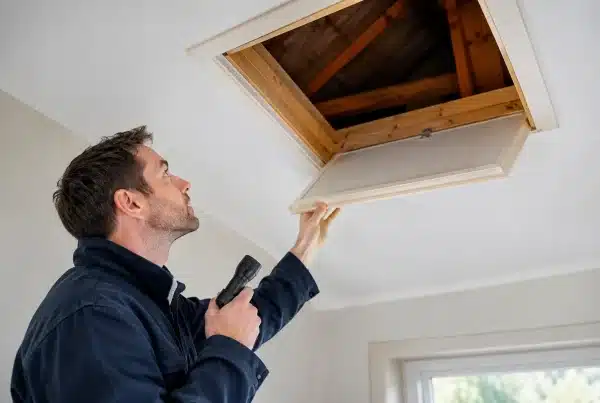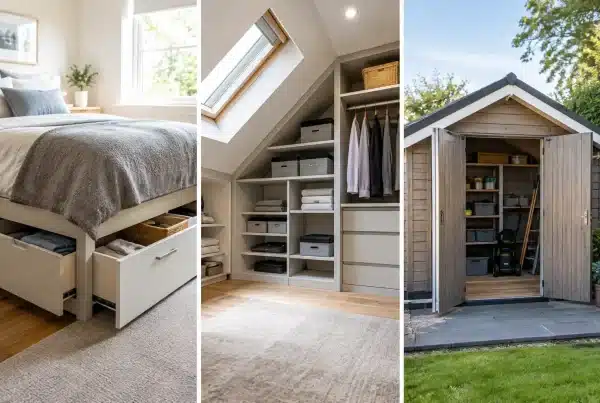
If your loft feels like wasted space but you have been warned not to squash the insulation, a raised loft flooring system is usually the answer. It creates a stable storage deck above the insulation layer, so you can use the loft properly without undermining the energy performance of your home.
That matters more than many homeowners realise. Standard loft boarding laid directly onto joists can compress insulation, reduce its effectiveness and in some cases cause issues with airflow or new-build warranty requirements. A raised system deals with those problems at the source, which is why it has become the preferred option for practical loft storage.
What is a raised loft flooring system?
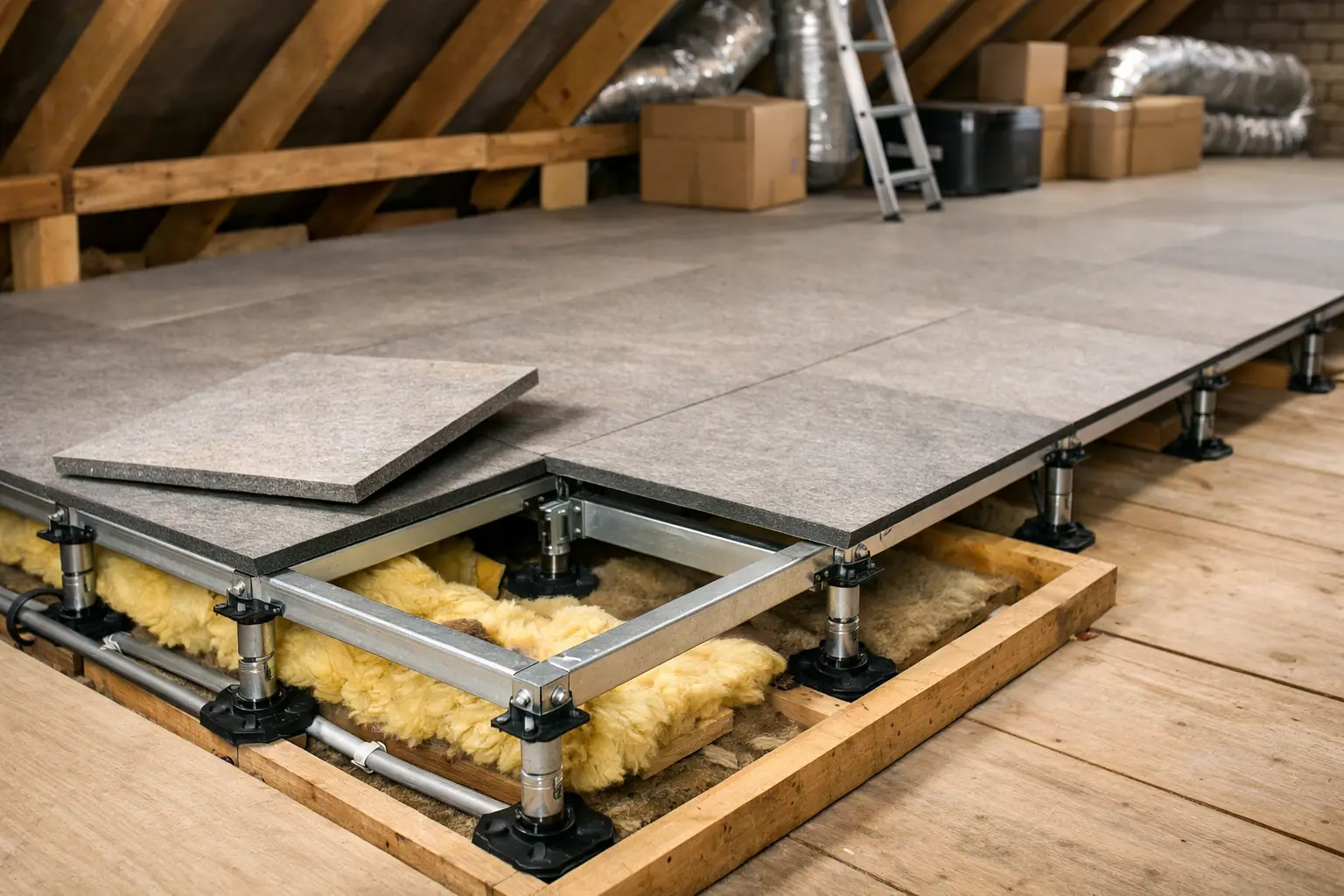
A raised loft flooring system lifts the boarded deck above the ceiling joists using purpose-made supports. Instead of fixing boards straight onto the timber joists, the installer fits a framework that creates extra height, allowing the insulation to remain at the correct depth underneath.
In simple terms, it gives you the floor you want without flattening the insulation you need. That makes it a far better long-term solution than older methods that focused only on creating a storage surface.
The exact build-up can vary depending on the property. A newer home may need a system designed to help maintain warranty compliance, while an older property may call for a more tailored approach because joist spacing, timber condition and loft layout can all differ. The principle stays the same – protect insulation, preserve ventilation and create safe, usable storage.
Why standard loft boarding is often the wrong choice
Many lofts were never designed to act as simple boarded storage spaces. The joists you see in the loft are usually ceiling joists, and their primary job is supporting the ceiling below, not carrying heavy loads in the way a room floor would.
When standard boards are fixed directly to those joists, there is very little room for modern insulation depths. Current insulation standards are much higher than they were years ago, so what once seemed acceptable may now leave you choosing between storage and thermal performance. That is not a good trade-off.
There is also the issue of condensation and airflow. In some lofts, especially in newer properties, blocking or disturbing the intended ventilation path can create moisture problems over time. That is why a professional survey matters. The right system is not only about fitting boards neatly – it is about understanding how the whole loft should function.
The main benefits of a raised loft flooring system
The biggest benefit is straightforward: you gain useful storage space without compressing the insulation. That means boxes, suitcases, seasonal items and household overflow can be stored more safely and more neatly, while the home continues to perform as it should.
There is also a comfort and energy angle. Insulation only works properly when it is installed at the right depth and left uncompromised. If it gets squashed beneath boards, it cannot trap heat as effectively. A raised system helps protect that investment, which is especially important when energy bills remain a concern for many households.
For owners of newer homes, compliance is often just as important as convenience. Some raised systems are designed specifically with new-build requirements in mind, helping reduce the risk of doing something that could affect warranty protection. That peace of mind is one of the main reasons homeowners choose a specialist installer rather than treating loft boarding as a quick DIY job.
Then there is day-to-day practicality. A properly installed deck feels more secure underfoot, looks tidier and makes the loft genuinely easier to use. Paired with good loft access, lighting and a suitable hatch or ladder, it can turn an awkward void into one of the most useful storage areas in the house.
Is every loft suitable for a raised loft flooring system?
Not every loft is identical, so the honest answer is that it depends. Most lofts can benefit from some form of raised boarding, but the right solution will depend on the structure, insulation levels, roof type and how much storage you actually need.
A small loft with limited head height may still be worth boarding, but expectations need to be realistic. The goal may be organised light storage rather than frequent access with bulky items. In older homes, extra care may be needed around uneven joists or existing alterations. In newer homes, the focus is often on using an approved system that respects the way the property was built.
This is where a survey earns its keep. Rather than forcing a standard package onto every property, a specialist can assess what is practical, what is advisable and what should be avoided.
Raised loft flooring system options and materials
Most systems use strong loft legs or similar raised supports fixed to the joists, with moisture-resistant boards fitted above. The board thickness, support spacing and layout all need to be chosen properly so the finished platform is stable and fit for purpose.
Quality matters here. Cheap materials can feel adequate on day one but start to show movement or wear later on. A better system costs more than basic chipboard laid straight onto joists, but it offers a much more sensible result. For many homeowners, that extra spend is justified by the added protection for insulation, the improved finish and the confidence that the job has been done properly.
Load expectations matter too. A raised loft flooring system is generally intended for domestic storage, not for turning the loft into a habitable room or carrying excessive weight. If your aim is to create a proper living area, that moves into loft conversion territory and requires a different structural approach.
Why professional installation makes a difference
Loft work often looks simpler than it is. In reality, there is a lot going on beneath the surface – electrical cables, pipework, ventilation paths, insulation depth, joist centres and safe access all need to be considered.
A professional installer will not just board around obstacles and hope for the best. They will plan the layout, protect the insulation, avoid creating pressure points and make sure the loft remains usable and safe. If the property is a new build, they can also advise on systems that are more appropriate where warranty considerations apply.
For homeowners in areas such as Cardiff, Newport, Swansea and Bristol, choosing a local specialist also makes the process more straightforward. A proper survey, clear recommendation and clean installation tend to matter far more than finding the cheapest quote and correcting problems later.
What else should you improve at the same time?
Loft flooring works best when it is treated as part of a complete loft upgrade rather than a standalone fix. If the hatch is awkward, the ladder feels unsafe or the lighting is poor, the storage area will still be frustrating to use no matter how well the floor is built.
That is why many homeowners choose to combine raised boarding with additional insulation, a better loft ladder, improved hatch access or integrated lighting. Done together, these improvements create a loft that is easier to reach, easier to navigate and much more useful through the year.
This joined-up approach also reduces disruption. Instead of arranging several separate jobs, you deal with the loft properly in one go.
How to know if it is worth the investment
If your cupboards are full, the spare room is becoming a storeroom and your garage is not an option, investing in loft storage usually makes sense. A raised loft flooring system is particularly worthwhile when you want extra capacity without committing to the cost and upheaval of a full loft conversion.
It is not the cheapest way to board a loft, but it is often the smartest. You are paying for a solution that respects the way modern homes should perform, rather than one that creates hidden problems. Over time, that can be the difference between a loft that helps the household run better and one that becomes an expensive compromise.
At Loft Ins Space, this is exactly why raised systems are recommended so often. They give homeowners usable storage, protect insulation performance and provide a neater, safer finish that stands up to everyday use.
If you are weighing up your options, the best starting point is not the board itself but the loft as a whole. Get the structure, insulation and access assessed properly, and the right storage solution usually becomes clear.