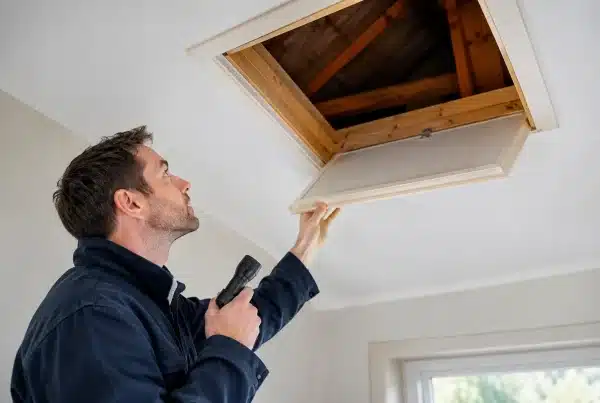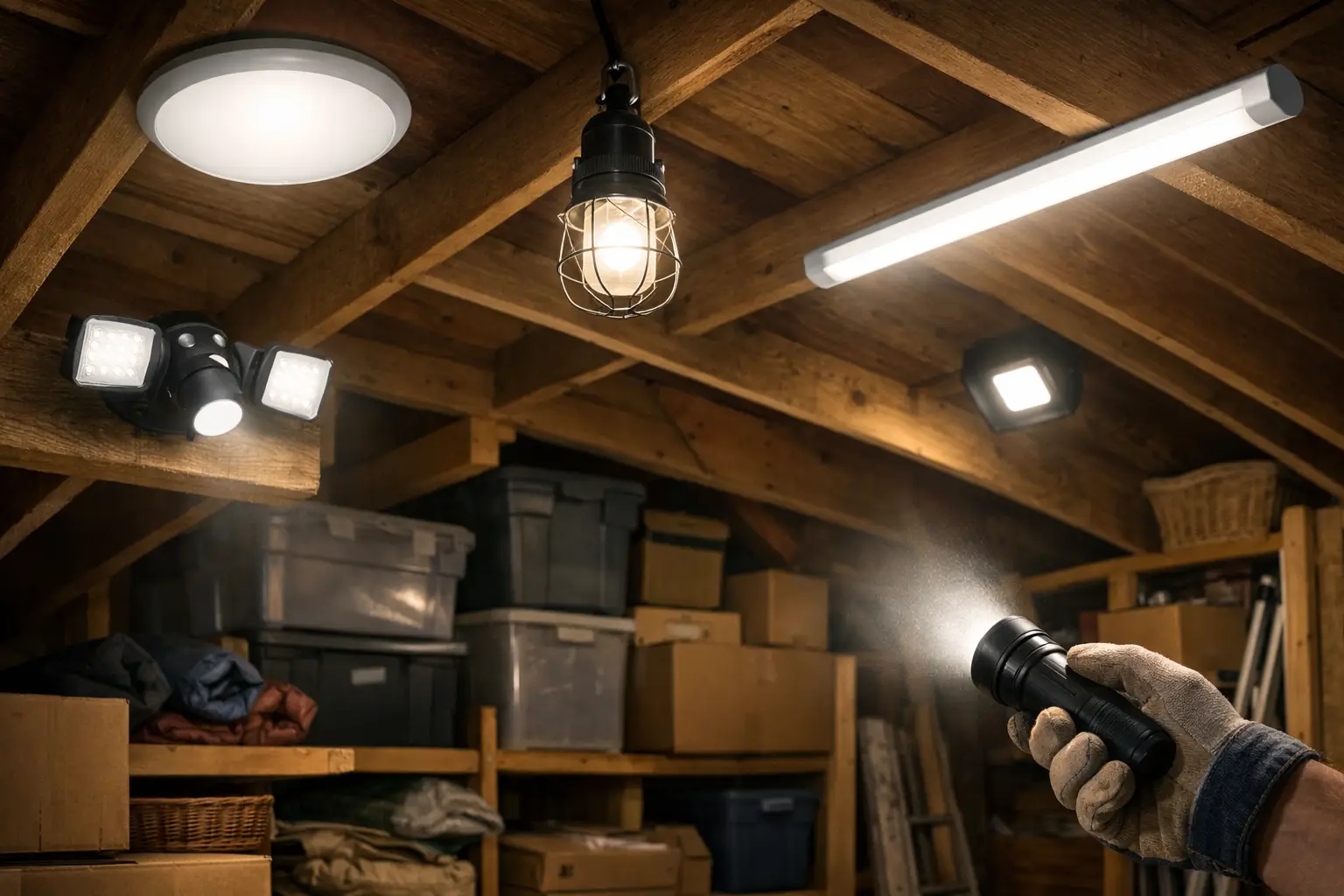
A loft that is boarded well but badly lit never feels fully usable. If you are climbing a ladder with a box in one hand and trying to find a pull cord in the dark, lighting stops being a small detail and becomes a safety issue. The best loft lighting options make storage easier to use, help you avoid trips and missed footing, and turn the loft into a space that feels practical rather than awkward.
For most homeowners, the right choice comes down to three things: how often you use the loft, how much boarded space you have, and whether you want a quick improvement or a fully fitted solution. There is no single answer for every property, especially when loft layouts, insulation depth and access points vary so much from one home to the next.
What makes the best loft lighting options?
Good loft lighting should do more than simply switch on. It needs to give you clear visibility at the hatch, along any walkway, and across the storage area itself. In practical terms, that means enough brightness to see where you are placing your feet, enough spread to avoid heavy shadows, and fittings positioned so they do not get in the way of stored items.
Energy efficiency matters too, because loft lights are often left on by accident. LED fittings are usually the sensible choice here. They run cool, use less electricity and last much longer than older bulb types. In a loft, lower heat output is especially useful because the space can already become very warm in summer and cold in winter.
Just as important is installation quality. A loft is not the place for improvised electrical work. Cables, insulation, boarding systems and access points all need to work together properly, and that is one reason homeowners often prefer a professional installation rather than trying to patch something together later.
Best loft lighting options for different needs
1. LED batten lights for all-round visibility
If you want one of the most reliable loft lighting choices, start here. LED batten lights are bright, efficient and well suited to lofts used for regular storage. They spread light more evenly than a single bulb and can cover a decent area without needing several separate fittings.
They are particularly useful in lofts with raised boarding, where you want a practical working light rather than a dim glow in one corner. For family homes where Christmas decorations, suitcases and archived paperwork are all stored overhead, this type of fitting often gives the best balance between cost and performance.
The trade-off is that placement matters. One batten in the wrong position can still leave dark patches, especially in larger lofts. In wider spaces, two or more fittings may be the better answer.
2. LED strip lighting for boarded pathways and edges
LED strip lighting can work well when you want guidance lighting rather than a single main source. Installed along the edge of a boarded walkway or around key access areas, it can help define where to step and make the loft feel easier to navigate.
This is not always the best standalone option for a large storage loft because strip lights do not usually provide enough general illumination on their own. Where they shine is as a supporting layer of lighting. Paired with battens or another main fitting, they improve visibility in awkward spots and reduce heavy shadowing.
For homeowners who use the loft regularly in the darker winter months, this can make a noticeable difference to confidence and safety.
3. PIR sensor lights for convenience
A PIR sensor light comes on automatically when movement is detected. In a loft, that can be very useful. You do not need to fumble for a switch while halfway up the ladder, and the light turns itself off after a set period, which helps avoid wasted energy.
This is often one of the best loft lighting options for households that use the loft little and often. If you are in and out to put things away, check a water tank area, or grab something quickly, automatic lighting removes one more hassle.
The limitation is that sensor coverage needs to be planned properly. In some loft layouts, a badly positioned sensor may not detect movement in every area, or it may switch off while you are standing still sorting through boxes. A good setup avoids that frustration.
4. Bulkhead lights for simple, durable performance
Bulkhead lights are sturdy enclosed fittings that suit lofts where durability matters more than appearance. They are a sensible option in utility-focused spaces and are often chosen where a robust fitting is preferred over something more decorative or delicate.
Their enclosed design can also be reassuring in loft environments where dust is an issue. They tend to be straightforward, dependable and low maintenance. For homeowners who just want the loft to be bright enough and reliable every time they open the hatch, bulkheads can do the job well.
They are less refined in light spread than some linear LED fittings, so they may not be the strongest option for larger boarded areas unless used in multiples.
5. Pendant lights with LED bulbs for basic loft access
Some older lofts still rely on a simple pendant with a bulb hanging near the hatch. If the loft is only used occasionally and the area is small, that may be enough. Replacing an old bulb with a bright LED version can provide a quick improvement without major changes.
That said, this is rarely the best long-term answer for a loft that is being upgraded for regular storage. A single pendant often creates glare near the centre and poor visibility elsewhere. It can also get in the way when moving boxes around. For a loft you plan to use properly, most homeowners quickly outgrow this setup.
6. Rechargeable battery lights for short-term improvement
Battery-powered loft lights appeal because they are quick to fit and avoid wiring work. They can be useful in very limited situations, such as a temporary stopgap or a loft that is accessed only now and then.
The weakness is consistency. Brightness can be lower, batteries need replacing or charging, and long-term convenience usually suffers. If your loft is being boarded, fitted with a ladder, or generally improved to create reliable storage, battery lighting can feel like the weakest part of the whole setup.
It is better seen as a temporary measure than a finished solution.
7. Zoned lighting for larger loft spaces
In a bigger loft, especially one with extensive boarding and a clear storage layout, zoned lighting can be the most practical choice. That means separate fittings or switching for the hatch area, the central walkway and the main storage sections.
This gives you better control and better coverage. You can light only the part of the loft you need, or fully illuminate the whole space when reorganising stored items. For homeowners investing in a more complete loft upgrade, this approach often delivers the best overall usability.
It does involve more planning at the installation stage, but that usually pays off in day-to-day use.
Choosing the right loft lighting for your home
The best loft lighting options depend on how your loft is built and how you plan to use it. If you only need occasional access, a straightforward LED fitting with a sensor may be enough. If your loft is becoming a proper storage area with raised boarding and regular foot traffic, brighter and more evenly distributed lighting is worth the extra thought.
Property age can matter too. New-build homes often require a careful approach so upgrades do not interfere with insulation performance or warranty-related considerations. Older homes may have more awkward roof shapes, limited existing electrics or less predictable layouts. In both cases, lighting should be planned as part of the wider loft setup rather than treated as an afterthought.
Another point many people miss is switch location. A light that works perfectly once you are inside the loft is less helpful if the switch is awkward to reach from the ladder. Convenience and safety should be considered together.
Why professional installation usually makes sense
Loft lighting looks simple until it has to work alongside insulation, safe access and usable boarding. Fittings need to be secure, wiring needs to be appropriate for the environment, and the whole arrangement needs to support how the space will actually be used.
A professionally installed system also tends to look neater and perform better. Rather than one bright patch and several dark corners, you get lighting designed around the storage area, not just around the easiest place to fit a cable. For homeowners across Cardiff, Newport, Swansea and nearby areas improving their loft for practical family storage, that difference shows up every time they use the space.
If you are already planning loft boarding or a loft ladder, lighting is worth addressing at the same time. It is often the detail that changes the loft from technically accessible to genuinely useful.
A good loft should feel safe, straightforward and ready to use when you need it. When the lighting is right, everything else about the space works better.