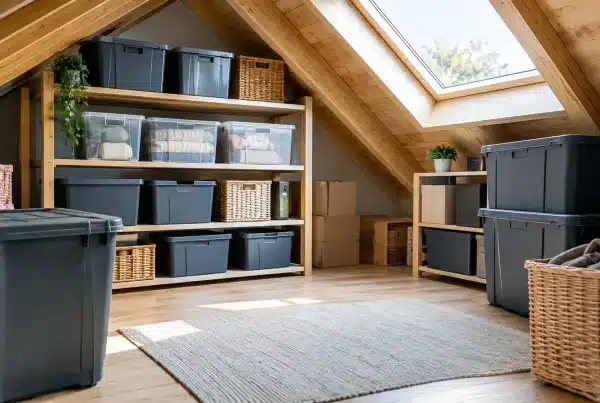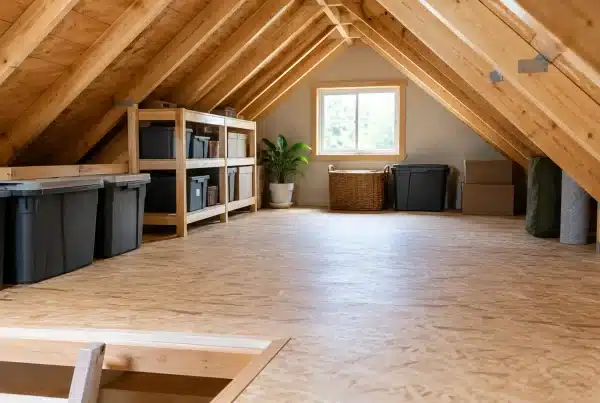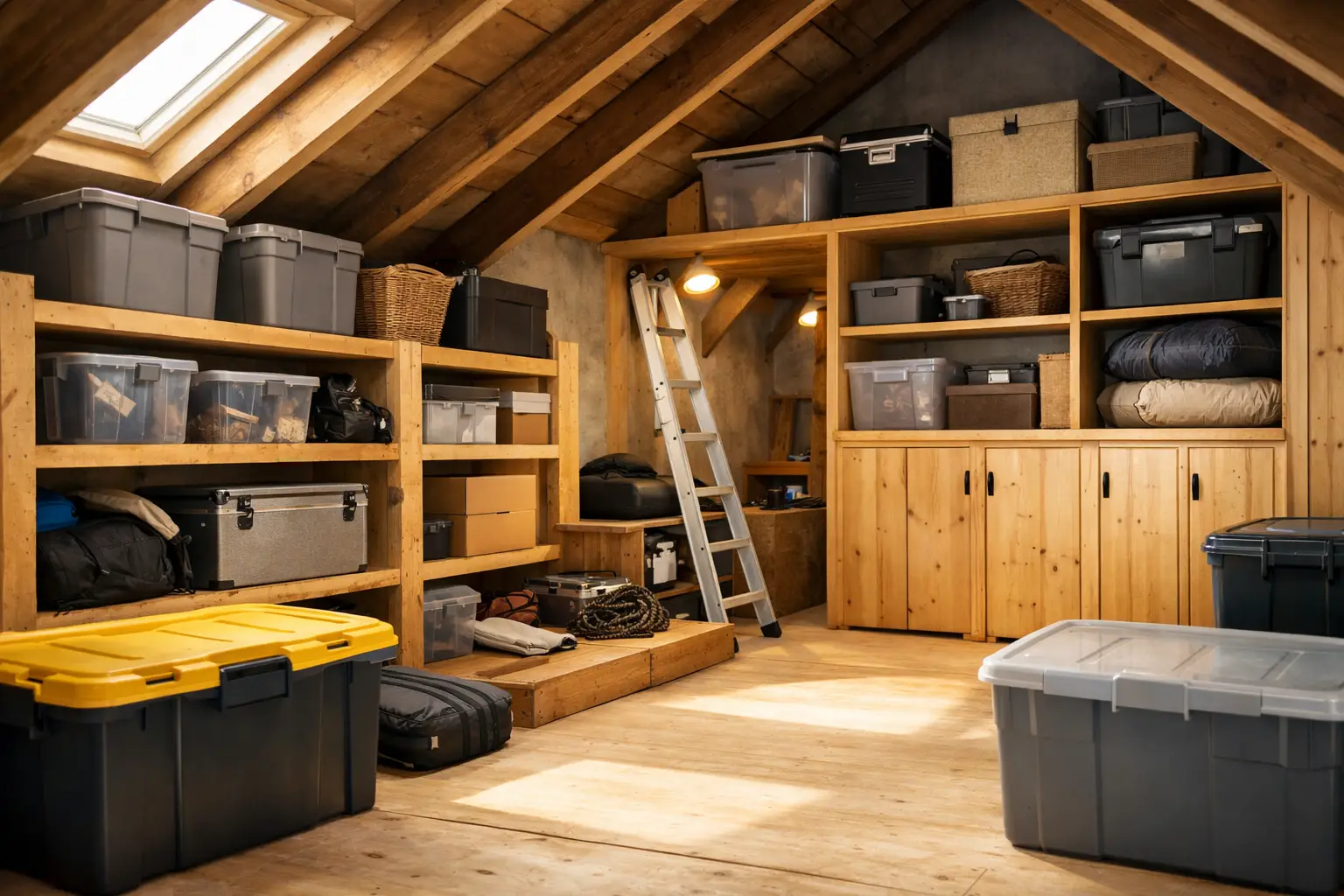
Most lofts have plenty of potential, but they are rarely ready for storage as they are. A few loose boards balanced across the joists might look like a quick fix, yet that approach can crush insulation, limit ventilation and make the space awkward or unsafe to use. If you are looking at how to create loft storage properly, the best results come from treating the loft as part of the home, not as an afterthought.
Done well, loft storage gives you back valuable space without the cost and disruption of a full conversion. Seasonal items, suitcases, keepsakes, decorations and household overflow can all be stored neatly overhead, provided the structure, insulation and access are handled correctly. The detail matters here, because a loft that is easy to reach and safe to load is far more useful than one that technically has a few boards fitted.
How to create loft storage safely
The first question is not where the boxes will go. It is whether the loft can support practical storage in the first place. Most lofts are designed to carry the ceiling below, not to act as a fully habitable room, so there is a clear difference between creating storage space and creating living space. For normal household storage, many properties are suitable, but the boarding system needs to work with the existing structure rather than against it.
This is especially important in newer homes, where insulation depth has increased significantly. If boards are laid directly onto the joists, the insulation beneath is compressed. That reduces its effectiveness and can affect the energy performance of the property. In some cases, particularly with new-build homes, poor loft boarding methods may also raise concerns around warranty compliance. That is why raised loft boarding systems are often the right answer. They allow the loft to be boarded above the insulation, helping preserve thermal performance while creating a stable storage platform.
Older properties need a slightly different approach. The loft may have uneven joists, historic alterations or limited head height. None of those automatically rule out storage, but they do mean the solution should be tailored to the building. A one-size-fits-all method rarely delivers the best outcome.
Start with a survey, not a stack of boards
A proper loft storage project begins with an assessment of the space. Head height, joist layout, insulation levels, existing wiring, water tanks, pipework and the position of the hatch all affect what can be done. This stage often tells homeowners something useful – the loft may have more usable area than expected, but only part of it should be boarded to allow safe movement and access around services.
The loft hatch is another point that gets overlooked. If the opening is too small, poorly placed or badly insulated, it will make the whole space inconvenient to use. The same goes for the ladder. Even a well-boarded loft feels impractical if access is awkward or you have to balance on a step stool every time you need something.
That is why good loft storage is usually a combination of elements rather than just boarding alone. A larger hatch, a secure loft ladder, proper lighting and clear boarding can turn the space from a dusty void into somewhere genuinely useful.
The key parts of a loft storage setup
There are four main parts to think about when deciding how to create loft storage in a way that lasts.
The first is the boarding itself. Raised systems are often preferred because they create a solid deck above the insulation instead of flattening it. They also provide a cleaner, more level finish than ad hoc boards. If the loft will be used regularly, that extra stability makes a real difference.
The second is insulation. This should not be treated as something to work around carelessly. A loft often plays a major part in heat retention, so preserving insulation depth is essential. If the existing insulation is poor or patchy, it can make sense to upgrade it before the boards go down rather than revisiting the job later.
The third is access. A proper loft ladder saves time and reduces risk. Folding and sliding ladders can both work well, but the right choice depends on ceiling height, landing space and how often the loft will be used. If access feels difficult, people are less likely to use the storage space properly.
The fourth is lighting. Many lofts still rely on a torch or the light from the hatch, which is inconvenient at best. A simple loft light installation can make the space much easier and safer to use, particularly in winter when mornings and evenings are dark.
What you should avoid
The most common mistake is boarding directly over insulation without raising the deck height. It may seem cheaper at first, but it can reduce insulation performance and create condensation issues if airflow is affected. Another frequent problem is overloading the loft with heavy items. Loft storage is ideal for many household belongings, but it is not designed for everything. Large gym equipment, extensive book collections or very heavy furniture may not be suitable.
There is also the temptation to treat the loft as a DIY weekend job. In some homes, that can work for a very small area, but many lofts have hidden complications such as cables buried in insulation, pipes crossing the joists or awkward roof trusses. A rushed installation can damage the fabric of the home or leave you with storage that is difficult to use safely.
How to create loft storage in new-build homes
New-build lofts often need extra care because the insulation standards are higher and the roof structures can be more complex. Homeowners are sometimes surprised to find that the loft cannot simply be boarded in the old-fashioned way. The right approach is usually to raise the boarding above the insulation and use a system suited to the property.
This matters not only for usability but also for peace of mind. Many households want to add storage without creating issues later, especially where warranty considerations apply. A specialist installer can advise on the best method for the home rather than relying on generic boarding techniques.
Why professional installation often makes sense
A professionally installed loft storage system is not only about saving time. It is about getting the details right from the start. That includes measuring the space accurately, choosing compatible materials, protecting insulation performance, fitting safe access and making sure the finished area feels solid underfoot.
For many homeowners, the real value is confidence. You know where it is safe to store items, you know the boards are supported correctly and you know the loft is easier to access when you need it. In practical terms, that means less clutter in bedrooms, airing cupboards and garages, and more usable space elsewhere in the house.
In areas such as Cardiff, Bristol and across South Wales, this kind of upgrade is especially appealing to families who need more room but do not want the expense of moving or carrying out a full loft conversion. A storage-focused loft upgrade is faster, less disruptive and often far more cost-effective.
When loft storage is the right choice
Loft storage works best when the goal is straightforward household space rather than an extra room. If you need clean, accessible storage for lighter and medium-weight belongings, it can transform how the house functions day to day. If you want a home office, bedroom or bathroom, that is a different project entirely and will require structural work and building regulation considerations on another level.
That distinction is useful because it keeps expectations realistic. A well-planned storage loft does not need to become a conversion to be worthwhile. For many households, simply being able to store things properly, reach them easily and keep the rest of the house clear is a major improvement.
If you are considering how to create loft storage, think beyond the boards themselves. The best result comes from a loft that is safe, insulated properly, simple to access and built around the way your home is actually used. When those elements come together, the loft stops being wasted space and starts earning its keep.