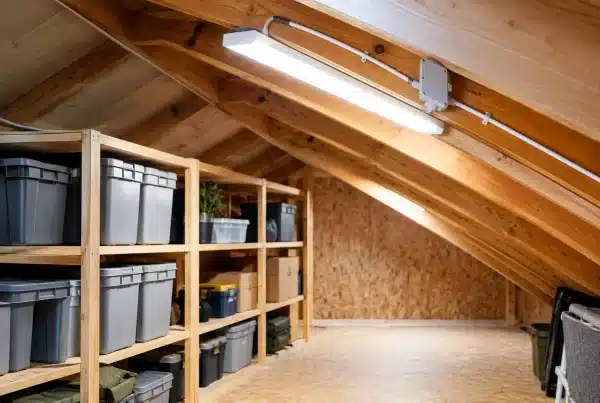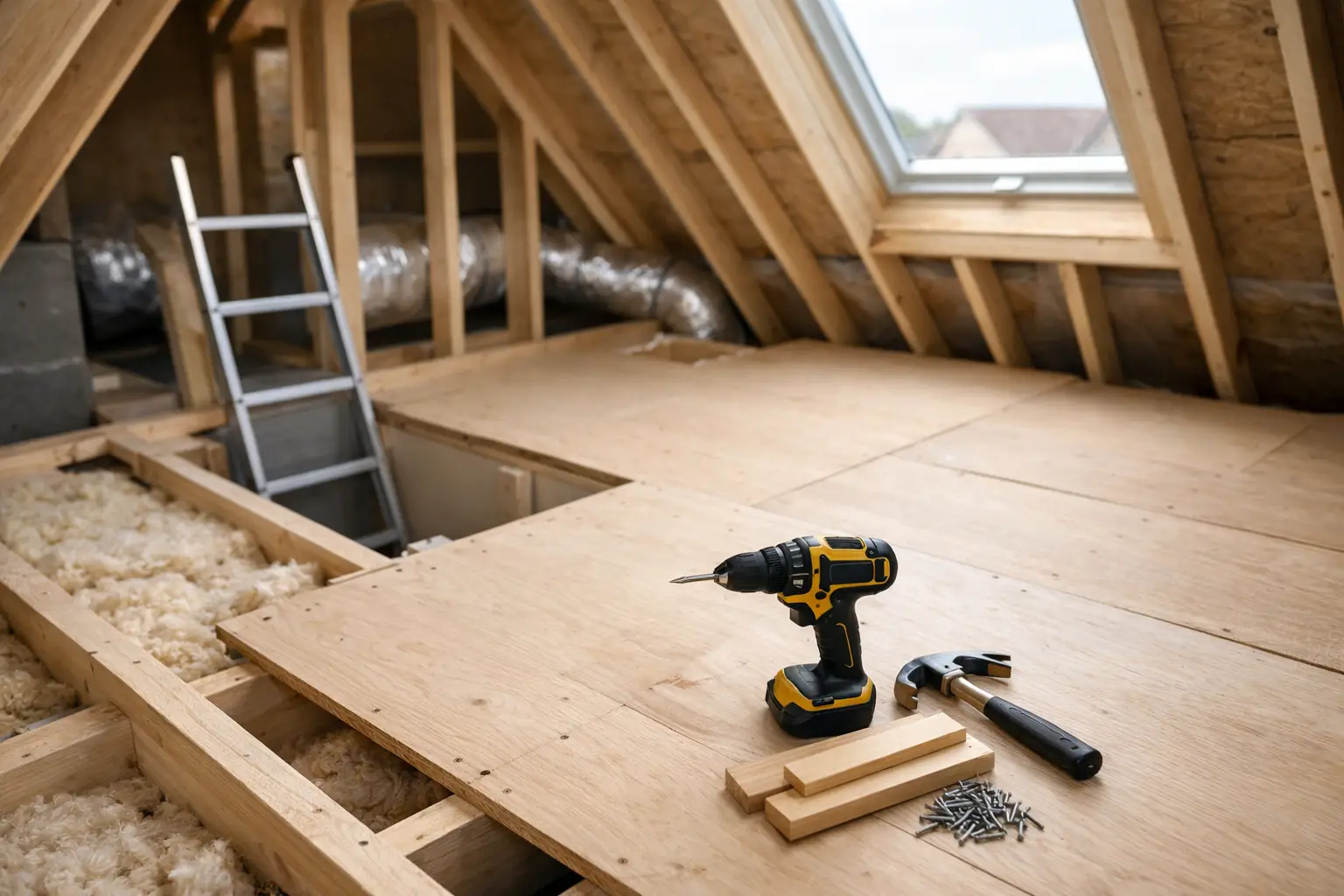
If you have opened the loft hatch in a newer home and found trussed rafters, deep insulation and warning labels, it is perfectly reasonable to ask: do new-build lofts allow boarding? The short answer is yes, often they can – but not in the same way as an older loft, and not without thinking carefully about structure, ventilation and warranty conditions.
That distinction matters. Many new-build lofts are not designed as habitable rooms, and they are rarely built with simple chipboard sheets laid straight across the joists in mind. They are designed primarily to support the ceiling below, hold insulation at the correct depth and allow the roof to breathe properly. So while extra storage is usually possible, the method matters as much as the result.
Do new-build lofts allow boarding without issues?
Sometimes, but only when the boarding system suits the loft.
The main reason homeowners run into problems is that a new-build loft often looks deceptively straightforward. There is space above your head, timber beneath your feet and an obvious temptation to create storage quickly. In practice, modern lofts can be more sensitive than older ones because insulation standards are higher, roof structures are lighter and developer warranty terms may place limits on unauthorised alterations.
Boarding directly onto joists can compress insulation, reduce thermal performance and increase the chance of condensation issues. It can also make it harder to inspect pipework, wiring or the roof structure later on. In some cases, overloading the loft with heavy stored items is a bigger concern than the boarding itself.
That is why the better question is not just whether boarding is allowed, but what type of boarding is appropriate.
Why new-build lofts are different
Most modern homes are built to meet tighter energy-efficiency requirements than older properties. That usually means thicker loft insulation, and that insulation needs to remain at its intended depth to work properly. If boards are laid straight on top of the joists, the insulation gets squashed down. Once that happens, you lose performance and risk creating a colder loft environment in the wrong places.
New-build roofs also commonly use prefabricated trusses. These are efficient and strong when used as intended, but they can create a web of diagonal timbers that limits open floor space and makes access awkward. A loft might be suitable for light, practical storage, yet unsuitable for turning into a heavily loaded storage deck.
There is also the warranty question. Depending on the age of the property and the provider, there may be cover in place for structural defects. Homeowners are often understandably cautious about doing anything that could affect that cover. That caution is sensible. Not every form of loft boarding will cause a warranty issue, but poor workmanship or structural alteration certainly can raise questions.
The role of your warranty provider
New-build homes are often sold with a structural warranty from providers such as NHBC or similar schemes. These warranties do not usually mean you can never board your loft. What they do mean is that any work should avoid damaging the structure or creating defects through improper installation.
For example, raising the loft floor above the insulation using a suitable system is very different from cutting timbers, altering trusses or loading the loft beyond what it was designed to take. One is a practical storage upgrade. The other can create real risk.
If your home is still within its warranty period, it is wise to check the terms and, where needed, choose an installer familiar with new-build requirements. That gives you a clearer paper trail and far more confidence that the work has been done properly.
The safest way to board a new-build loft
In most cases, the right solution is a raised boarding system.
This type of system lifts the loft deck above the insulation so the insulation can remain at the correct depth while still giving you usable storage space. It also creates a more controlled, professional finish than trying to improvise with timber battens and off-the-shelf boards.
That matters for three reasons. First, it protects energy efficiency. Second, it helps preserve ventilation paths within the loft. Third, it provides a more stable and predictable platform for the sort of everyday storage most homeowners actually need – boxes of decorations, suitcases, baby items, paperwork and similar lighter household belongings.
For newer homes, this is usually the sensible middle ground. You gain storage without treating the loft as something it is not.
Not every loft should be fully boarded
This is where a bit of honesty helps. Some lofts are ideal for partial boarding rather than wall-to-wall coverage.
A water tank, pipework, solar equipment, awkward truss layout or limited head height may mean that only a central section is genuinely useful. In those cases, trying to board every inch is not necessarily better. It can add cost without improving day-to-day practicality.
A well-planned storage area around the hatch, with safe access and enough room for the items you really want to store, is often the smarter option.
What can go wrong with DIY loft boarding?
The biggest issue is usually not the boards themselves. It is everything underneath them.
DIY loft boarding in a new-build home often overlooks insulation depth, load distribution, ventilation and access safety. Homeowners may buy standard boards from a builders’ merchant, lay them onto visible joists and assume the job is done. The loft may then feel usable, but hidden problems can develop slowly.
Compressed insulation can increase heat loss. Poorly planned boarding can leave cables buried or make maintenance harder. Storing too much weight in one area can place unnecessary stress on ceiling joists. Even something as simple as balancing awkwardly between trusses while carrying boxes can become a safety issue.
That does not mean every DIY attempt is disastrous. It does mean that new-build lofts are less forgiving of guesswork.
How to tell if your loft is suitable for boarding
A proper survey is the most reliable starting point, but there are a few signs that help frame the conversation.
If your loft has deep mineral wool insulation rising above the joists, a standard direct-to-joist board layout is unlikely to be the right approach. If the roof is formed with trussed rafters rather than a more open traditional structure, storage space may need to be planned around the available access routes. If the loft already contains services, ducting or equipment, these need to remain protected and accessible.
The age of the home matters too. A very recent new-build may still be within a period where warranty sensitivity is front of mind. That does not rule out boarding, but it strengthens the case for a system-based installation rather than an improvised one.
Questions worth asking before any work starts
Ask whether the proposed system raises the boards above the insulation, whether it avoids structural alteration, and what sort of loading it is intended for. It is also worth asking how access, lighting and safe movement through the loft will be handled. Loft storage works best when the whole setup is considered together, not as separate add-ons.
That joined-up approach is especially useful in family homes where the loft is going to be used regularly. Safe ladders, strong hatches and sensible lighting can make just as much difference as the boards themselves.
Do new-build lofts allow boarding for heavy storage?
Usually, the answer is no – at least not without careful assessment.
This is one of the most common misunderstandings. Boarding a loft for light domestic storage is one thing. Using it to hold stacks of books, gym equipment, large furniture or anything especially dense is another. New-build lofts are not typically intended to become a general-purpose storage floor for heavy loads.
That does not mean they are fragile. It means they have design limits, and those limits should be respected. A professional installer can advise on what is reasonable for the space, but as a rule, lighter and evenly distributed storage is the safer expectation.
Why professional installation makes a difference
A specialist installer does more than fit boards. They assess the loft as a whole – structure, insulation, access, ventilation and intended use.
That is particularly valuable in new-build homes, where protecting performance and avoiding unintended issues matters just as much as gaining space. A good installation should leave you with a loft that feels more useful, not one that creates doubts every time you put a box away.
For homeowners in areas such as Cardiff, Newport, Swansea and Bristol, where many estates include similar modern house types, experienced loft specialists will usually have seen the same roof layouts and constraints many times before. That familiarity can save time and reduce mistakes.
Loft Ins Space, for example, works with raised systems designed to create storage while helping protect insulation depth and new-build compliance considerations. That kind of specialist approach is often the difference between a quick fix and a long-term solution.
If you are weighing up whether to board your loft, the practical answer is this: most new-build lofts can provide useful storage, but only when the boarding is designed around the property rather than forced into it. Done properly, the loft becomes easier to use, the home stays efficient, and you get the extra space you wanted without second-guessing the decision.