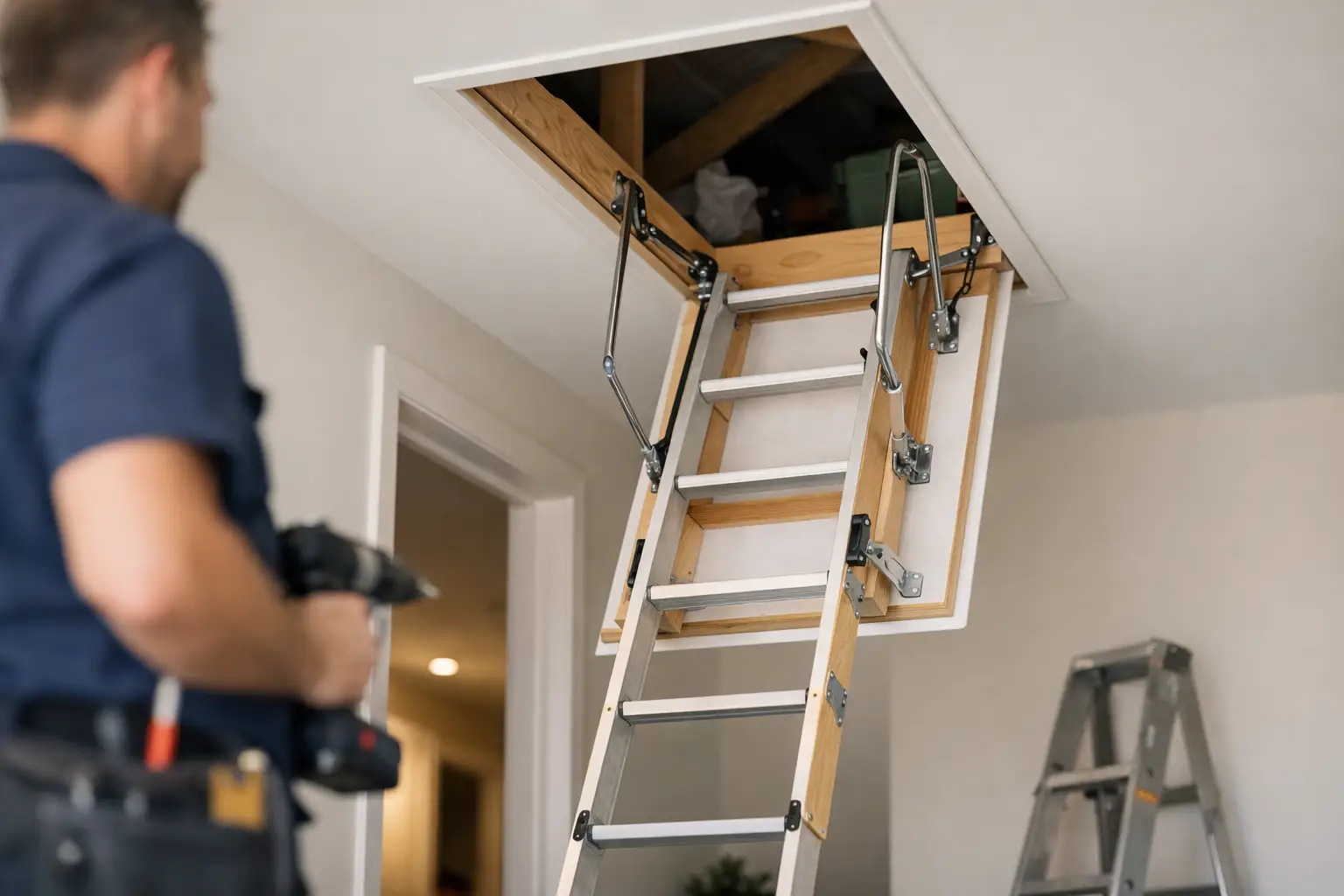
That awkward moment when you need the Christmas decorations, a suitcase or the next size up in school uniforms is usually when poor loft access becomes a real problem. Loft ladders installation is not just about adding a set of steps to the ceiling. It is about making your loft safe to reach, practical to use and properly suited to the way your home is built.
For many homeowners, the loft has plenty of potential but remains underused because access is inconvenient or risky. Balancing on a chair with a loose ladder is not a sensible long-term solution, particularly in busy family homes. A professionally fitted loft ladder changes that immediately. It turns the loft into a storage area you can actually use, rather than one you avoid.
Why loft ladders installation matters
The biggest benefit is straightforward access, but that is only part of the picture. A well-chosen loft ladder helps you use your home more efficiently. If your loft is boarded or planned for storage, safe access becomes essential rather than optional.
There is also a safety angle that should not be glossed over. Improvised access is one of the main reasons people delay using their loft or put themselves at risk when they do. A fixed ladder system gives you a stable way to get up and down, with the right angle, proper fixing points and a hatch arrangement that works with the opening.
It can also improve day-to-day convenience more than people expect. Once access is easy, seasonal storage stops being a chore. That matters in homes where cupboards are limited and every bit of usable space counts.
Choosing the right loft ladder for your home
Not every property needs the same type of ladder. The right choice depends on the available ceiling height, the size of the loft hatch, how often you will use it and how much clearance there is on the landing or in the room below.
Timber ladders remain a popular option for homeowners who want a solid, traditional feel underfoot. They can be very sturdy and are often well suited to regular use. Aluminium ladders are lighter and practical, especially where ease of operation matters. Concertina and telescopic styles can work in tighter spaces, but there is usually a trade-off. Compact designs save room, yet they may feel steeper or less comfortable than a larger folding ladder.
This is where professional advice makes a real difference. The best ladder on paper is not always the best one for your property. In a newer home, access needs to work within the roof structure without affecting insulation performance or creating unnecessary pressure on the hatch area. In older houses, uneven joists, limited opening sizes and previous alterations can all affect what is possible.
Loft ladders installation and the loft hatch
A ladder is only one part of the system. The hatch matters just as much.
In some homes, the existing hatch is too small for comfortable access or not strong enough to work well with a modern loft ladder. In others, the position of the hatch is the real issue. If it opens into a poor location, even a quality ladder can feel awkward to use. That is why loft ladders installation often goes hand in hand with hatch enlargement or a complete loft hatch replacement.
A good hatch should open cleanly, close neatly and help maintain a tidy finish at ceiling level. It should also support good insulation standards. Homeowners are often surprised by how much heat can be lost through an old or poorly sealed hatch. If you are improving loft access, it makes sense to look at the full setup rather than treating the ladder as a stand-alone feature.
What professional installation should include
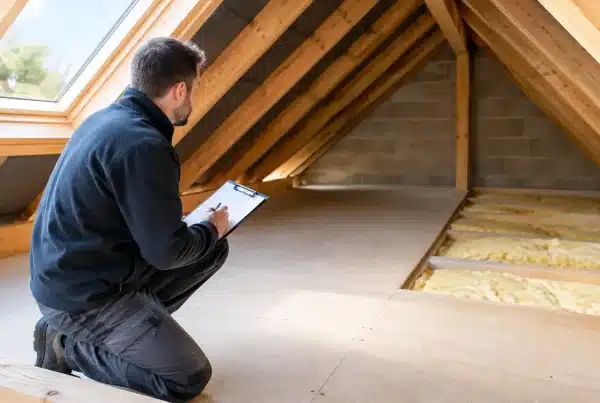
A proper installation starts with a survey, not a guess. Before any work begins, the installer should assess the loft opening, check the loft structure, measure floor-to-ceiling height and understand how you plan to use the space.
That conversation is important because storage use varies. A loft used once a year for suitcases has different demands from one used weekly for household items, hobby equipment or children’s clothes. The more often you use it, the more important comfort and ease of operation become.
A professional fitting should also account for the condition of the loft itself. If there is no safe area to step onto once you enter the loft, a new ladder solves only half the problem. In many cases, the best result comes from pairing access improvements with raised loft boarding, additional insulation or loft lighting. That creates a storage space that is not only reachable, but genuinely useful.
The installation itself should be neat, secure and minimally disruptive. Most homeowners want the job completed efficiently, with a clean finish and clear instruction on how to operate the ladder afterwards. That is a reasonable expectation.
Common issues that affect installation
Some properties are simple. Others need a more tailored approach.
Restricted hatch openings are common, particularly in older homes. Limited landing space can also narrow the choice of ladder style. In some new-build homes, protecting the performance of the insulation and avoiding unsuitable alterations is a key concern. That is one reason specialist installers are often the safer choice than a general handyman approach.
Roof trusses, wiring, pipework and loft insulation depth can all influence the final specification. None of these automatically prevent installation, but they do affect what a good solution looks like. A rushed or off-the-shelf approach can leave homeowners with awkward access, poor operation or unnecessary heat loss.
This is also why price should be looked at carefully. A cheaper ladder fitted without proper consideration can end up costing more if it needs adjustment later or does not work well with the loft hatch and surrounding structure.
Is DIY loft ladders installation worth it?
Some homeowners do consider fitting a loft ladder themselves, and for very confident DIYers there are situations where that can work. But the difficulty is often underestimated.
The job involves more than fixing a unit in place. It may require structural trimming around the hatch, accurate levelling, secure fixings and a good understanding of ceiling and loft construction. If the hatch needs enlarging or replacing, the complexity rises again. A ladder that is slightly out of alignment or badly supported may still open, but that does not mean it is safe or durable.
For households that want reliable, long-term use, professional installation usually offers better value. You are not only paying for fitting. You are paying for the right recommendation, correct specification and confidence that the finished result suits the property.
What good loft access looks like in practice
The best loft access feels easy from day one. The hatch opens without effort, the ladder lowers smoothly and there is enough room to climb with confidence. Once in the loft, there should be a safe area to step onto and enough visibility to use the space properly.
That is why access, boarding, insulation and lighting often work best as a joined-up improvement. A ladder on its own may solve the entry problem, but it will not create a practical storage area if the loft is dark, unstable underfoot or poorly organised.
For homeowners in places such as Cardiff, Newport or Bristol, where moving to a larger property is rarely a quick or cheap answer, making better use of existing space is often the more sensible option. A loft ladder can be a small upgrade on paper, but it often changes how the home functions.
How to judge whether a quote is right
A good quote should be clear about what is included. That means the ladder type, whether the hatch is being altered or replaced, what finishing work is part of the job and whether any related loft improvements have been recommended.
It should also reflect the realities of your property rather than offering a one-size-fits-all package. Homes differ, and the quote should show that the installer has actually considered yours.
Reassurance matters too. Homeowners should look for evidence of specialist experience, reliable workmanship and guarantees that make the decision feel lower risk. If the company regularly handles loft access, boarding and insulation together, that is usually a strong sign that it understands the whole storage system rather than just one component of it.
Loft Ins Space takes that approach because the aim is not simply to fit a ladder. It is to create loft access that works properly, feels safe every time you use it and supports the wider potential of the space above your ceiling.
A loft should not be a place you dread accessing. When the ladder, hatch and surrounding setup are chosen properly, that wasted area becomes part of the home in a practical, everyday way.