A narrow loft opening can turn a useful storage space into a nuisance. If you are searching for the best loft ladder for small hatch access, the right answer is rarely the cheapest ladder on the market. It depends on the size of your opening, the floor-to-ceiling height, how often you use the loft, and whether the hatch itself needs improving at the same time.
In many homes, especially newer properties and houses where the original hatch was never designed for regular use, the opening is simply too tight for a standard timber folding ladder. That is where many homeowners go wrong. They buy for the loft alone, not for the hatch, and end up with awkward access, poor insulation around the opening, or a ladder that feels unstable every time it comes down.
What makes the best loft ladder for small hatch use?
For a small hatch, the best option is usually one that folds or concertinas neatly into a compact space without demanding a large swing clearance. In practical terms, that often points towards aluminium concertina ladders or compact sliding models rather than bulky timber systems.
The reason is simple. A small loft hatch limits both the width of the ladder and the way it stores above the ceiling line. If the ladder sections are too long or too wide, they either will not fit properly or they will require alterations that make the job more complicated than it needs to be.
That said, compact design should not come at the expense of safety. A good small-hatch ladder still needs secure fixings, comfortable treads, suitable handhold support, and a working load rating that matches normal household use. If it feels flimsy, awkward to lower, or difficult to stow, it is unlikely to get used properly.
The main loft ladder types to consider
Not every ladder style suits a restricted opening. Some look appealing on paper but are much less practical once installed.
Concertina loft ladders
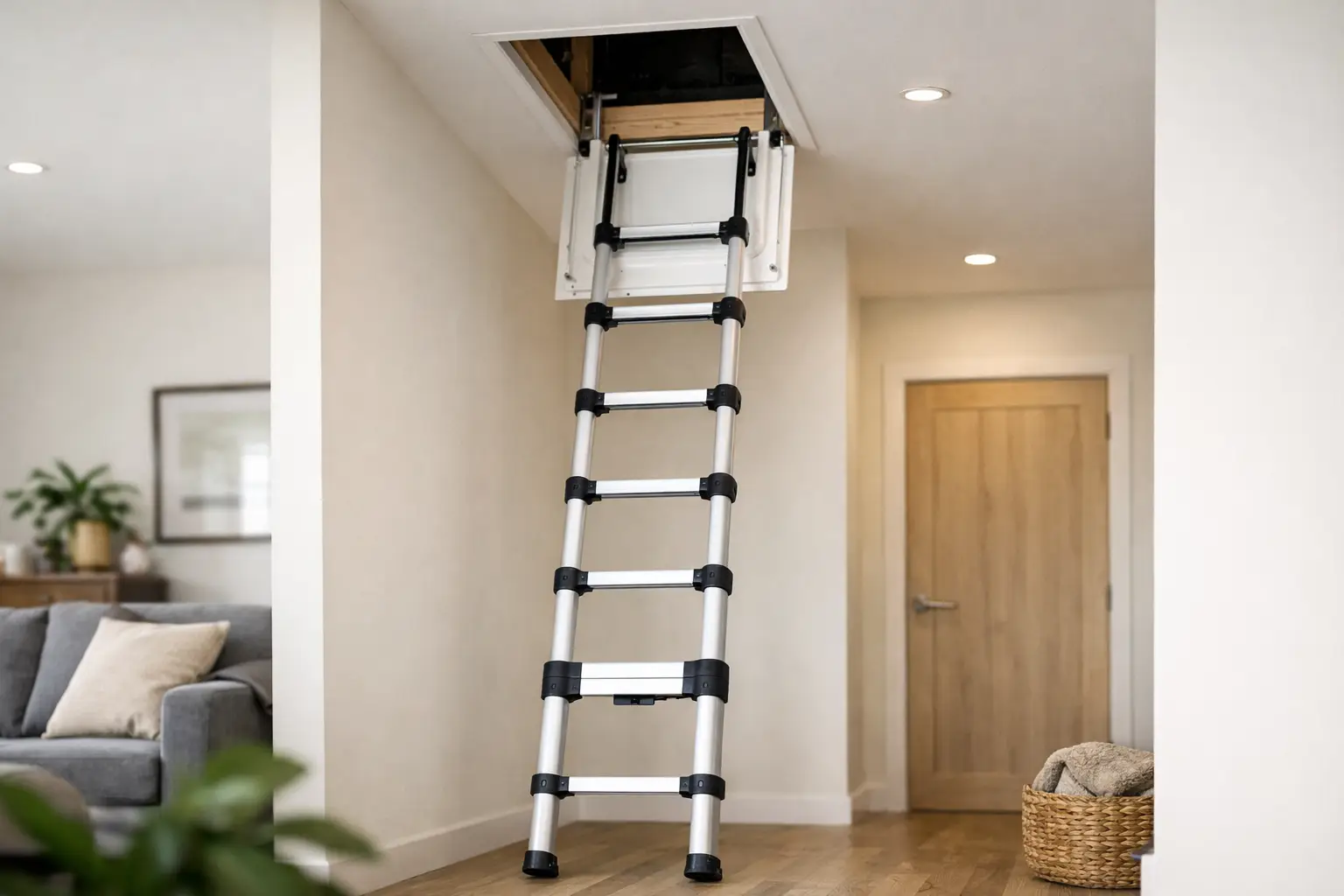
For many small hatch openings, concertina ladders are the strongest candidate. They fold into a very compact footprint and are particularly useful where loft space above the hatch is limited. Aluminium models are popular because they are durable, relatively light, and straightforward to operate when properly fitted.
The trade-off is underfoot comfort. Concertina ladders can feel steeper than other options, and the tread shape is not always as comfortable as a wider folding ladder. For occasional loft access, that may be perfectly acceptable. For very regular use, some homeowners prefer something with a gentler climbing angle.
Sliding loft ladders
Sliding ladders can work well with a smaller hatch, especially if the hatch length allows the ladder sections to store cleanly above it. They are usually a good middle ground – more economical than some premium compact systems, but often easier to climb than a tight concertina design.
The catch is space below. A sliding ladder needs room to extend into the landing or room beneath the hatch. If your loft opening is above a tight first-floor landing, this can become awkward quickly.
Folding loft ladders
Folding ladders are often comfortable and stable, but they are not always the best fit for a small hatch. Many require a larger trapdoor and more loft clearance than homeowners expect. In some cases, they only become viable if the hatch is enlarged.
That is not necessarily a bad thing. If you plan to use the loft regularly for storage, enlarging the hatch and installing a better insulated access point may be the smarter long-term decision than forcing a compact ladder into an unsuitable opening.
Why the hatch matters as much as the ladder
This is the point that often gets missed. Choosing the best loft ladder for small hatch situations is not just about the ladder mechanism. The hatch size, hatch door, surrounding timber structure, insulation detail, and ceiling position all affect what will work well.
A poor hatch setup can leave gaps, draughts, and heat loss around the loft opening. It can also make the ladder harder to operate. In newer homes, there may be additional concerns around maintaining the correct approach to loft boarding and insulation so the property continues to perform as intended.
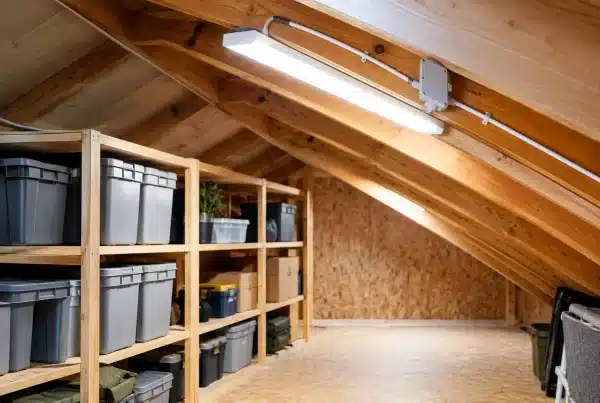
In many cases, a homeowner starts out asking for a ladder and ends up benefiting more from a complete loft access upgrade. That might include a larger insulated hatch, a better ladder, improved lighting, and safer boarding around the opening. The result is not just access, but a loft that is genuinely usable.
Small hatch does not always mean keep the existing opening
If your current hatch is very narrow, awkwardly placed, or fitted with an older push-up panel, keeping it may be false economy. A compact ladder can sometimes be installed within the original opening, but that is not always the best route.
A slightly larger hatch often gives you better access, safer climbing, easier storage handling, and better insulation performance all in one go. This matters if you are storing bulky items such as suitcases, Christmas decorations, or family keepsakes. There is little value in adding a ladder if getting boxes through the hatch remains a struggle.
For homeowners in places like Cardiff, Newport or Bristol, where property styles can vary widely from modern estates to older terraces, the right answer often depends on the construction of the house rather than the hatch dimensions alone.
Safety should decide more than price
A loft ladder is not something most people replace often, which is why buying on price alone tends to backfire. A lower-cost model may save money at the start, but if it is difficult to operate or feels unstable, it quickly becomes a compromise you notice every time you use it.
Look closely at tread depth, handrail options, maximum load, ease of lowering, and how firmly the ladder sits on the floor when extended. Also consider who will use it. A ladder that feels manageable for one person may be far less suitable for an older homeowner or a busy family using the loft regularly.
Professional installation also matters. Even a good ladder can perform poorly if it is badly aligned, poorly fixed, or squeezed into an opening it was never designed for.
Best loft ladder for small hatch homes with limited landing space
When the hatch sits above a narrow landing, compact operation becomes even more important. In these cases, the best loft ladder for small hatch homes is often one that stores tightly and opens in a controlled way, without dominating the available floor space.
Concertina models are often strong here, but not always by default. The floor-to-ceiling height must be right, and the opening needs to allow safe access at the top of the ladder. It is also worth checking whether a handrail can be fitted without making the climb awkward.
If the landing is especially restricted, a survey is usually worthwhile before choosing a model. Measurements taken from a brochure rarely account for bannisters, door swings, or ceiling angles nearby.
Older homes and newer homes need different thinking
In older properties, the challenge is often irregular joist spacing, outdated hatch frames, or limited structural support around the opening. A made-to-measure approach can make a big difference here, because standard off-the-shelf sizes do not always suit the space.
In newer homes, access upgrades need a bit more care around insulation, ventilation, and the way the loft is intended to perform. If the loft is also being boarded, it is important that the system used does not compress insulation and reduce its effectiveness. That is one reason specialist installers are often preferred over a general handyman approach.
A well-planned installation should improve access without creating new problems elsewhere.
So, what is the right choice?
For many households, an aluminium concertina ladder is the best starting point for a small hatch because it suits compact openings and stores neatly. If comfort is the priority and the opening can be adjusted, a sliding or folding ladder may be the better long-term option. There is no single correct answer for every property.
The better question is this: do you want the smallest ladder that fits, or the safest and most practical loft access solution for the way you actually use your home? Those are not always the same thing.
If your loft is currently difficult to reach, treated as dead space, or only used because it is there rather than because it works well, it may be time to look beyond the ladder alone. A professionally planned loft access upgrade can make storage easier, safer, and far more worthwhile from day one.
The best result is not a ladder that merely fits the hatch. It is one that makes the loft feel like part of the house again.