A damp smell when you open the loft hatch, droplets on roofing felt or mould on stored belongings are all signs that moisture is collecting where it should not. Knowing how to reduce loft condensation starts with understanding that a cold loft needs the right balance: warm, moist air must be stopped from escaping into it, while the loft itself needs enough ventilation to remove any moisture that does get in.
Condensation is common in British homes, particularly through colder, wetter months. It is not something to ignore. Left unresolved, it can dampen insulation, stain timbers, affect the roof structure and make valuable storage unsuitable for use.
Why loft condensation happens
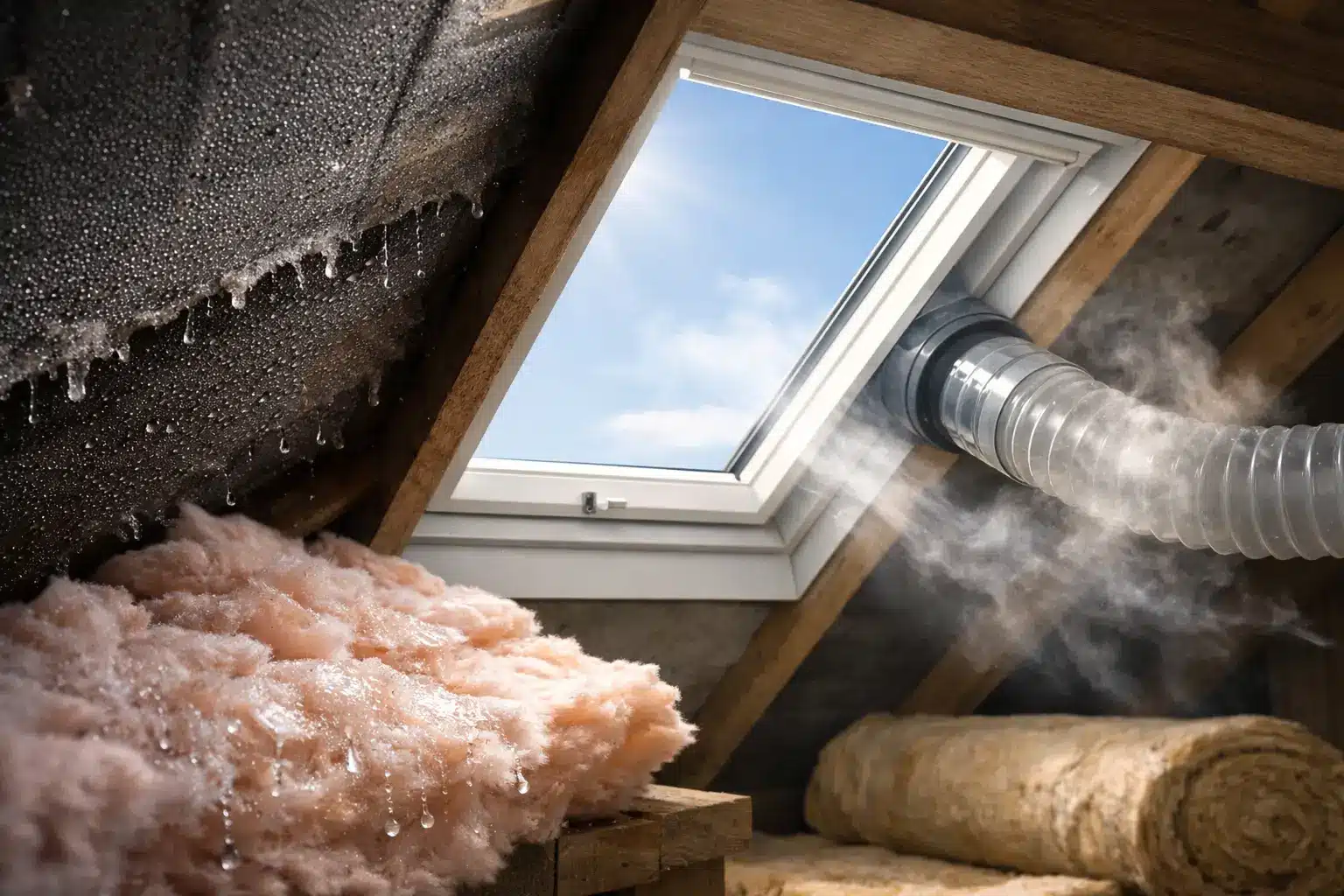
Warm indoor air holds more moisture than cold air. Everyday activities such as showering, cooking, drying clothes indoors and even breathing add water vapour to the home. When that warm air reaches a cold loft through gaps around pipes, cables, downlights, the loft hatch or poorly sealed ceilings, it cools quickly. The moisture then settles on cold surfaces, including rafters, roofing felt and the underside of roof tiles.
A little moisture can dry out when conditions improve. Persistent condensation occurs when too much humid air reaches the loft, ventilation is restricted, or both. This is why simply adding more insulation does not always solve the problem. Insulation is essential for energy efficiency, but it needs to be installed without blocking the airflow at the eaves.
Older homes may have gaps and irregular construction details that allow warm air into the roof space. Newer homes can have a different issue: they are often more airtight, so any missing seal around loft services or poorly managed ventilation can have a noticeable effect. The right fix depends on the property, not a one-size-fits-all product.
How to reduce loft condensation: start with the source of moisture
The most effective approach is to reduce the amount of moisture reaching the loft in the first place. Start inside the house. Use extractor fans when cooking and showering, keep them running for a short time afterwards, and make sure they vent outside rather than into the loft. A bathroom extractor discharging into the roof space is a frequent cause of condensation and should be corrected promptly.
If possible, avoid drying washing on radiators indoors. When a tumble dryer is used, check that it is correctly vented or that its condenser system is maintained. Consistent background heating and sensible use of trickle vents can also help keep humidity under control, particularly in bedrooms where windows may remain closed overnight.
It is worth checking whether humid air is escaping through the ceiling. Common trouble spots include:
- gaps around soil pipes, recessed light fittings, cables and loft access hatches
- unsealed joints around boxing or service runs
- extractor ducting that is loose, split or uninsulated
- bathroom and kitchen ducts that terminate in the loft rather than outdoors
These gaps can usually be sealed with suitable materials, but care is needed around electrical fittings, flues and ventilation pathways. Do not seal over anything that is designed to ventilate the loft or requires a safe clearance.
Check that loft ventilation is working
A cold roof loft normally relies on airflow through the eaves, and sometimes through vents in the roof or gable ends. This moving air carries moisture away before it can settle for long periods. If insulation has been pushed tightly into the eaves, or stored items have blocked vents, the loft may no longer breathe as intended.
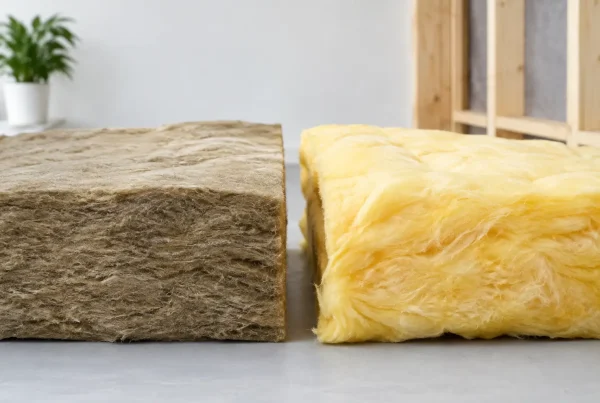
From inside the loft, look along the lower edges of the roof where it meets the external walls. There should be a clear path for air to move above the insulation. Avoid packing mineral wool into this area. In some properties, ventilation trays are fitted to preserve an airflow channel while keeping insulation in place.
Do not assume that more vents are always the answer. Adding ventilation can be useful where an assessment shows it is inadequate, but it will not compensate for an extractor fan pumping shower moisture directly into the roof space. The priority is usually to control air leakage from the house, then confirm that existing roof ventilation is clear and sufficient.
If you have had roof repairs, replacement soffits or external work carried out recently, it is sensible to check that eaves vents have not been accidentally covered. Leaves, insect nests and insulation can restrict them too.
Protect insulation without blocking airflow
Loft insulation reduces heat loss from the rooms below, but damp insulation does not perform as it should. If it feels wet, compressed or has visible mould, establish and resolve the moisture cause before simply placing fresh insulation over it.
The depth and condition of insulation matter, as does where it sits. Insulation should form a continuous layer across the loft floor while maintaining ventilation at the edges. It should not be compressed beneath chipboard or repeatedly walked on, as this reduces its effectiveness.
For homeowners who need accessible storage, raised loft boarding is often the more practical option. A properly designed raised system creates a stable storage deck above the insulation, avoiding unnecessary compression and allowing the required insulation depth to remain in place. It also provides a clear, safer route through the loft rather than encouraging people to step between joists or pile boxes across ventilated areas.
The detail matters here. Boarding laid directly over insulation can create cold spots, squash the insulation and make it harder to identify issues below. In newer homes, any work should also be planned with the property’s construction and warranty requirements in mind.
Inspect the roof, but do not confuse leaks with condensation
Water marks in a loft do not automatically mean condensation. A roof leak often appears in one localised area and may worsen after heavy rain. Condensation is more likely to show as widespread droplets, damp roofing felt, rusty nail tips, mould growth or moisture across several cold surfaces.
That said, both problems can exist at once. Check for slipped or cracked tiles, damaged flashing, defective valley gutters and signs of water entering around roof penetrations. If the roof covering is sound but the loft is consistently damp during cold weather, condensation is the more likely explanation.
Look at the pattern before spending money on a fix. Take photographs, note when the moisture appears and check whether it follows a period of rain, a cold snap or heavy use of bathrooms and the kitchen. This gives a surveyor or roofing professional a much clearer starting point.
Make loft access part of the solution
An ill-fitting loft hatch can be a surprisingly significant source of warm air leakage. If it is warped, uninsulated or has visible gaps around the frame, humid household air can rise directly into a cold roof space.
A well-fitted, insulated loft hatch with effective draught sealing helps separate the heated home from the loft. It also makes a practical difference when the loft is used regularly for storage. The hatch should close securely, and a loft ladder should be installed so it does not damage insulation or encourage unsafe access.
Lighting and electrical additions should be considered carefully too. Every cable penetration through the ceiling is a potential route for air leakage if it is not properly finished. Professional installation can bring these details together rather than treating storage, insulation, access and ventilation as separate jobs.
When to ask for professional advice
Call for advice if you can see mould on roof timbers, insulation is wet, droplets repeatedly form on the underside of the roof, or the loft has a persistent musty smell. It is also sensible to seek an assessment before boarding a loft that has shown any signs of dampness. Covering the floor may make storage easier, but it should never conceal a ventilation or moisture problem.
A specialist loft survey can identify whether the issue is caused by air leakage, blocked eaves, unsuitable insulation, a roof defect or a combination of factors. For homeowners in Cardiff, Newport, Swansea, Bristol and surrounding areas, a tailored approach is particularly useful because property age and roof construction vary widely from one home to the next.
A dry loft is not achieved by one isolated change. Seal the routes that let warm, moist air escape, keep the roof space ventilated, protect the insulation and investigate any signs of a leak. Once those fundamentals are right, your loft can remain a cleaner, safer and far more dependable space for storage.