If you have to twist your shoulders, balance on a step ladder and pass boxes up one at a time, it is fair to ask: can a loft hatch be enlarged? In many homes, yes – but the right answer depends on the joists, the ceiling structure, the position of services and what you want the loft to do once access is improved.
A bigger hatch can make a loft far more practical. It is easier to store bulky items, safer to climb through, and often the missing piece when homeowners want to add proper boarding, a fitted loft ladder or better lighting. At the same time, enlarging a hatch is not just a matter of cutting a bigger hole in the ceiling. Done badly, it can create structural issues, damage plasterwork or leave you with an awkward opening that still does not work well in daily use.
Can a loft hatch be enlarged in any home?
In principle, many loft hatches can be enlarged, but not every property allows the same approach. The main limitation is the roof and ceiling structure above the hatch. In some houses, there is enough clear space between joists to widen or lengthen the opening with relatively straightforward framing adjustments. In others, the existing hatch sits in a tight position between structural members, pipework, cables or other obstructions.
Property age also matters. Older homes can have more variation in joist spacing, ceiling levels and previous alterations. Newer homes may look simpler, but they often come with their own considerations, especially where homeowners want to protect insulation performance or avoid work that could affect warranty expectations. That is why a proper survey matters more than guesswork.
The good news is that there is usually more than one option. If the current opening cannot be enlarged exactly where it is, it may be possible to reshape it, move it slightly, or create a better access point nearby. The best solution is the one that improves usability without creating unnecessary disruption.
Why people enlarge loft hatches
For most households, the issue is not the hatch itself. It is what the hatch stops you doing.
A small opening makes the loft harder to use as practical storage. You cannot get larger boxes through comfortably, seasonal items become a chore to move, and climbing up and down feels less secure than it should. If you are considering a loft ladder, a very small hatch can also limit the type of ladder that can be installed and how easy it will be to operate.
Enlarging the hatch often becomes part of a wider upgrade. Homeowners want safer access, more usable storage and a cleaner, more organised loft space, rather than an area that is technically there but difficult to use. In that situation, the hatch is not a cosmetic change. It is a functional one.
What determines whether the hatch can be made bigger?
The first factor is structural layout. Ceiling joists and any supporting timbers help define what can be altered safely. If the new opening needs one or more joists to be trimmed and supported properly, that can usually be done, but it must be designed and installed correctly.
The second factor is location. A hatch above a narrow landing may be suitable for enlargement, but the surrounding headroom still needs to work for a person climbing through. There is little benefit in creating a larger opening if the ladder position becomes cramped or unsafe.
Then there are services. Electrical cables, pipework, extractor ducting and even alarm wiring can all pass through loft areas unexpectedly. These do not always rule out enlargement, but they can affect where the hatch should go and how much work is involved.
Finally, think about the end use. If you simply want less awkward access for light storage, one size may be enough. If you want a proper loft ladder, raised boarding and routine access, it makes sense to choose dimensions that support the full setup rather than making do with the smallest possible increase.
Size matters, but so does shape
Many homeowners assume wider is always better. In practice, the best hatch size is the one that fits the structure and gives comfortable, safe access. Sometimes extending the opening in one direction is more practical than widening it. Sometimes a slightly repositioned hatch performs better than a very large opening in the wrong place.
A professional installer will look at how you enter the loft, where your feet and shoulders need space, and how the ladder will fold or slide. That is what turns an enlarged hatch into a genuinely better access point.
The risks of enlarging a loft hatch yourself
This is one of those jobs that can look simpler than it is. Cutting plasterboard is easy enough. Making sure the opening is structurally sound, neatly finished and suitable for long-term use is a different matter.
If the hatch is enlarged without proper support, you can weaken the surrounding ceiling structure. Even if no immediate problem is obvious, poor framing can lead to movement, cracking and a less secure opening over time. There is also the practical issue of finish quality. A hatch used regularly should open cleanly, close properly and sit neatly within the ceiling, not look like an afterthought.
Insulation is another point homeowners often miss. If the hatch and door are not upgraded correctly, you can create a weak spot for heat loss and draughts. In homes where energy efficiency matters – which is most homes now – that should not be overlooked.
What happens during a professional hatch enlargement?
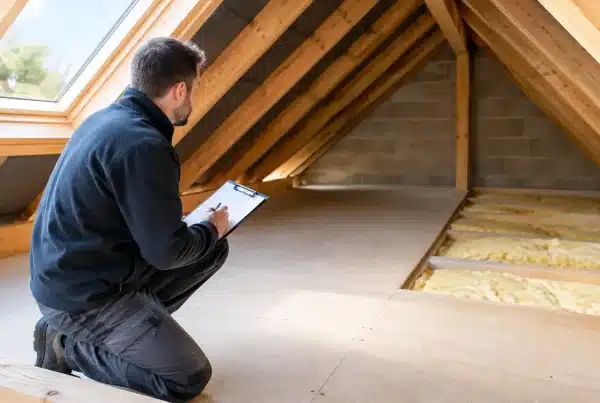
The process usually starts with a survey. This checks the loft layout, joist direction, available clearance, existing access point and any features that could affect the work. It also helps decide whether the current hatch should be enlarged in place or whether a new position would work better.
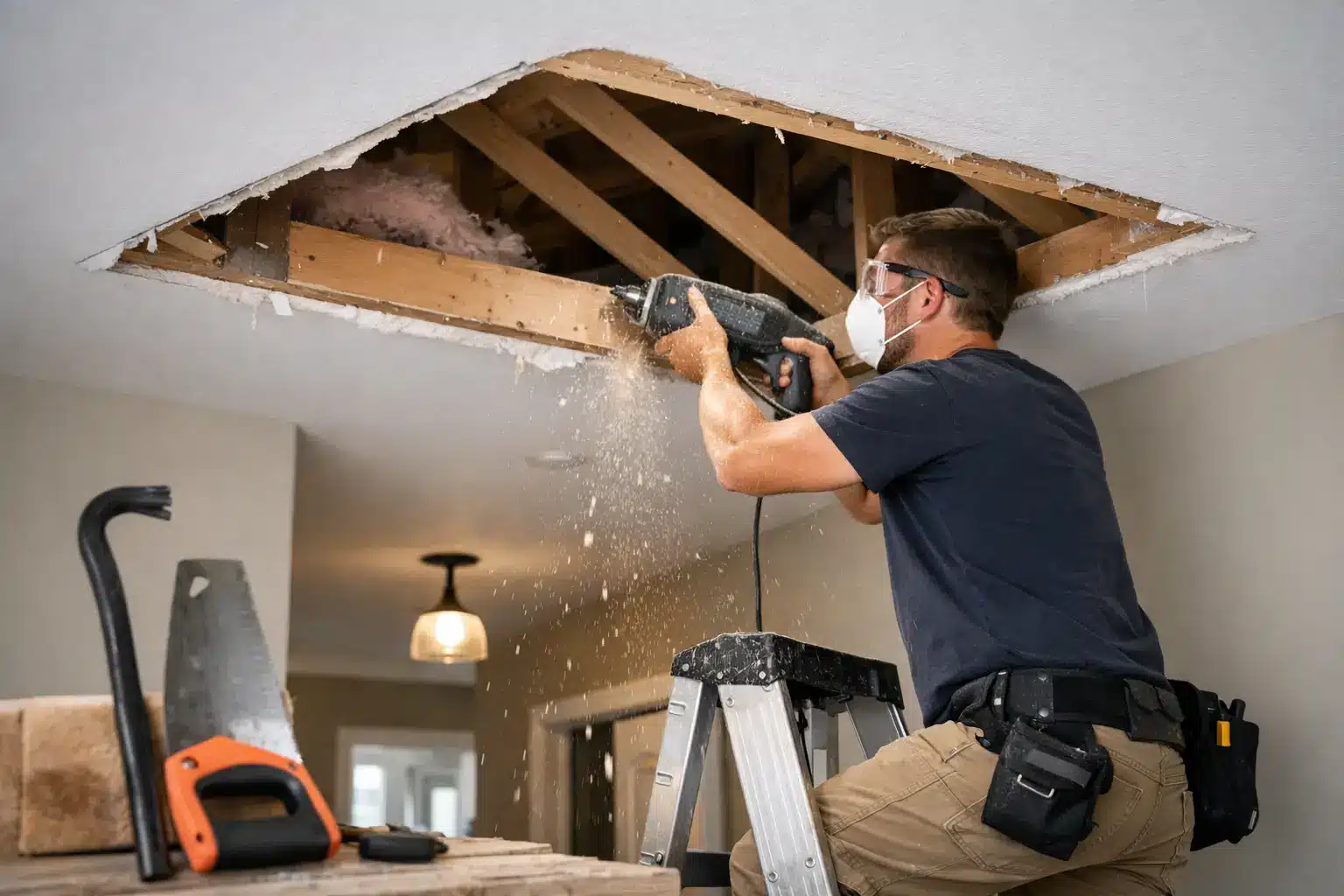
From there, the opening is marked out carefully and the surrounding structure is adapted as needed. Any structural trimming is reinforced properly, and the hatch is finished with a new frame and door designed for regular use. If part of a larger loft access upgrade, this is also the stage where a suitable ladder can be fitted and the access point aligned with boarding or loft flooring plans.
A good installer is not just creating a bigger hole. They are making sure the loft is easier and safer to use every time you go up.
Can a loft hatch be enlarged for a loft ladder?
Very often, yes – and in many homes it should be. A loft ladder needs enough opening space to operate correctly and enough room below for safe use. If the existing hatch is too small, forcing a ladder into that layout usually leads to compromises.
Those compromises show up later. The ladder may feel steep, awkward to open or inconvenient to close. Carrying items through the hatch becomes more difficult than it needs to be, which defeats the point of improving access in the first place.
When the hatch size, ladder type and loft layout are planned together, the result is much better. This is especially useful for family homes where the loft is used often for storage rather than visited once or twice a year.
Is bigger always more expensive?
Not necessarily by a huge margin, but cost does vary. A simple enlargement in a suitable location is usually more straightforward than a hatch that needs repositioning, structural trimming or extra finishing work. Adding an insulated hatch door, loft ladder or associated electrical work will also affect the final price.
The key is value rather than raw size. If a slightly larger hatch makes the loft genuinely usable, it can save frustration for years. If the job is done as part of a complete loft storage upgrade, it often makes more sense than tackling access, boarding and insulation as separate pieces later on.
When enlargement may not be the best answer
There are cases where enlarging the existing hatch is not the smartest route. If the current hatch is in the wrong place, if headroom is poor, or if the surrounding structure makes enlargement inefficient, a new hatch position may deliver a better result.
That can sound like a bigger job, but sometimes it leads to a cleaner installation and better long-term use. In homes across Cardiff, Newport and Bristol, layouts vary enough that the obvious solution is not always the best one. The aim should be practical access, not just a larger opening on paper.
Making the loft work properly
A loft hatch is easy to ignore until you start using the loft regularly. Then every awkward movement, every scraped knuckle and every oversized box becomes a reminder that access was never designed for modern storage needs.
So, can a loft hatch be enlarged? In many cases, yes, and it can make a real difference to safety, convenience and the overall usefulness of the space. The important part is doing it in a way that respects the structure of the property and supports what you actually want from the loft. If the access point works properly, the whole loft starts to feel like part of the home rather than wasted space.