Most lofts are not short of space. They are short of safe access, a stable floor and a sensible place to put the things a household needs but does not use every day. The right quick loft upgrade options can change that in a matter of days, creating clean, practical storage without the cost, disruption or planning considerations of a full loft conversion.
For homeowners, the best starting point is not simply laying boards over the joists. A worthwhile upgrade needs to protect the insulation beneath it, suit the structure of the property and make getting in and out of the loft feel safe. The result should be storage that is genuinely useful, rather than an awkward area that is difficult to reach and risky to use.
Start with the storage problem you want to solve
Before choosing an upgrade, consider what will live in the loft. Archive boxes, seasonal decorations, suitcases and lightweight household items have different demands from a large collection of books, gym equipment or heavy furniture. This matters because a boarded loft intended for storage is not the same as a habitable room.
A professional survey will also identify the construction beneath the insulation, the available headroom, the hatch position and any obstacles such as water tanks, pipework, cables or roof supports. Older homes around Cardiff, Newport and Bristol can have very different loft layouts from modern new-build properties, so a one-size-fits-all approach is rarely the best value.
For many households, a partial boarded area close to the loft hatch is enough. It gives you accessible storage for the items you use occasionally while keeping the project focused and cost-effective. If your loft is already packed with boxes, however, a larger raised boarding installation may make far more sense.
Quick loft upgrade options worth considering
Raised loft boarding for usable, protected storage
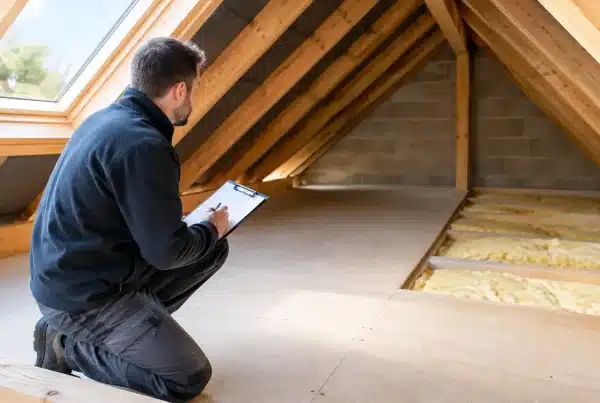
Raised loft boarding is often the most effective upgrade because it deals with two problems at once: lack of storage space and compressed insulation. Rather than fixing boards directly onto the joists, a raised system sits above the insulation on purpose-designed supports. This leaves room for the insulation to retain its depth and performance while providing a solid deck for storage.
Directly boarding over insulation can squash it, reducing its ability to hold heat in the home. It can also create an uneven surface and make it harder to inspect what lies underneath later. A raised system is a cleaner long-term answer, particularly where insulation has been topped up to meet modern expectations.
The amount of boarding can be tailored to your needs. Some homeowners choose a clear central walkway with storage sections on either side. Others want a broad, organised area for boxes and household belongings. The right layout depends on access, roof geometry and the loading limits of the loft structure.
A larger or better-positioned loft hatch
A small hatch turns even a well-boarded loft into a frustrating storage area. Replacing it with a larger, properly finished hatch can make a noticeable difference straight away, especially when you need to move bulky boxes, luggage or a folded pushchair upstairs.
A new hatch can also be positioned more conveniently where the layout allows. The aim is to provide straightforward access without compromising the ceiling finish below or making the loft difficult to use. Insulated loft hatches and doors help reduce draughts and heat loss at a point that is often overlooked.
This is a relatively quick improvement, but it should be measured carefully. A hatch that is generous enough for practical use still needs to work with the available landing space and the ladder arrangement.
A fixed loft ladder that feels safe to use
If reaching the loft involves balancing on a chair or carrying a loose ladder through the house, storage is likely to remain underused. A professionally fitted loft ladder provides a safer, more dependable route into the space and makes it realistic to retrieve items when you need them.
There is no single best ladder for every property. Folding timber ladders can be a strong choice where space and regular use are priorities, while compact telescopic or sliding options can suit tighter areas. The important factor is a secure installation, sensible pitch and a ladder that can be operated confidently by the people who will use it.
Pairing a ladder with a larger hatch often delivers one of the most immediate improvements in day-to-day convenience. It changes the loft from an inaccessible void into an extension of your home’s storage.
Loft lighting and electrical additions
Good lighting is a small upgrade with a large practical benefit. A single bulb controlled from below can make a loft safer and easier to organise, while additional lighting may be appropriate for larger boarded areas. You should be able to see the route underfoot, read box labels and identify stored belongings without relying on a torch.
Electrical work in a loft should always be planned around the existing wiring and completed properly. Cables should not be trapped beneath boards or disturbed carelessly, and any additions need to suit the installation. During a survey, it is worth discussing how often you expect to use the space and where lighting will be most useful.
Loft clearance before the work begins
A loft full of old insulation offcuts, unwanted furniture and decades of forgotten belongings can make any upgrade harder than it needs to be. Clearance creates a clean starting point, reveals the condition of the existing loft and avoids moving the same boxes several times during installation.
It is also a chance to be selective. Keep what has a purpose, recycle what can be recycled and remove items that have simply been moved from one house to the next. Once the boarding is installed, use sturdy labelled boxes and leave a route clear from the hatch to the main storage area.
Protect insulation rather than trading it for storage
The key trade-off in most loft upgrades is simple: homeowners need storage, but they do not want to lose the energy-saving benefit of effective insulation. The wrong installation can force a compromise between the two. The right one avoids it.
Raised boarding helps maintain a ventilation gap and keeps insulation at its intended depth. It is also important not to block eaves ventilation or cover areas that need to remain accessible. Pipework may require protection against freezing, while water tanks, if present, need safe access for maintenance.
Avoid treating a storage loft as a conversion by stealth. Standard ceiling joists are not automatically designed to support the loads associated with a bedroom, office or regular living space. A boarded loft is an excellent alternative when you need organised storage, but a habitable conversion requires a different level of structural design, insulation, fire safety and approvals.
New-build homes need an especially careful approach
Owners of new-build properties are often rightly concerned about warranty compliance. Cutting or altering roof timbers, compressing insulation or making unsuitable changes can raise avoidable questions later. This is why the installation method matters as much as the boards themselves.
A specialist raised boarding system, installed to suit the property, can provide valuable storage while respecting the roof structure and insulation design. Ask how the system is fixed, whether the materials are approved for their purpose and how the work will be documented. Reassurance should come from a clear explanation, not vague promises.
BBA-approved systems and a lifetime guarantee are meaningful indicators when choosing an installer, but the survey remains essential. It is the point at which the proposed solution should be matched to your individual loft rather than sold as a standard package.
What a quick professional installation should look like
“Quick” should mean organised and efficient, not rushed. A good process starts with a free survey and a clear recommendation based on the amount of storage required, your access needs and the condition of the loft. You should know what is included, where the boarding will go and whether any preparation is needed before work begins.
On installation day, the team should protect the working area, work carefully around existing services and leave the loft tidy and usable. Depending on the scope, boarding, a hatch, ladder and lighting can often be completed with minimal disruption to normal family life. Loft Ins Space provides tailored loft upgrades designed around this practical, storage-first approach.
The final check is not just whether there are boards in the loft. It is whether you can safely open the hatch, use the ladder, see what you are doing and store belongings without crushing insulation or filling every available route with boxes.
A well-planned loft upgrade gives a busy home somewhere sensible to put the things that matter, while keeping living rooms, bedrooms and cupboards free for everyday life. Start with the access and storage you genuinely need, then choose an installation that protects the home beneath it as carefully as the belongings above it.