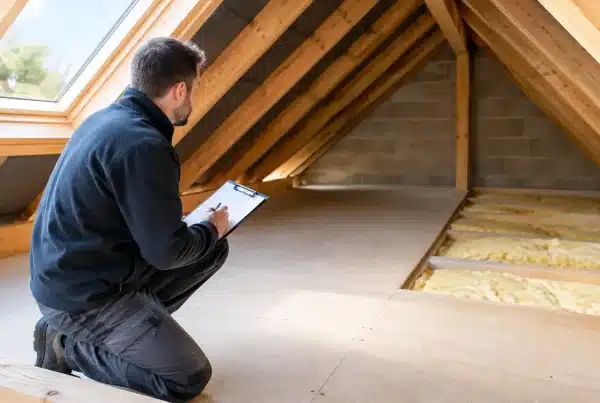
A loft can only become useful storage when getting into it feels safe and straightforward. The folding loft ladder vs telescopic decision often comes down to more than price: the ladder affects how confidently you carry boxes, how well the hatch closes and whether access works for every member of the household.
For homeowners planning loft boarding, insulation upgrades or a simple access improvement, the best choice depends on the room below, the available headroom and how often the loft will be used. Both designs have a place, but they provide a noticeably different experience day to day.
Folding loft ladder vs telescopic: the main difference
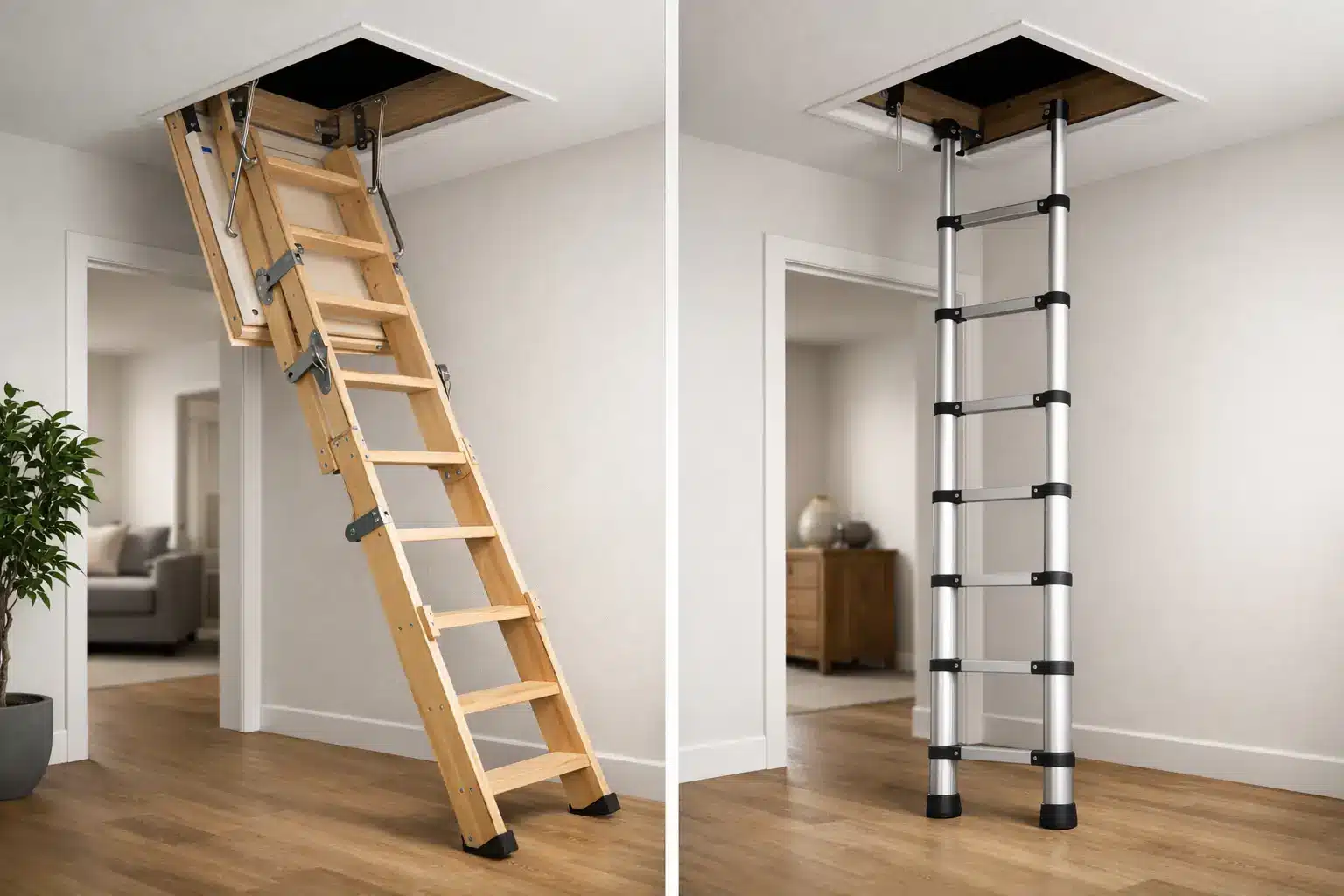
A folding loft ladder is made from two or three hinged sections. It is normally attached to the loft hatch and folds away into the roof space when not in use. Once lowered, the sections unfold to create a fixed-length staircase-style route into the loft.
A telescopic ladder has sliding sections that extend and retract. It is compact when closed and can be fitted within or alongside a hatch, depending on the model and installation. Rather than unfolding, each section pulls out until the ladder reaches its full working length.
The distinction sounds simple, but it changes the way the ladder feels underfoot. Folding ladders tend to offer wider, more consistent treads and a more planted climb. Telescopic ladders save space, though the narrower rungs and steeper feel can be less comfortable when carrying storage items.
Everyday safety and comfort
If the loft will hold seasonal decorations and occasional lightweight items, either ladder may be suitable when correctly specified and installed. If you expect regular trips up and down, perhaps to access family storage, a folding ladder is usually the more comfortable long-term option.
Its broad steps provide better support for the foot, and the continuous side rails tend to make climbing feel more secure. Many folding models also accommodate a handrail, which can make a real difference when stepping through the loft opening or descending with an awkward box.
Telescopic ladders can be safe products, but they require more care in use. Every sliding section needs to be properly extended and locked before climbing. The user must also take care when closing it, as fingers should be kept clear of the moving sections. For an agile adult using the loft infrequently, this may be an acceptable trade-off. It is less ideal where children, older relatives or anyone unsteady on ladders may need access.
A ladder should never be chosen on appearance alone. The angle, tread depth, weight rating, handhold position and quality of the hatch installation all contribute to safe access. A professional survey helps ensure the ladder suits the actual floor-to-ceiling height rather than an assumed measurement.
Carrying items into the loft
This is where the difference becomes particularly clear. Folding ladders generally make it easier to take up labelled storage boxes, bedding bags or lightweight household items because the steps are more forgiving and the climb feels less ladder-like.
That does not mean a folding ladder turns loft access into a staircase. You should still avoid carrying anything heavy or bulky that prevents you from holding on securely. It does, however, make sensible use of a boarded storage loft more practical.
Telescopic ladders are better suited to lighter, less frequent loads. If your main goal is to keep a few small boxes out of sight and you only visit the loft a handful of times a year, their compact design can work well.
Space below the hatch matters
The room directly beneath the loft hatch often decides the issue before any product is selected. A folding ladder swings down and out in sections, so it needs clear floor space to operate. In a landing or hallway, that is often easy to achieve. In a small box room, over a stairwell or where a door opens close to the hatch, it may not be.
Telescopic models have a smaller footprint while opening. They can be useful in tight locations where a folding section would clash with furniture, a wall or a door. This is one reason they are sometimes considered for compact new-build homes with restricted landing space.
However, compact does not automatically mean convenient. Consider where the ladder will rest when extended, whether there is enough room to climb on and off safely, and whether the hatch can be opened fully. A practical layout needs enough clear space for the person using the ladder, not just enough space for the ladder mechanism.
Loft hatch, insulation and draught prevention
A good loft access solution should protect the thermal performance of the home as well as provide a route into the roof space. An old or poorly fitted hatch can allow warm air to escape into the loft, contributing to heat loss and condensation risk.
Folding loft ladders are commonly supplied as part of an insulated hatch system. The ladder stores above the hatch, leaving a neat ceiling-level finish below. When the hatch is correctly sealed and fitted, this can provide a tidy, practical solution that supports the performance of the insulation around it.
A telescopic ladder may also be paired with an insulated hatch, but the installation details matter. Some arrangements require the ladder to be stored separately in the loft, while others use a hatch-mounted mechanism. The right approach depends on joist direction, available clearance and the depth of insulation or raised boarding system above.
For homes with modern insulation standards, avoid compressing mineral wool simply to make room for storage or ladder components. Raised loft boarding is designed to maintain ventilation and insulation depth while creating a stable storage platform. The ladder, hatch and boarding should be planned together rather than treated as separate jobs.
Headroom and loft configuration
A folding ladder needs adequate clearance within the loft for the sections to fold and stow. The hatch location, roof pitch, water tanks, trusses, cabling and stored items can all affect what is possible. Older properties may have irregular framing or limited headroom, while newer homes may have trussed roofs that call for careful planning around the structure.
Telescopic ladders can be advantageous where loft-side storage space is limited because they retract into a shorter unit. Yet they still need a safe opening position and sufficient clear height for the user to step into the loft without striking the roof covering or structural members.
Neither option should require cutting structural timbers without appropriate assessment. A specialist installer will measure the opening, assess the construction and recommend a ladder size that works without compromising the loft structure.
Cost, durability and value
A telescopic ladder can have a lower upfront cost, particularly for occasional-use access. Its smaller form also makes it attractive where budget and space are the overriding priorities.
A folding ladder often represents better value when the loft is intended as a genuinely useful storage area. The higher initial outlay can reflect a more substantial mechanism, better access comfort and the ability to integrate it with a purpose-made insulated hatch. It is an investment in using the space regularly, rather than simply reaching it.
Durability is not solely about ladder type. Correct installation, appropriate load limits and careful operation matter just as much. A ladder that is forced to fit an unsuitable opening will never perform as well as one selected for the property and fitted properly.
Which loft ladder is right for your home?
Choose a folding loft ladder when you want regular, comfortable access; have enough clearance beneath and above the hatch; and plan to use a boarded loft for practical household storage. It is usually the stronger choice for families who value stable footing, easier handling of lighter boxes and a neat integrated hatch arrangement.
Choose a telescopic ladder when space beneath the opening is especially limited, loft visits will be infrequent and compact storage of the ladder is a priority. It can be a sensible solution in the right setting, provided all sections lock correctly and users are comfortable with a more ladder-like climb.
For many homes across Cardiff, Newport, Swansea and Bristol, the deciding factor is not simply folding versus telescopic. It is whether the hatch, ladder, insulation and loft boarding work together as one safe system. A measured survey makes that decision clearer and helps turn an awkward loft opening into access you will be happy to use for years.