A loft ladder should make stored Christmas decorations, suitcases and family keepsakes easier to reach – not turn a simple job into a balancing act. So, are loft ladders safe? Yes, when the ladder, hatch and surrounding loft space are properly specified, securely installed and used with care. The risk usually comes from unsuitable equipment, poor fitting or trying to carry too much up a narrow opening.
For homeowners, a safe loft access solution is about more than the ladder itself. It needs to work with the ceiling structure, fit the available opening, provide a stable route into the loft and lead onto a safe boarded area. That is why a professional assessment is worthwhile before choosing a style or size.
Are loft ladders safe for everyday use?
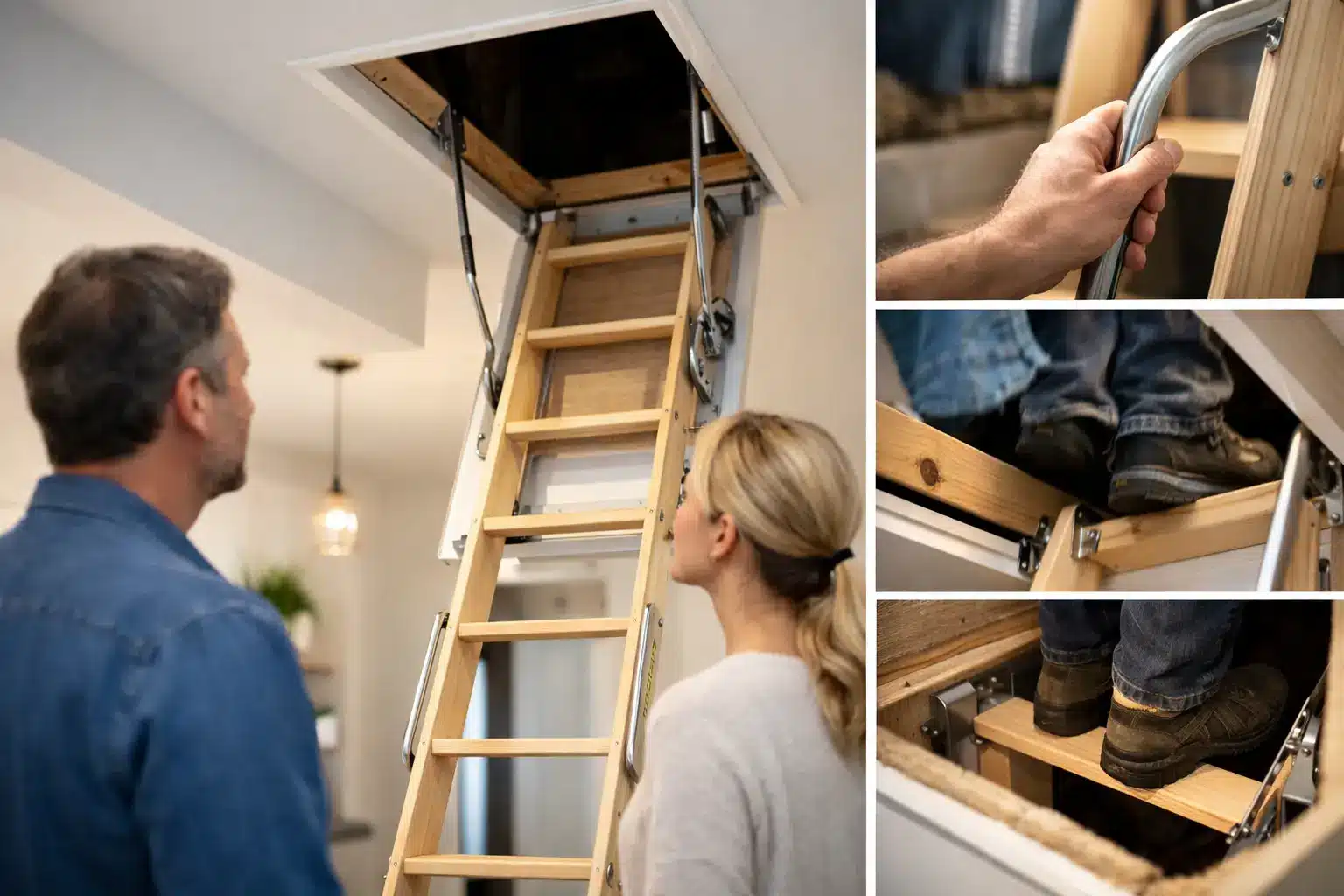
A correctly installed loft ladder is designed for regular domestic access. Folding timber ladders, aluminium concertina ladders and sliding ladders can all be safe choices, provided they are manufactured for their intended purpose and fitted in line with the manufacturer’s instructions.
The best option depends on the property and how the loft will be used. A lightweight ladder may be perfectly suitable for occasional access to a small storage area. If you expect to use the loft often, or carry boxes up and down regularly, a more substantial ladder with wide treads, handrails and a controlled operating mechanism will normally feel safer and more comfortable.
It is also worth being realistic about the task. A loft ladder is for access, not for lifting large or awkward items on your own. Heavy boxes, furniture and long items can affect your balance and obstruct your view of the rungs. Where possible, pass items up with help from another adult rather than climbing while carrying a load.
What makes a loft ladder safe?
Safety starts with proper installation. A ladder must be fixed to a suitable, sound opening and supported as intended by its design. It should sit firmly on the floor when extended, with no rocking, movement or gaps that make the first step uncertain. The hatch must also open and close smoothly without catching, dropping or requiring excessive force.
A safe installation considers the full route, not just the ladder. The area below needs enough clear floor space to climb without stepping around furniture. Above the hatch, you should be able to get into the loft without twisting awkwardly beneath roof timbers or stepping straight onto exposed ceiling joists.
For most households, the following features make a meaningful difference:
- A ladder with a suitable domestic load rating and secure fixings.
- Non-slip treads or rungs that are clean, dry and in good condition.
- A handrail, particularly where the ladder is steep or used frequently.
- A hatch opening large enough to pass through comfortably.
- Reliable catches, hinges and operating poles where these are used.
- Good lighting both below the hatch and immediately inside the loft.
These details may sound small, but they reduce the rushed, awkward movements that lead to slips and falls.
The loft floor matters as much as the ladder
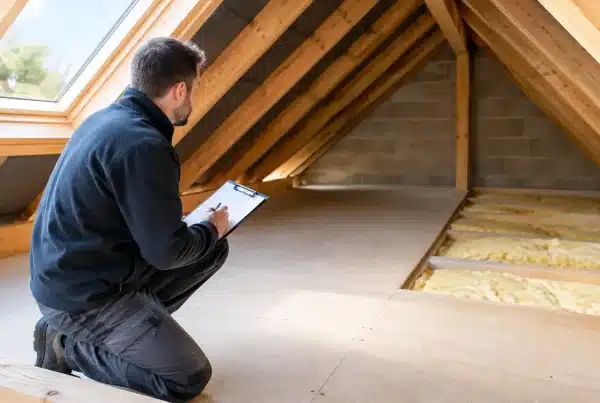
One of the most common hazards is reaching the top safely, then stepping onto an area that is not designed for storage or foot traffic. Ceiling joists in many homes support the ceiling below. They may not be suitable for carrying people, boxes and boarding without the right raised system and structural consideration.
Walking directly on insulation is unsafe and can compress it, reducing its thermal performance. It can also conceal gaps between joists. A properly designed raised boarding system creates a clear, stable storage platform above the insulation, helping to protect both the insulation and the ceiling structure below.
This is particularly relevant in newer homes, where incorrect loft boarding can create warranty concerns. A specialist installer can assess the construction and recommend an approach that provides practical storage without compromising the loft’s intended performance.
Safe access needs a safe landing area
The first few steps inside a loft are often the most overlooked. There should be a secure boarded landing near the hatch so that you do not have to balance on a joist while pulling the ladder up or down. If the loft is used after dark, fit suitable lighting that illuminates the hatch, landing and route to the storage area.
A simple switched light near the entrance is far safer than using a phone torch while climbing. Cables should be kept tidy and protected from damage, and nothing should be stored where it could fall through the hatch when it is opened.
Choosing the right type of loft ladder
There is no single safest ladder for every house. The right choice is the one that suits the ceiling height, hatch size, available clearance and expected level of use.
Timber loft ladders are often chosen for their solid feel and wider steps. They can be an excellent option where there is enough space for a folding section to operate. Aluminium ladders are lighter, durable and popular for straightforward access, while concertina ladders can work well where space is limited. However, their steeper angle and narrower footholds may not suit everyone.
If a household member has reduced mobility, a fear of heights or difficulty gripping a handrail, do not assume any standard loft ladder will be comfortable. A larger hatch, a shallower ladder angle or improved handholds may make access considerably safer. The purpose of the loft should guide the specification: occasional storage has different requirements from a loft that is used every week.
Warning signs that your loft ladder needs attention
Even a well-fitted ladder needs occasional checks. Before climbing, look for loose screws, damaged treads, bent sections, worn catches or signs that the ladder no longer reaches the floor squarely. A ladder that sticks, drops suddenly or needs force to fold away should be inspected rather than ignored.
The hatch is equally important. Check that hinges are secure, catches hold properly and any insulating seal is undamaged. If the hatch door feels unusually heavy, warped or difficult to control, avoid forcing it. Problems often worsen gradually, so small changes in operation are a good reason to arrange maintenance.
Keep the ladder and floor beneath it free from paint, dust, shoes and loose items. Wet soles can make even a good tread slippery, particularly during winter when moisture is more likely to be brought indoors.
Using a loft ladder safely
Safe equipment still needs safe habits. Always face the ladder as you climb, use the handrail where fitted and keep three points of contact whenever possible. Wear secure footwear with a good grip rather than socks, slippers or loose sandals.
Avoid rushing. If you need both hands for an item, do not attempt to carry it while climbing. Ask someone to help, use smaller boxes, or place the item safely at the top or bottom before moving it on. Children should not use a loft ladder unsupervised, and pets should be kept clear while the hatch is open.
It is sensible to avoid loft access if you are tired, unwell or taking medication that affects balance. These are ordinary precautions, but they matter most in a tight space where a missed step has more serious consequences.
When professional installation is the safer choice
Replacing or adding a loft ladder can appear straightforward, but the quality of the fitting has a direct impact on safety. The opening may need altering, the hatch may need insulating, and the loft may require a secure landing and raised boarding before it becomes genuinely useful.
A professional installer can measure the space, assess the ceiling and loft construction, and recommend a ladder that operates correctly in your home. This helps avoid common issues such as a ladder that is too short, a hatch that is too small or a storage area that cannot safely support the intended use.
For homeowners in Cardiff, Newport, Swansea, Bristol and surrounding areas, Loft Ins Space can assess loft access as part of a wider storage solution, including insulated hatches, raised boarding and lighting. The aim is not simply to install a ladder, but to create a practical route to storage that feels secure every time you use it.
A loft ladder should give you confidence, not a reason to put off retrieving what you need. Choose equipment that suits your home, make sure the area above is properly prepared, and address any signs of wear before the next trip into the loft.