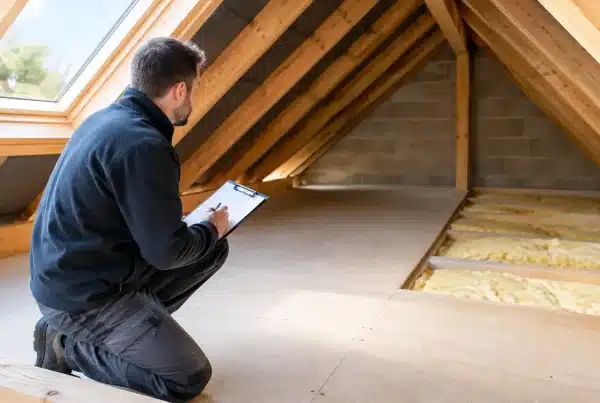
Most lofts have far more potential than homeowners realise. The issue is rarely a lack of square footage. It is that standard loft joists, deep insulation and awkward access make the space difficult to use safely. Raised loft storage Newport homeowners choose solves that problem by creating a stable boarded area above the insulation, rather than compressing it beneath ordinary loft boards.
For families running out of cupboard space, or homeowners who would rather avoid the cost and disruption of a full loft conversion, it can be a practical middle ground. Seasonal decorations, luggage, paperwork, children’s keepsakes and occasional-use household items can be stored neatly overhead, while the loft remains properly insulated and accessible.
What raised loft storage actually does
A raised loft boarding system uses purpose-designed supports to lift the new floor above the existing ceiling joists. This creates a protective gap for insulation and allows the boarding to sit on a stable, level framework. It is a very different approach from simply laying chipboard directly across the joists.
That distinction matters. Modern loft insulation needs sufficient depth to perform properly. If boards are fitted directly on top of it, the insulation can be squashed down, reducing its effectiveness and potentially creating cold spots below. A raised system helps preserve the insulation depth while giving you a clear, usable storage platform.
It also provides a more considered solution for the electrical cables, pipework and ventilation that may run through the loft. These features should be assessed rather than hidden under a rushed installation. A professional survey identifies what is present and plans the boarding layout around it.
Raised boarding is intended for domestic storage, not for turning the loft into a living room or bedroom. If you need habitable accommodation, a full conversion with the appropriate structural work, approvals and fire safety measures may be required. For many Newport homes, however, a well-designed storage loft is all that is needed.
Why direct boarding can be a false economy
It is understandable to see a few spare boards and assume the job is straightforward. But a loft is not a blank floor ready for loading. Ceiling joists are commonly designed to support the ceiling below and light loft access, not unlimited weight.
Direct boarding can create three common problems: compressed insulation, restricted access to services and excess load in the wrong places. It may look tidy on the day it is installed, yet leave the home less energy efficient or make future maintenance more difficult.
The right solution depends on the property. An older Newport terrace may have uneven joist spacing, legacy wiring or limited headroom. A newer build may have deep insulation and warranty considerations that make the installation method especially important. In both cases, the goal is the same: create useful storage without compromising the loft’s underlying function.
A survey should also establish how much of the loft should be boarded. More boarding is not always better. A sensible storage area, planned around the hatch, water tank where present, pipework and roof structure, is often more useful than trying to cover every available inch.
Raised loft storage in Newport homes
Newport has a broad mix of property types, from Victorian and interwar homes to modern estates. That means there is no one-size-fits-all loft solution.
In older homes, the practical challenges are often access and irregular construction. The existing hatch may be small, the loft may have limited lighting, and the ceiling structure can require careful assessment before any storage system is fitted. Improving the hatch and adding a suitable loft ladder can make the new storage space genuinely convenient instead of something you avoid using.
In newer homes, insulation depth is frequently the main consideration. Building standards have led to thicker insulation in many lofts, which is good for warmth and running costs but makes conventional boarding unsuitable. Raised boarding allows the insulation to retain its intended depth while creating a firm platform above it.
For homeowners with a new-build warranty, it is sensible to choose an installation approach designed to respect the property’s construction requirements. Using an appropriate raised system and an experienced installer provides greater reassurance than an improvised fitting that could affect future warranty discussions.
Plan the whole loft, not just the boards
A good storage loft works as a complete system. Boarding is central to the project, but safe access, visibility and insulation are equally important.
Access that makes storage worthwhile
A loft hatch should be large enough for the items you plan to store and properly insulated to reduce heat loss. If it is awkward to open, too small for boxes or poorly positioned, the loft will remain underused regardless of how much boarding has been installed.
A professionally fitted loft ladder can make a significant difference for regular access. The best option depends on available headroom, landing space and how often the loft will be used. A ladder should be stable, easy to operate and suitable for the way your household uses the space.
Lighting and safe movement
A single torch or phone light is not a sensible long-term answer. Loft lighting makes it easier to find what you need, avoid tripping hazards and see the edge of the boarded area. Where appropriate, a switched light close to the hatch and additional lighting along the storage route make the space far more practical.
The storage area should also be planned with a clear walking route. Boxes should not be balanced on unboarded joists, and heavy items should not be carried across a loft without an adequate platform beneath them.
Insulation that continues to perform
Loft insulation is one of the home’s most valuable energy-saving measures, but only when it is installed and protected correctly. Raised boarding should work with your insulation, not against it.
During a survey, an installer can identify whether existing insulation is sufficient, uneven, damaged or likely to benefit from improvement before the raised floor is fitted. Addressing this at the same time can be more efficient than trying to revisit it once the storage area is in place.
What can you safely store in a raised loft?
A raised loft storage system is ideal for lighter, occasional-use household belongings. Think Christmas decorations, suitcases, archived documents, spare bedding, toys kept for younger relatives and carefully boxed sentimental items.
Weight still matters. Even with a professionally installed storage platform, a loft should not become a place to stack heavy furniture, gym equipment, paving slabs or large quantities of books without advice. The safe load depends on the structure of the property and the specification of the installed system.
It is also wise to consider the loft environment. Temperature changes can be significant, so avoid storing anything that is particularly sensitive to heat, cold or humidity. Important paperwork should be sealed in suitable containers, while paints, aerosols and other hazardous materials should be handled in line with their storage guidance.
What to expect from a professional installation
The process should begin with a free survey, not a generic recommendation. The installer needs to inspect access, insulation, joist layout, available headroom, electrics and the amount of storage you actually need. This makes it possible to provide a tailored recommendation and a clear quotation.
On installation day, the work should be planned to keep disruption low. The team protects the working area, fits the raised support system and boards the agreed storage section. If the project includes a new hatch, loft ladder, insulation or lighting, these elements can be coordinated as part of the same improvement rather than left as separate jobs.
Quality materials matter, but workmanship matters just as much. A BBA-approved raised boarding system, fitted to suit the property, gives homeowners confidence that the storage space has been created with insulation performance and long-term use in mind. At Loft Ins Space, installations are backed by a lifetime guarantee, providing reassurance well beyond the day the work is completed.
Is raised loft boarding the right investment?
For many households, the value is immediate. Reclaiming cupboards, clearing spare rooms and storing seasonal items properly can make the rest of the home feel more organised without the expense of extending it.
It is not the right answer for every ambition. If your aim is a home office, an extra bedroom or a permanent living space, investigate a loft conversion instead. But if you need clean, accessible storage and want to protect the insulation already working hard above your ceilings, raised boarding is often the more proportionate choice.
The best next step is to look at what your loft needs rather than what a standard package promises. A careful survey will show whether raised storage, improved access, additional insulation or a combination of all three will give your Newport home the space you have been missing.