If getting into your loft means balancing on a stepladder, wrestling with a stiff hatch, or deciding it is simply not worth the effort, your loft is not really working for you. The best loft access options make storage easier to reach, safer to use and far more practical day-to-day, especially when your loft is boarded and used regularly rather than treated as dead space.
For most homeowners, the right choice comes down to how often the loft is used, how much room is available on the landing, and whether insulation and boarding need protecting at the same time. A loft access setup should never be chosen in isolation. The hatch, ladder and surrounding loft floor all need to work together if you want safe access and usable storage without causing avoidable heat loss or damage.
What the best loft access options need to do
A good loft access system should feel straightforward. It needs to open cleanly, provide stable footing, and allow you to carry boxes or seasonal items up and down without unnecessary strain. That sounds simple, but there is often a trade-off between convenience, space and budget.
A basic hatch and ladder may be perfectly suitable for a home where the loft is only used a few times a year. If you are storing suitcases, Christmas decorations and archived paperwork, that level of access can be enough. If you are using the loft every week, perhaps in a busy family home where storage space is at a premium, something more secure and easier to operate usually makes better long-term sense.
Insulation also matters. Many older lofts were never designed for regular storage use, and many newer properties need extra care to avoid compressing insulation or affecting warranty conditions. Access should support the loft’s function, not undermine it.
Best loft access options for different homes
Drop-down loft ladders
For most homes, a drop-down loft ladder is the most practical starting point. It gives you direct access without taking up permanent floor space, and it can be fitted neatly above a landing or hallway. When installed properly, it is quick to use and far safer than relying on a separate stepladder.
The material makes a difference. Timber ladders can feel solid and suit traditional homes well, while aluminium ladders are lightweight and easy to handle. The best option depends on the hatch size, ceiling height and how regularly the loft is accessed. A compact folding ladder may be ideal where space is tight, but if comfort underfoot is a priority, a sturdier telescopic or sectional design may feel more secure.
This is often the right choice for homeowners who want better access without the cost or disruption of a larger structural change.
Enlarged loft hatches
Sometimes the ladder is not the main issue. The hatch itself can be too small, awkwardly positioned or poorly insulated. In those cases, enlarging the loft hatch can make a noticeable difference.
A wider hatch gives easier access for bulkier storage items and can make climbing in and out less awkward. It also allows modern loft ladders to be fitted more effectively. If your current opening feels cramped, or if you are trying to use the loft for practical storage rather than occasional access, hatch enlargement is often one of the most worthwhile improvements.
There is also an energy-efficiency benefit. Older hatches are often draughty and lack proper insulation. Replacing them with a well-fitted insulated hatch helps reduce heat loss and improves the finish of the access point itself.
Loft stairs
Loft stairs are usually the premium option. They provide the easiest and most comfortable access, particularly where the loft is used very frequently. They are far more like a normal staircase, which can make a major difference for homeowners who struggle with steep ladders or want a stronger sense of stability.
That said, loft stairs are not right for every property. They need more space, often require more significant structural work, and cost more than a standard loft ladder installation. In many homes, especially where the goal is storage rather than a full conversion, stairs can be more than is necessary.
They make most sense when access needs to be as easy as possible and there is enough room to install them without compromising the layout below.
Concertina and telescopic ladders
Where space is especially limited, concertina or telescopic ladders can work well. These designs are compact and suited to tighter hatch openings, so they are often used in smaller homes or where the landing arrangement leaves little flexibility.
The trade-off is comfort. Because these ladders are steeper and narrower than some sectional alternatives, they may not feel as easy to use when carrying heavier items. They solve a space problem effectively, but they are best viewed as a practical compromise rather than the most comfortable solution available.
Choosing access based on how you use the loft
The best loft access options are not always the most expensive ones. They are the ones that suit real usage.
If your loft is only for light, occasional storage, a quality insulated hatch with a dependable folding ladder may be all you need. If you want regular access to a properly boarded storage area, a larger hatch and stronger ladder are often the better investment. If mobility, safety or ease of use are major concerns, loft stairs may be the most sensible route if the property allows for them.
This is where a tailored recommendation matters. Two houses on the same street can have very different loft structures, ceiling heights and access constraints. Older homes may need adaptations for uneven joists or limited hatch positions, while newer homes often need systems that preserve insulation depth and suit modern construction standards.
Why loft boarding and access should be planned together
Loft access works best when it is considered alongside the floor beneath it. There is little point fitting a new ladder if the loft itself is difficult to move around in safely.
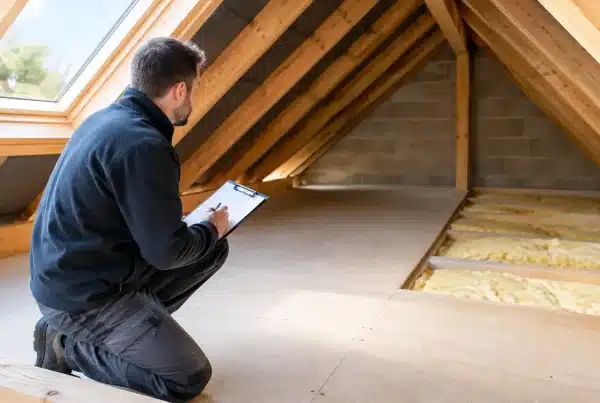
A raised loft boarding system creates a stable storage platform above the insulation, which helps protect thermal performance while giving you usable space. It also means that when you step off the ladder, you are stepping onto a secure surface rather than balancing between joists or compressing insulation. That matters for safety, but it also affects how confidently and how often you use the loft.
For many homeowners, this joined-up approach is what turns the loft into practical storage rather than a space that remains awkward even after access is improved.
Safety, compliance and long-term value
Safety is not just about avoiding slips on the day of installation. It is about whether the loft can be accessed repeatedly without strain, wobble or unnecessary risk. A professionally installed hatch and ladder should feel secure every time it is used.
Compliance can also be a factor, particularly in newer homes. Some new-build properties require care around how loft boards are installed and how insulation is protected. In areas such as Cardiff, Newport and Bristol, where there is a mix of new-build estates and older housing stock, the right recommendation often depends on the property type as much as the homeowner’s budget.
Good access also adds day-to-day value. It saves time, reduces frustration and makes existing space work harder. For growing households, that can delay the need for more disruptive and expensive changes elsewhere in the home.
When to upgrade your current loft access
Many homeowners put up with poor loft access for years because it feels like a minor issue. Usually, it becomes a priority only when storage space runs short or climbing into the loft starts to feel unsafe.
Signs that it is time to upgrade include a hatch that sticks or lets in draughts, a ladder that feels unstable, an opening that is too small for practical storage use, or a loft that cannot be used confidently because there is no proper boarded area at the top. If any of those sound familiar, your loft access is probably limiting the value of the space.
This is also one of those improvements where doing it properly the first time tends to pay off. A well-chosen hatch and ladder setup should last, feel secure and make the loft far easier to use from the start.
Getting the right recommendation
The best result usually comes from looking at the whole loft rather than choosing a ladder from a catalogue and hoping it fits. Ceiling height, hatch position, landing clearance, insulation depth and intended storage use all affect what will work well.
That is why a home survey is so useful. It allows the access solution to be matched to the property rather than forced into it. For a specialist company such as Loft Ins Space, that means recommending an option that is safe, practical and suitable for how the loft will actually be used, not simply fitting the cheapest model available.
A loft should be easy to reach if it is going to be useful. Choose access that suits your home as it is now, but also how you expect to use the space over the next few years.