The pushchair that is only needed for holidays, boxes of children’s clothes, Christmas decorations and spare bedding all need a home. A well-planned family home loft storage transformation can take these items out of bedrooms, cupboards and hallways without the cost, disruption or structural work of a full loft conversion.
For many households, the loft is already large enough to solve a storage problem. The challenge is making it safe, accessible and suitable for regular use while protecting the insulation that helps keep the home warm. The right approach creates a clean, practical storage area that works for family life now and can adapt as needs change.
Start with what the family actually needs to store
The most useful loft storage plans begin downstairs. Before deciding how much boarding to install, consider what is taking up valuable space around the house and whether it genuinely belongs in the loft.
Seasonal items are usually ideal: suitcases, artificial trees, decorations, camping equipment, prams kept for visiting grandchildren and clothes saved for younger siblings. Lightweight household items can also work well. Heavy furniture, large quantities of books and anything affected by extreme temperatures may need a different home, depending on the property and the loft’s load-bearing capacity.
It also helps to think ahead. A young family may need room for baby equipment today, while in a few years’ time the priority may be sports kit, school projects and holiday luggage. Storage that is slightly too small quickly becomes cluttered, so the aim should be a sensible area with clear walkways rather than a loft packed from edge to edge.
A family home loft storage transformation needs raised boarding
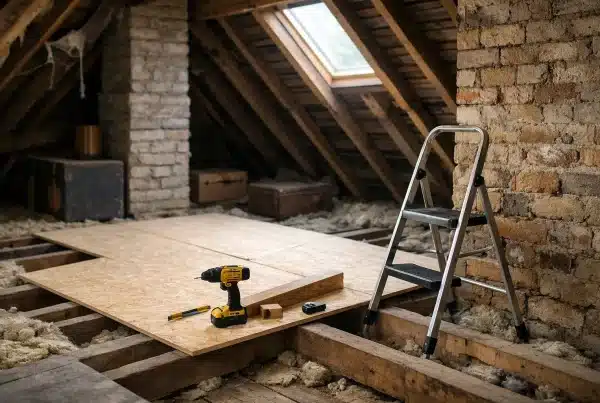
One of the most common mistakes is laying boards directly over loft insulation. It may look like a quick solution, but compressed insulation cannot perform as intended. That can reduce thermal efficiency and make the home harder and more expensive to heat.
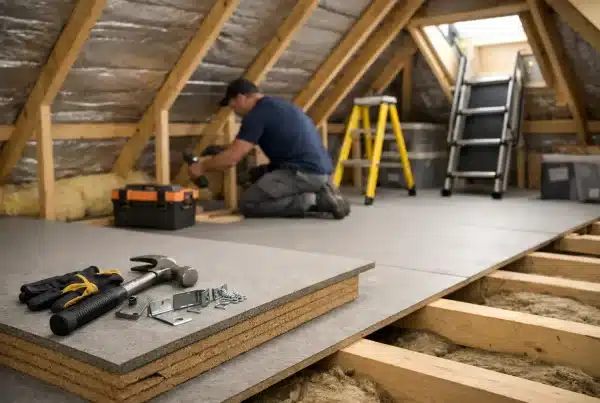
Raised loft boarding is designed to avoid this problem. A raised system sits above the insulation, leaving it at its correct depth while creating a stable boarded platform for storage. It also provides a more level surface to walk on, making it easier to retrieve items without balancing on joists or disturbing insulation.
The details matter here. Older homes and newer properties can have very different loft structures, insulation depths and access arrangements. A professional survey identifies the appropriate system, the workable storage area and any constraints around wiring, pipework or ventilation.
For new-build homeowners, this assessment can be particularly valuable. Altering a loft without suitable consideration for the structure and insulation may raise warranty concerns. A purpose-designed, professionally installed raised boarding system offers a more considered route to additional storage.
Not every inch needs to be boarded
A larger boarded area is not always the best value. Some families need a central storage deck and a clear route from the hatch, while others benefit from a wider platform for organised boxes. The right size depends on the loft layout, what will be stored and how often it will be accessed.
Boarding around equipment also requires care. Water tanks, cables, extractor ducting and loft ventilation should not simply be covered or obstructed. Good planning protects the function of the loft as well as improving its usability.
Safe access changes how often the space gets used
A loft that is difficult to reach soon becomes a place where items are left and forgotten. A secure loft ladder and a correctly sized hatch turn storage from an awkward chore into a straightforward part of running the home.
The most suitable ladder depends on available space, ceiling height and how regularly the loft will be used. A compact folding ladder may suit an infrequently used landing hatch, while a sturdier option can make more sense for a busy family accessing storage throughout the year. The hatch should also open and close properly, with insulation and draught prevention considered as part of the installation.
This is not just about convenience. Carrying boxes up a loose stepladder, reaching through a small opening or walking across unboarded joists creates avoidable risks. A clear access route, secure ladder and stable boarded area provide a safer way to use the space.
Lighting is another small addition with a major practical benefit. A properly positioned loft light means there is no need to hold a torch while carrying a box or searching through stored items. It also makes it easier to spot any signs of damp, leaks or pest activity before they become a bigger concern.
Organise the loft for real family life
Once the physical work is complete, the best results come from simple organisation rather than filling every available corner. Use sturdy, lidded boxes and group items by purpose: Christmas, holidays, baby items, school memories or spare linens. Clear labels on the outward-facing side of each box save time later.
Keep the most frequently used belongings near the hatch. Items only needed once a year can sit further back, provided there is a safe route to reach them. Avoid stacking boxes so high that they become difficult to lift down safely, especially where roof slopes reduce headroom.
It is also wise to leave a visible gap around the loft edges and any services. This supports access for inspection and avoids trapping cables or pipes beneath stored belongings. The loft should feel organised, not overloaded.
What should stay out of the loft?
Lofts are subject to temperature changes, even where insulation is performing well. Important documents, photographs, delicate electronics, candles, paint, aerosols and valuables are generally better kept elsewhere. If in doubt, choose items that are durable, dry and not needed every week.
Families should also avoid assuming that every item can be stored simply because there is space. The boarding system and loft structure have load limits, so storage should be proportionate and sensible. A specialist can explain what is appropriate for the specific property rather than relying on a general rule.
Choose storage over a loft conversion when it fits the brief
A loft conversion can add a new room, but it is a major building project involving structural considerations, planning requirements in some cases, extended disruption and a far higher budget. If the real issue is overflowing wardrobes and limited cupboard space, a boarded storage loft may be the more practical answer.
This option preserves the loft’s role as storage while making it far easier to use. Installation is usually much quicker than a conversion, and there is no need to reorganise the household around months of building work. It is a particularly sensible choice where the family needs breathing room, not another bedroom.
That said, storage boarding is not a substitute for habitable accommodation. It should not be treated as a living room, playroom or bedroom. Keeping that distinction clear helps homeowners choose the right improvement for their needs and use the finished space safely.
A professional plan protects the parts you cannot see
The visible result of a loft upgrade is a neat, usable floor. The value is also in the work beneath it: insulation left uncompromised, safe access, careful fitting around services and a system suited to the property.
For homeowners in Cardiff, Newport, Swansea, Bristol and surrounding areas, a survey can remove the guesswork. Loft Ins Space can assess the loft, discuss how the household wants to use it and recommend a tailored combination of raised boarding, access, insulation, lighting or clearance where required. BBA-approved systems and a lifetime guarantee offer further reassurance for a home improvement intended to last.
The most satisfying storage improvements are the ones that make everyday life feel calmer. When the hallway is clear, bedrooms have room to breathe and seasonal belongings are easy to find, the loft stops being wasted space and starts working hard for the whole family.