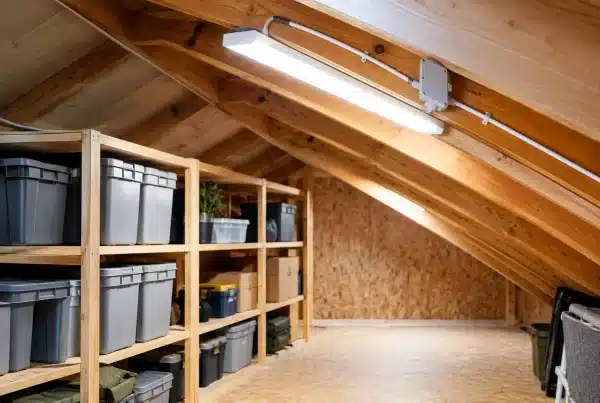
A lot of lofts look usable at first glance. There are joists, there is open space, and it can seem like laying a few boards is a quick way to solve storage problems. In practice, what is loft boarding really about? It is the process of creating a stable storage platform in your loft so you can use the space safely without crushing insulation, overloading the ceiling structure, or making access awkward.
That distinction matters. Proper loft boarding is not just about putting timber under your Christmas decorations. Done well, it gives you practical extra storage, protects the performance of your insulation, and makes your loft easier and safer to use for years.
What is loft boarding?
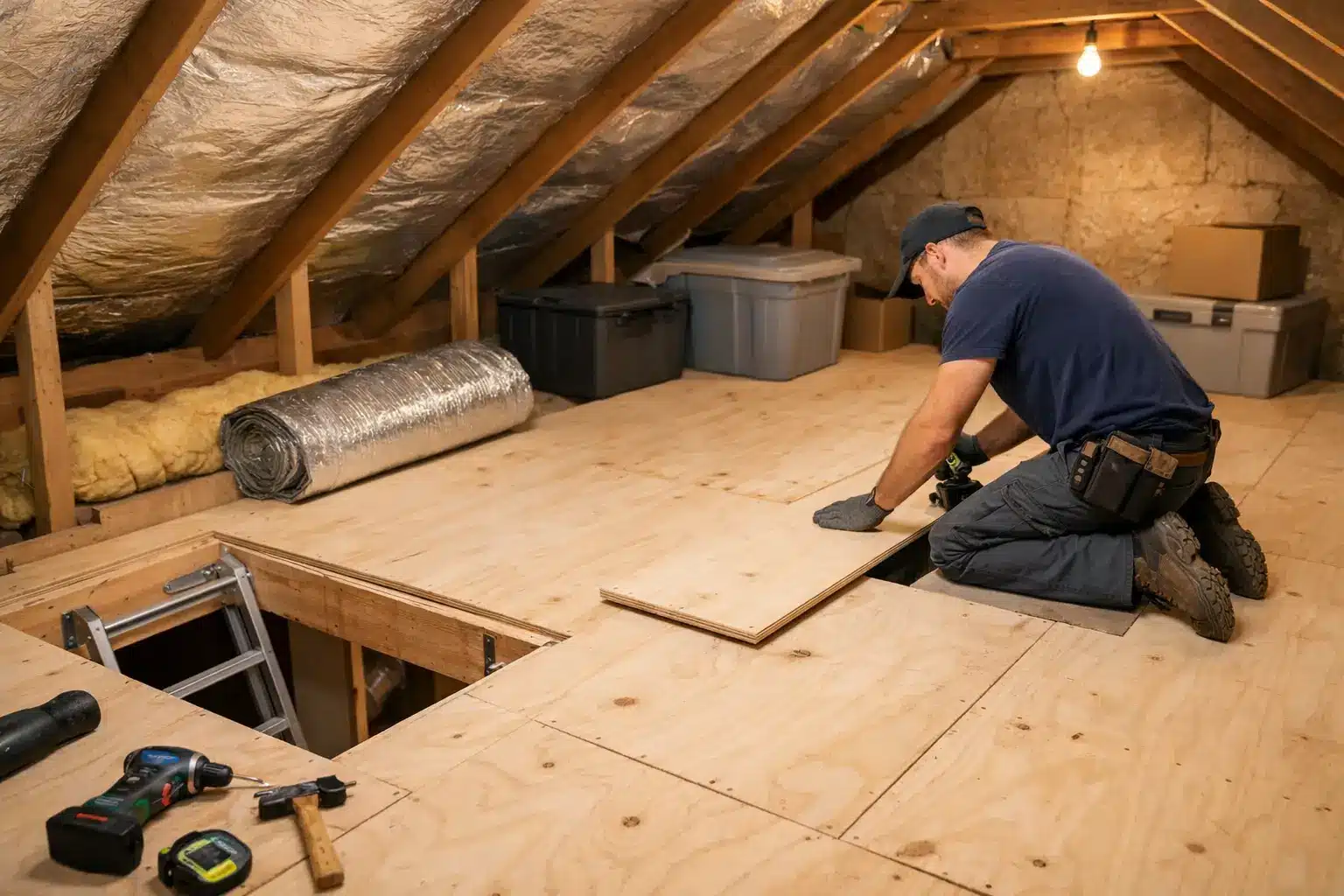
Loft boarding means fitting boards across a loft to create a raised, usable floor area for storage. In most homes, those boards are installed above the ceiling joists rather than directly onto them, using a raised support system that leaves room for insulation underneath.
This is the key point many homeowners miss. Modern insulation standards usually require a much deeper layer of insulation than the depth of the joists alone. If boards are fixed straight onto the joists, the insulation gets compressed. Once that happens, it cannot perform as well, which can affect your home’s energy efficiency.
A professionally boarded loft is designed to avoid that problem. The boards sit above the insulation, helping preserve airflow and thermal performance while still giving you a solid area for storage.
Why homeowners choose loft boarding
For most households, the appeal is simple. Storage is tight, but a full loft conversion is more work, more cost, and more disruption than they need. Loft boarding sits in the middle ground. It turns wasted roof space into somewhere genuinely useful without changing the room below.
That makes it a practical option for families, homeowners planning to stay put, and anyone fed up with cupboards overflowing into bedrooms and landings. Suitcases, keepsakes, seasonal items, baby equipment and household extras can all be stored out of the way, provided the loft has been boarded properly and loaded sensibly.
There is also the convenience factor. A loft is far more likely to be used if it is easy to access and feels safe underfoot. That is why boarding is often paired with a proper loft ladder, hatch upgrade and lighting rather than treated as a standalone job.
How loft boarding works in practice
The process starts with the loft itself. Not every roof space is the same, and the right solution depends on the age of the property, the type of construction, the existing insulation depth and how you want to use the area.
In many homes, installers use raised loft legs or a similar support system to lift the boards above the insulation layer. Once the framework is in place, purpose-made loft boards are fixed down to create a strong and even platform. The result is a defined storage area that is far more stable than balancing on joists or makeshift planks.
A good installation also takes access into account. There is little value in boarding a loft if the hatch is too small, the ladder feels unsafe, or there is no lighting once you are up there. This is where a specialist approach tends to make the biggest difference. The loft becomes usable, not just technically boarded.
Why raised loft boarding matters
If you take one thing from the question what is loft boarding, it should be this: raised loft boarding is usually the right approach.
Older methods often involved screwing boards straight onto the joists. Years ago, that was common enough, but insulation requirements were different and expectations around energy performance were lower. In many modern homes, especially newer builds, that method can create problems.
Compressed insulation does not insulate as effectively. In some cases, blocking ventilation paths can also lead to condensation issues. There can even be warranty implications in certain new-build properties if loft alterations are not carried out in line with manufacturer or warranty guidance.
Raised systems are designed to protect against those risks. They allow insulation to remain at the correct depth while still giving you storage space above it. For homeowners who want extra room without compromising the fabric of the property, that is a much better long-term outcome.
Is loft boarding suitable for every home?
Not always in exactly the same way, and this is where a little nuance helps.
Most lofts can be improved, but the right boarding solution depends on structural limits, head height, roof shape and the condition of the existing loft. A modern trussed roof, for example, needs a different approach from an older cut roof. Some lofts are ideal for a large boarded area, while others are better suited to a smaller central storage zone with safe walkways.
The weight you plan to store matters too. Loft boarding is intended for storage, but not all lofts should carry the same loads. Boxes of decorations and clothes are one thing. Heavy furniture, stacks of books or dense household contents are another. A professional survey helps establish what is appropriate for your property rather than relying on guesswork.
DIY loft boarding vs professional installation
Some homeowners do consider loft boarding as a weekend project. That can be tempting, especially if the aim seems straightforward. The challenge is that the risks are not always obvious until the job is done badly.
The most common mistakes are compressing insulation, choosing the wrong fixings, boarding over cables without proper care, and assuming all joists are suitable for the same type of load. Access can be overlooked too. A loft with poor lighting and an awkward hatch is less likely to be used safely, no matter how neatly the boards are fitted.
Professional installation gives you more certainty. The loft is assessed properly, the boarding system is matched to the property, and associated upgrades such as ladders, hatches and lighting can be planned together. For newer homes, that can also be important from a compliance and warranty point of view.
For homeowners in places such as Cardiff, Newport or Bristol, where property types can vary from modern estates to older terraces and semis, that tailored approach is especially valuable. One-size-fits-all loft work rarely ages well.
What are the main benefits of loft boarding?
The biggest benefit is simple, usable storage. It frees up space elsewhere in the home and makes the loft a practical part of the property rather than an awkward void.
There is also a safety benefit. A proper boarded platform reduces the temptation to step between joists or perch boxes on uneven surfaces. When combined with better access and lighting, the loft becomes easier to use with confidence.
Energy performance matters as well. A well-designed raised system helps protect insulation instead of flattening it. That means you are gaining storage without undermining the job your loft insulation is supposed to do.
For many households, loft boarding is also a cost-effective alternative to more extensive building work. It does not create a habitable room, and it should not be confused with a loft conversion, but it can still transform how much practical space you have at home.
Loft boarding and loft conversion are not the same
This is a common point of confusion. Loft boarding creates storage space. A loft conversion creates a room intended for living use, such as a bedroom or office, and comes with a very different level of structural work, regulation and cost.
If your goal is simply to store household items safely and get clutter out of the rest of the house, loft boarding is often the more sensible route. It is quicker, less disruptive and far more affordable. If you need full-time living space with proper stairs, windows and heating, that is when a conversion becomes the relevant option.
For many homeowners, especially those who just need more breathing room rather than another room entirely, boarding is the better fit.
So, what is loft boarding worth to a homeowner?
Its value comes down to practicality. A well-boarded loft gives you storage you can actually use, protects insulation rather than damaging it, and makes better use of space you already own. It can also save you from pushing clutter into bedrooms, garages and spare cupboards that are already doing too much.
The strongest results usually come from treating the loft as a complete project rather than a few boards laid in a hurry. Boarding, access, insulation and lighting all work together. When they are planned properly, the loft stops being a dusty afterthought and starts becoming one of the most useful parts of the house.
If you have been looking up at that unused space and wondering whether it could do more, that question is usually the right place to start.