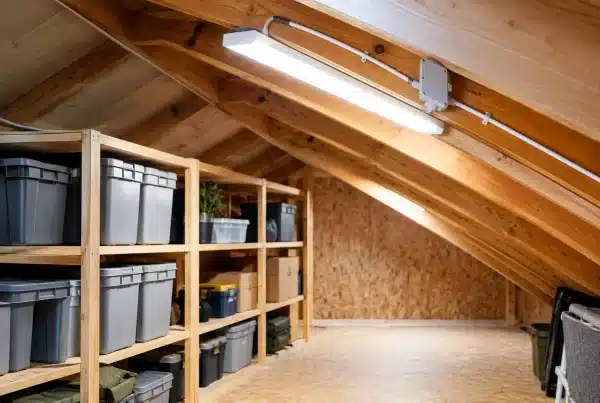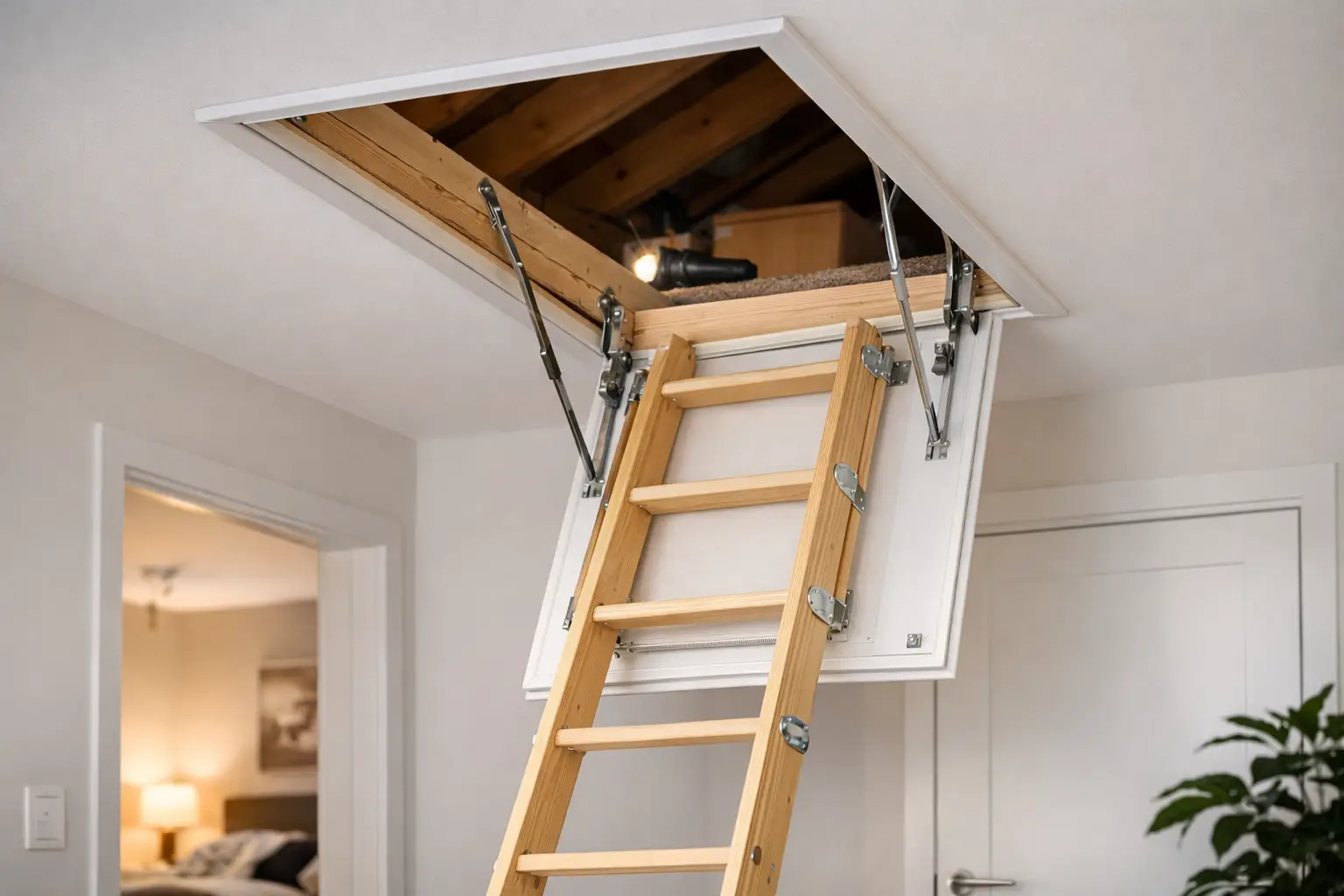
If your loft access is a small, draughty panel that sticks in winter and drops dust every time it opens, it is probably doing your home no favours. A good guide to loft hatches and doors starts with one simple point: the hatch is not just an opening in the ceiling. It affects storage access, insulation performance, safety, convenience and, in some homes, compliance too.
For many households, the loft becomes useful only when getting into it feels easy and safe. That means choosing the right hatch size, the right door style, the right ladder arrangement and the right level of insulation. Get those details right and the space above your ceiling becomes far more practical without the cost and disruption of a full loft conversion.
Why loft hatches and doors matter more than people think
A loft hatch is often treated as an afterthought. In reality, it sits at the point where warm air from the house meets a colder roof space. If the hatch is poorly fitted or badly insulated, heat can escape and draughts can develop around the frame. That can make the landing colder and force your insulation to work harder than it should.
There is also the everyday issue of access. A narrow opening may be enough for a quick look into the loft, but it is less helpful if you want proper storage. Trying to lift boxes through a cramped hatch while balancing on a stepladder is awkward at best and unsafe at worst.
For newer homes, there can be extra considerations around how the loft is boarded and accessed. Some properties need a raised system to protect insulation depth and airflow, and homeowners are often rightly cautious about changes that could affect warranty requirements. In those cases, a professionally planned loft access setup is not just about convenience. It is about protecting the home properly.
The main types in this guide to loft hatches and doors
Most homes suit one of a few common loft access options, but the best choice depends on your ceiling space, how often you use the loft and what you want to store.
Standard drop-down hatches
This is the familiar ceiling hatch that opens downward. It is common in older properties and can work well if it is properly insulated and sized sensibly. The drawback is that many older versions are small, basic and not designed with regular use in mind.
If you only need occasional access for light storage, a standard hatch may be enough. If you plan to use the loft regularly, the opening size and ease of operation become much more important.
Hinged loft doors
A hinged loft door opens in a more controlled way and usually feels sturdier in everyday use. These systems often work well with integrated loft ladders and can be finished more neatly around the frame. For homeowners who want a clean, professional result, this is often the better-looking and more practical option.
Push-up or lift-out panels
These are simple and low cost, but they are generally less convenient. Removing the panel completely every time you need loft access is fiddly, and reseating it properly can be frustrating. They are usually best kept for very occasional use rather than regular storage access.
Choosing the right size and position
Size matters more than many people expect. A larger opening makes it easier to move storage boxes, suitcases and seasonal items without scraping the frame or overreaching. It also tends to make ladder use feel safer because the opening is more generous and less restrictive.
That said, bigger is not always automatically better. The available space between joists, the ceiling layout, nearby doors and the landing shape all influence what can realistically be installed. In some homes, especially older ones, the best position for a hatch is not the current one.
Relocating or enlarging a loft hatch can make a major difference, but it needs to be done with care. The surrounding structure, pipework, cables and insulation all have to be considered. A neat finish matters too. A hatch should feel like part of the home, not a rough cut-out in the ceiling.
Insulation and draught-proofing
One of the biggest upgrades you can make is choosing an insulated loft hatch with proper seals around the frame. Older hatches often have little to no thermal protection, which means warm air can rise into the loft and colder air can creep back down around the edges.
A well-fitted insulated hatch helps maintain the performance of your loft insulation rather than creating a weak spot in it. This is especially worthwhile if you have already invested in improving loft insulation and want the whole area to work as it should.
There is a trade-off here. Some budget hatch products look acceptable at first glance but do very little in terms of airtightness or thermal performance. For homeowners planning to use the loft for long-term storage, it usually makes sense to prioritise quality over the cheapest option.
Fire safety and compliance considerations
Not every home requires the same specification, which is why off-the-shelf advice can fall short. In some properties, particularly where the loft layout, access route or building type raises extra considerations, fire-rated loft hatches may be the right option.
This is one of those areas where it depends on the property and the intended use. A simple storage loft in a standard house may not need the same solution as a more complex layout. The safest approach is to assess the home properly rather than guess.
Homeowners in newer properties are often particularly careful about compliance and workmanship, and rightly so. Poorly planned loft access can create issues later if insulation is compressed, ventilation is reduced or unsuitable boarding is installed around the hatch area. A specialist installer can usually spot those risks early and recommend a setup that supports both access and the wider health of the loft.
Loft ladders and hatch compatibility
A hatch and ladder should be treated as one system, not two separate purchases. Even a high-quality ladder will disappoint if it is paired with an awkward hatch opening, and a well-made hatch becomes far more useful when matched with a stable, easy-to-operate ladder.
Timber, aluminium and concertina-style ladders all have their place. Aluminium folding ladders are popular because they are durable, practical and straightforward to use. Timber ladders can feel solid and suit some homes well, while concertina designs can help where space is tight.
The right choice depends on ceiling height, available landing room and frequency of use. If the loft is only visited once or twice a year, a simpler ladder may be enough. If you are going up every week for stored items, ease of use matters far more. A ladder that feels awkward or flimsy quickly becomes something you avoid using.
What makes a good installation
A good loft hatch installation should look neat, open smoothly, close securely and sit well within the ceiling. More importantly, it should work with the insulation, ladder and boarding plan rather than against them.
This is where professional installation adds real value. Measuring the opening, strengthening where needed, fitting the frame squarely, sealing gaps and ensuring the hatch operates cleanly all affect the result. So does finishing. Cracked plaster edges and misaligned frames can make even a decent product look poor.
For homeowners in places such as Cardiff, Newport, Swansea and Bristol, where property styles vary from older terraces to modern new-builds, the right specification can differ significantly from one house to the next. That is why a survey-led approach tends to produce better results than choosing a hatch on price alone.
When it is worth upgrading your current hatch
If your existing hatch is small, uninsulated, difficult to open or poorly positioned, an upgrade is often worthwhile. The same applies if you are planning loft boarding, new insulation or improved lighting. It makes sense to address access at the same time rather than improve the loft and leave the weakest part untouched.
An upgrade is also worth considering if you are relying on a separate stepladder for access. Integrated loft ladders are not just more convenient. They can make loft use safer and more realistic for the whole household.
Loft Ins Space often sees homes where the loft itself has good potential, but access is what has held it back. Once the hatch, ladder and boarding are planned together, the loft becomes a genuinely usable part of the house.
A final thought on choosing the right loft hatch
The best loft hatch is the one that suits your home, your storage needs and how you actually live. A simple hatch may be enough for one property, while another needs a larger insulated opening with an integrated ladder and a more tailored installation. When access is safe, neat and properly fitted, the loft stops being wasted space and starts earning its keep.