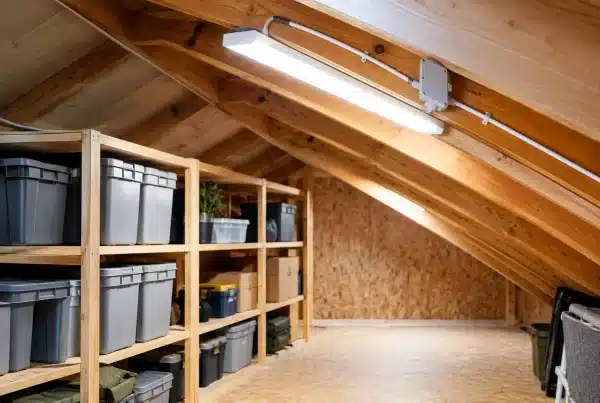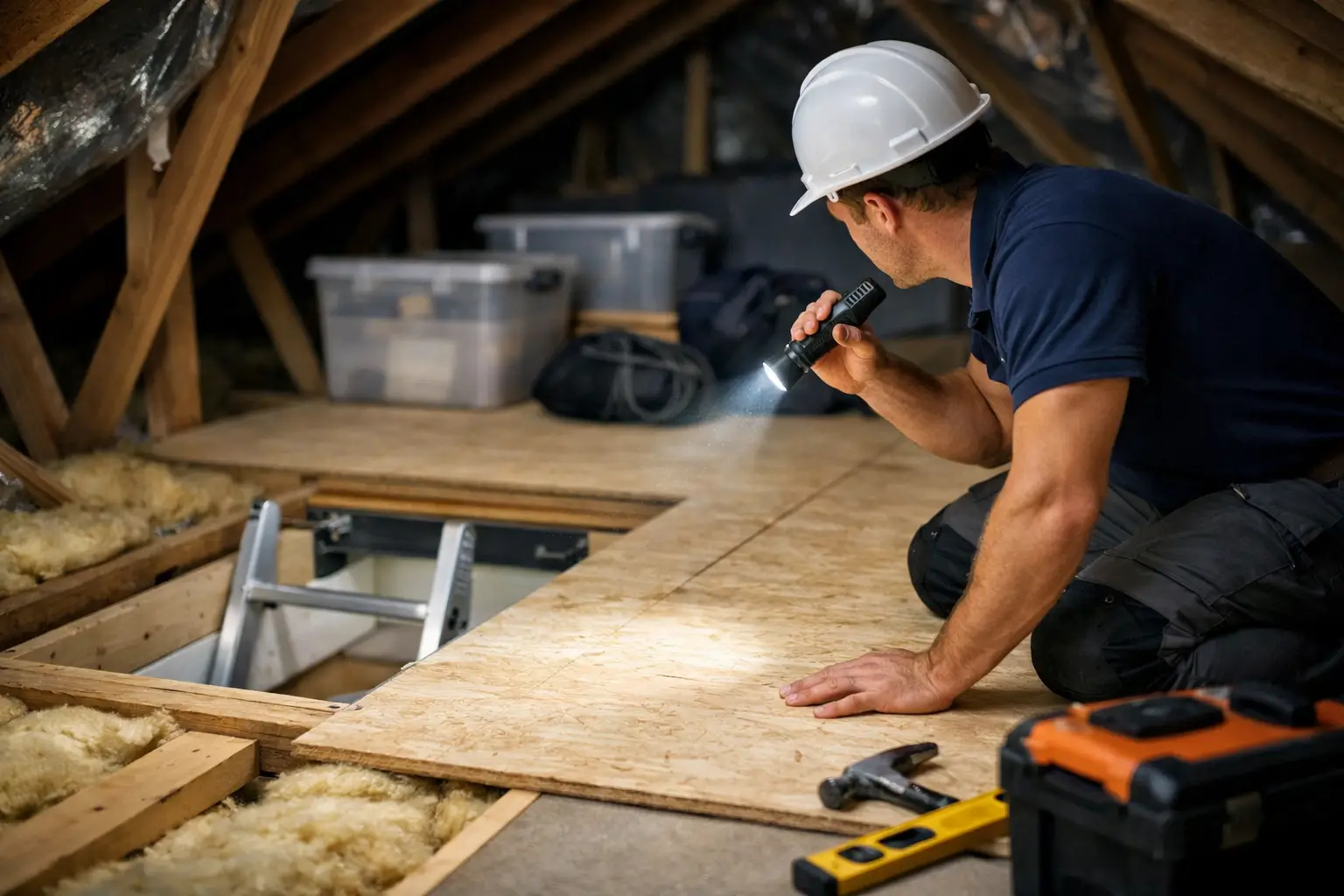
A lot of loft problems start with good intentions. A homeowner wants more storage, lays a few boards across the joists, and only later finds compressed insulation, cracked ceilings or a loft that never feels quite right again. So, is loft boarding safe? It can be – but only when it is designed and installed properly for the way your home is built.
That distinction matters more than many people realise. Loft boarding is not just about creating a platform for boxes. It affects insulation performance, the load placed on the ceiling structure, ventilation within the roof space and, in some newer homes, warranty compliance as well. Done well, it gives you practical storage without causing problems elsewhere. Done badly, it can create expensive ones.
Is loft boarding safe in every home?
The short answer is no, not in the same way and not with the same method. Every loft has its own limits. The age of the property, the size and spacing of the joists, the depth of the insulation and the amount of storage you plan to use all affect what is safe.
In many homes, especially newer ones, the loft was not originally designed as a floor. The joists you see are often ceiling joists, which means their main job is to support the plasterboard ceiling below, not heavy storage. That does not mean boarding is impossible. It means the system used has to respect those limits.
Older houses bring different considerations. Some have irregular joist spacing, older timbers or less predictable roof construction. In those lofts, a one-size-fits-all approach rarely works well. Safe loft boarding starts with knowing what is already there.
What makes loft boarding unsafe?
The most common problem is boarding laid directly on top of the joists, with insulation trapped underneath. Modern insulation standards require much greater depth than older lofts were built around. If boards are fixed straight to the joists, that insulation gets squashed.
Once insulation is compressed, it cannot trap heat as effectively. The result is reduced thermal performance, a colder home and higher heating costs. It can also interfere with ventilation in the loft space, which raises the risk of condensation and moisture issues over time.
Weight is the other major concern. Loft boarding is often treated as a storage project, but structurally it is a loading issue. A few suitcases and Christmas decorations are one thing. Rows of books, tools, old files or heavy household items are another. If the structure below is not suited to the load, you may end up with ceiling movement, popped screws, cracks in the plaster or worse.
Poor access can also make a boarded loft less safe to use. If the ladder is unstable, the hatch is too small or there is inadequate lighting, the risk shifts from the structure itself to everyday use. A safe loft is not just one that holds boards. It is one that can be reached and used sensibly.
Why raised loft boarding is usually the safer option
In most modern homes, the safest way to board a loft for storage is with a raised system. This creates a platform above the insulation rather than pressing boards directly into it.
That gap is important. It helps preserve the full depth and performance of the insulation while still giving you usable storage space. It also allows the boarding to be installed in a more controlled, even way across the loft area.
A properly specified raised system can also help address concerns around new-build properties, where inappropriate alterations in the loft may affect warranty terms. Homeowners in places like Cardiff, Newport and Bristol often ask about this because many estates have been built with strict requirements around insulation depth and roof-space use. The right system is not just a practical choice – it can also be the more compliant one.
That said, raised boarding is not a magic fix for every loft. It still needs to be matched to the property, the intended use and the condition of the structure.
How much weight can a boarded loft take?
This is where the honest answer is: it depends. There is no universal safe weight for every boarded loft because not all lofts are built the same. Span, timber size, spacing and overall condition all matter.
What homeowners usually need is not a loft they can treat like another room, but one that safely stores lighter domestic items. Seasonal decorations, luggage, clothing, keepsakes and similar household belongings are usually the type of storage a boarded loft is intended for. Heavy furniture, gym equipment, large collections of books or dense archive boxes are a different proposition and may not be suitable.
This is one reason professional surveys matter. A proper assessment should look at what you want the space for, not just whether boards can physically be fitted. Safe loft boarding is about capacity as much as coverage.
Is DIY loft boarding safe?
DIY loft boarding is possible, but it is often where avoidable mistakes happen. The danger is not only poor workmanship. It is misunderstanding how lofts function.
A confident DIYer may be perfectly capable of cutting and fixing boards, but still miss the bigger issues – insulation depth, ventilation paths, safe loading, electrical cables, pipework and the implications for a newer home’s warranty. There is also the practical risk of working at height in a cramped space with limited footing and poor light.
The problem is that a loft can look simple when it is not. By the time issues show up downstairs as cold spots, damp patches or ceiling cracks, the original job is much harder to put right.
For that reason, professionally installed loft boarding is usually the safer route, particularly if you want a raised system, integrated loft access or confidence that the installation has been designed around your property rather than forced into it.
Signs a loft boarding job has been done properly
A safe installation tends to look tidy because the planning behind it is sound. Boards should feel secure underfoot, with no unnecessary movement. Insulation should remain at the correct depth rather than flattened beneath the boarding. The loft should still have adequate ventilation, and access should be straightforward rather than awkward or risky.
You should also know what the space is meant to be used for. Good installers are clear about that. They do not imply that every boarded loft is suitable for heavy loading or regular habitation. They explain the purpose of the system and any limits that come with it.
In many cases, the best result comes from treating the loft as part of a wider upgrade. Boarding, insulation, a suitable hatch, a secure ladder and proper lighting work better together than as separate afterthoughts. That approach makes the loft easier to use and reduces the temptation to use it unsafely.
Is loft boarding safe for insulation and energy efficiency?
It is, provided the insulation is protected rather than compressed. This is one of the biggest misunderstandings around loft boarding. Some homeowners assume boarding and insulation work against each other. They do not have to.
When the loft is raised above the insulation, you can keep the thermal benefit while gaining storage. In practice, that means your loft can become more useful without undermining the very thing that helps your home stay warm.
This is particularly relevant in family homes where storage pressure builds over time. The loft often becomes the obvious place for the things you do not use every week, but still need to keep. The safest and most cost-effective approach is not choosing between storage and insulation. It is using a system that respects both.
When to get expert advice
If you are asking whether loft boarding is safe, that is usually a sign you are approaching the project in the right way. The key is to ask before anything is fitted, not afterwards.
Expert advice is especially worthwhile if your home is a new build, your insulation is already deep, your loft has awkward access, or you plan to store more than just light household items. It is also sensible if you have noticed signs of previous poor work, such as flattened insulation, loose boards or cracking on the ceiling below.
A specialist company should be able to assess the loft, explain the safest option in plain English and recommend a solution that fits the property rather than overselling the space. That is the difference between simply adding boards and creating storage you can use with confidence.
Loft boarding is safe when it is done with the structure, insulation and long-term performance of the home in mind. If you want the space to be genuinely useful, not just temporarily covered with boards, it pays to get it right first time.