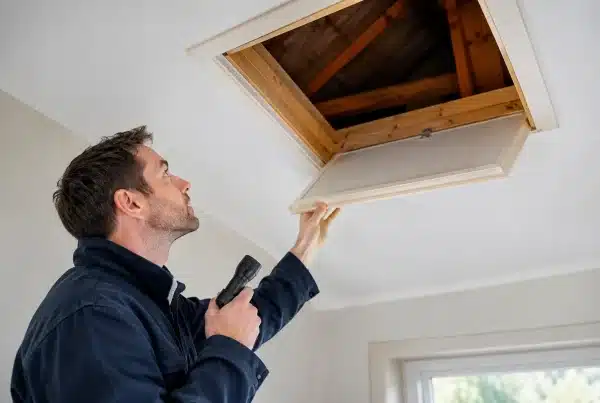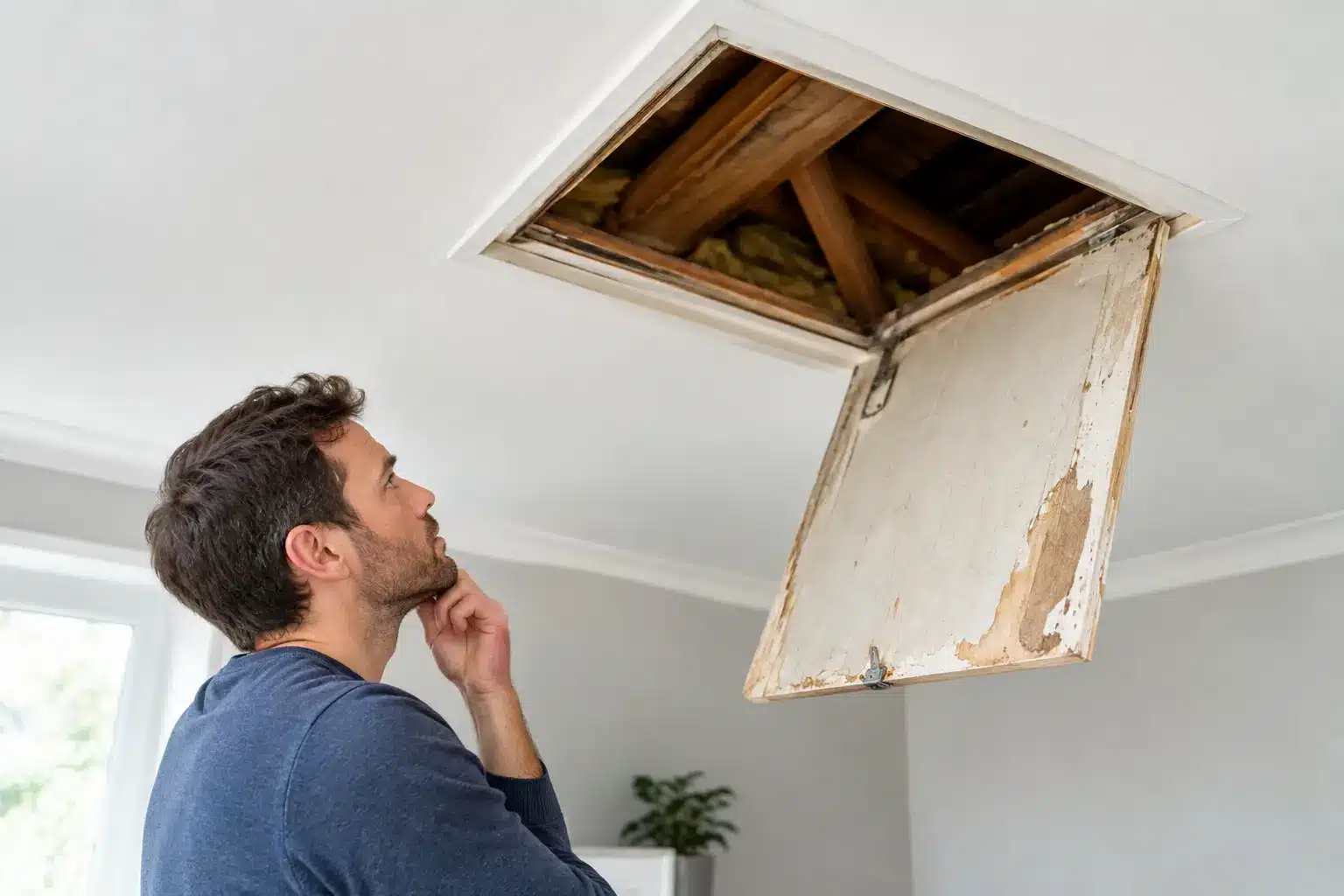
A loft hatch is easy to overlook until it becomes difficult to open, lets cold air into the landing or feels unsafe under your hand. The signs a loft hatch needs replacing are not always dramatic, but they can affect everyday safety, energy efficiency and whether your loft is genuinely usable for storage.
For many homes, the hatch was fitted when the loft was only expected to hold a water tank or a few suitcases. Once you want regular access, proper boarding or a loft ladder, an undersized, damaged or poorly insulated hatch can quickly become the weak point in the whole space.
8 signs your loft hatch needs replacing
1. The hatch is difficult to open or close
A hatch should open smoothly and close securely without excessive force. If it sticks in the frame, drops suddenly, needs to be pushed into place or only stays shut with a makeshift catch, it is time to investigate.
Timber can swell, warp or split over time, particularly where there has been condensation in the loft. Old hinges may loosen and catches can stop engaging properly. In some cases, a small adjustment or replacement catch is enough. But if the hatch itself has distorted, the frame is damaged or the opening is no longer square, replacement is usually the more dependable long-term option.
2. You can feel a draught around the frame
The loft sits above the heated part of your home, so an unsealed hatch can allow warm air to escape into a cold roof void. You may notice a chilly patch on the landing, a draught when walking beneath it, or discolouration around the frame caused by airborne dust.
Older hatches often have no effective draught seal and may consist of a thin, uninsulated panel resting on timber trims. Replacing it with a purpose-made, insulated loft hatch and properly fitted frame can improve the seal at this often-neglected point in the ceiling. The result is a more comfortable home and less unnecessary heat loss.
3. There are cracks, water marks or soft areas
Visible cracking, bowed plasterboard, loose timber or soft patches should never be ignored. These can be signs of age, repeated strain or moisture exposure. Water staining deserves particular attention, as it may indicate a roof leak, condensation issue or poorly insulated loft area rather than a hatch problem alone.
The source of moisture needs resolving before a new hatch is fitted. Installing a replacement over an unresolved leak simply risks damaging the new materials too. A professional survey can help separate a local hatch defect from a wider ventilation, insulation or roof maintenance issue.
4. The opening is too small for safe access
Many traditional loft hatches are awkwardly small. Getting through them can mean twisting your shoulders, balancing on the top of a step ladder and passing boxes up at an uncomfortable angle. That is inconvenient when access is rare, but it becomes a real safety concern if you use the loft regularly.
A larger opening can make loft access safer and more practical, especially when combined with a fitted loft ladder. It also makes it easier to bring storage items in and out without scraping the ceiling edges or overreaching from below. The right size depends on the ceiling structure, available space and the type of ladder or access door you need.
It is not a job for cutting a bigger hole without checking what is above it. Ceiling joists and other structural elements must be assessed and worked around correctly. Trusses should never be altered casually, particularly in newer homes.
5. The hatch feels flimsy or unsafe under load
A loft hatch is not designed to carry a person’s weight, but it should still feel solid when being opened, closed and used alongside a loft ladder. A loose panel, failing hinges or a frame pulling away from the ceiling can create a risk of falling materials or sudden movement while you are on the steps.
This is especially relevant where a ladder has been added to an old hatch that was never designed to accommodate one. Folding ladders, sliding ladders and timber ladders all need suitable fixing points and a compatible opening. A properly specified hatch-and-ladder installation gives you a more stable route into the loft, rather than asking an ageing access panel to do more than it was built for.
6. Insulation has been cut back or compressed around it
Loft insulation should continue as consistently as possible around the hatch, without preventing it from closing or creating gaps. In older lofts, insulation is often pushed aside around the opening and never reinstated properly. This leaves a cold spot above the ceiling and can contribute to heat loss and condensation.
A replacement hatch is an opportunity to tidy this area up. The aim is not simply to fit a new door, but to create a well-sealed access point that works with the insulation depth and layout. If you are also considering raised loft boarding, this planning matters even more. The boarding system should protect the performance of the insulation below rather than squash it flat.
7. Condensation or mould keeps appearing nearby
Condensation around a loft hatch can show up as dark marks, mould on the ceiling, peeling paint or a musty smell on the landing. A poorly insulated hatch can leave the inner ceiling surface colder than the surrounding area, increasing the chance of moisture in the air settling there.
However, condensation is rarely caused by one component in isolation. High humidity in the home, insufficient ventilation, gaps in insulation and roof-space ventilation may all play a part. Replacing the hatch can be part of the solution where it is clearly cold or draughty, but it should be considered alongside the condition of the loft as a whole.
8. Your loft plans have outgrown the existing hatch
Sometimes the clearest sign is not visible damage. You may be planning to clear the loft, add lighting, install a ladder or create clean, accessible storage for seasonal items. An old push-up panel with no insulated seal is unlikely to support that upgrade properly.
A new loft hatch can be tailored to the way you intend to use the space. That may mean an insulated drop-down hatch for a ladder, a larger opening for easier access, or a discreet finish that suits the landing below. In newer properties, careful planning is also valuable for protecting the building fabric and avoiding unnecessary work that could affect warranty considerations.
When repair is enough and when replacement makes sense
Not every issue means a full replacement is necessary. A loose catch, a worn draught strip or slightly stiff hinges may be repairable if the hatch and frame are otherwise sound. This can be a sensible choice when access is occasional and the opening already meets your needs.
Replacement is usually the better investment when there is warping, water damage, persistent draughts, an unsafe fit, a very small opening or plans for a loft ladder and regular storage access. It gives you the chance to improve several things at once: safe entry, insulation continuity, a neater finish and a more practical route into the loft.
What a professional loft hatch assessment should consider
The best solution starts with more than measuring the existing panel. A specialist should consider the ceiling construction, position of joists or trusses, insulation depth, available landing space and the intended use of the loft. If a ladder is required, headroom and safe operation need to be checked too.
For homeowners in Cardiff, Newport, Swansea, Bristol and surrounding areas, property age can make a noticeable difference. Older homes may have uneven ceilings or legacy alterations, while new-build homes often need a solution that respects modern insulation standards and construction details. A tailored survey avoids choosing a hatch that looks suitable but does not work safely in practice.
Make access to your loft work harder for your home
A replacement loft hatch is a relatively contained upgrade, but it can change how useful the entire loft feels. With safer access, an insulated and secure opening, and the right support for a loft ladder or boarding project, storing belongings overhead no longer has to be an awkward balancing act.
If your hatch is showing more than one of these warning signs, address it before the next trip into the loft makes the problem harder to ignore. A well-planned access upgrade gives you a safer starting point for making the most of the space already above your ceiling.