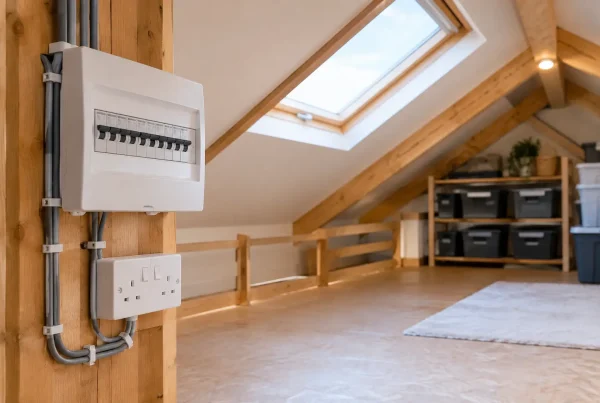
A loft can quietly become the most crowded part of a home. Old boxes, broken furniture, unused suitcases and previous owners’ belongings often build up for years, leaving little room to move safely or assess what is underneath. Professional loft clearance services Newport homeowners can rely on provide a practical first step towards a cleaner, safer and more useful loft.
Clearing a loft is not simply a matter of carrying items downstairs. Many lofts have limited headroom, narrow access, uneven joists and insulation that must not be compressed or disturbed unnecessarily. A considered clearance protects the property while giving you a clear view of the space’s potential.
Why a cleared loft is worth having
For many households, the loft is valuable storage space that has become difficult to use. When belongings are piled directly onto insulation or spread across exposed joists, finding anything becomes frustrating and the risk of missteps increases. Clearing the area creates order, but it can also reveal issues that need attention, such as damp staining, damaged insulation, poor access or unsafe wiring.
A clear loft is particularly useful before arranging new boarding, insulation improvements, a loft ladder or lighting. Installers need safe access to inspect the construction and recommend a solution suited to the property. In a modern new-build, this may mean a raised boarding system designed to avoid squashing insulation and to help protect ventilation and warranty requirements. In an older Newport property, the focus may be on working carefully around irregular joist layouts, legacy insulation or a small hatch.
There is also a practical benefit for everyday life. Once unwanted items have gone, the things you genuinely want to keep can be stored deliberately rather than buried beneath years of clutter. Seasonal decorations, suitcases, baby equipment and paperwork are easier to locate when the loft is planned as a usable storage area.
What loft clearance services in Newport should include
The right service depends on what is in the loft, how accessible it is and what you want to do with the space afterwards. A straightforward clearance may involve removing bagged household contents and unwanted furniture. A more involved job could require careful sorting, dismantling bulky items and creating safe routes through a tight loft space.
A professional approach starts with an assessment. This helps establish whether the items can be removed safely through the existing hatch, whether access needs extra care, and whether any belongings require separate handling. It also allows the team to identify visible concerns before the work begins. Nobody wants a clearance to cause damage to ceilings, walls, insulation or the hatch frame.
Responsible disposal matters too. Not every item belongs in the same waste stream. Cardboard, metal, electrical items, timber and general household waste may need different disposal arrangements. If you are clearing belongings following a move, bereavement or long-delayed declutter, it is sensible to decide in advance what should be kept, donated, recycled or removed. A reputable service should work to a clear plan rather than rushing everything into disposal.
Clearing before loft boarding and insulation work
If your goal is better storage, clearance and boarding should be viewed as connected jobs. Boarding over an obstructed or poorly organised loft makes later maintenance harder. It can also conceal problems that would have been easier to resolve first.
Once the area is clear, a specialist can assess the insulation depth and condition. Current insulation standards often require more depth than older lofts have, and laying standard boards directly over it can reduce its effectiveness. Compressed insulation holds less air, which can affect thermal performance and leave the home less energy efficient.
Raised loft boarding solves this problem by creating a stable platform above the insulation. The result is a level storage area without forcing insulation flat beneath the boards. This is not the same as a full loft conversion. It is a cost-effective way to make an unused loft practical for storage while retaining its primary role as part of the home’s thermal envelope.
The timing is important. Clear first, inspect second, then install the access and storage solution that suits how you will use the loft. Doing it in this order avoids paying to move items around newly installed boards or asking tradespeople to work around avoidable obstructions.
Do not assume the existing floor is ready for storage
Lofts are commonly built to support the ceiling below, not the weight of extensive stored possessions, people moving around and heavy boarded areas. The right approach depends on the property’s construction, the joists, the intended storage load and the insulation build-up.
This does not mean a useful storage loft is out of reach. It means it should be designed and installed appropriately. A survey gives you a more reliable answer than relying on what appears to be a solid-looking surface from the hatch.
Choosing a clearance service with care
Price matters, but it should not be the only consideration. A very low quote can overlook the awkward realities of loft work: restricted access, protective handling, waste disposal and the time needed to remove items safely. Ask what is included, particularly if there are bulky pieces, fragile possessions or a large volume of bagged contents.
It is also worth checking whether the service is insured and how waste is handled. Clear communication helps avoid surprises on the day. Share photographs where possible, describe the hatch size, mention whether there is a fixed ladder, and be honest about the amount of material involved. This enables a more accurate recommendation and helps the work proceed with minimal disruption.
If you intend to upgrade the loft afterwards, choose a provider that understands the next stage. Loft Ins Space can clear the way for a tailored storage upgrade, then assess access, insulation and boarding as one practical plan. That joined-up approach is useful because the clearance is not treated as an isolated task – it is preparation for a loft that works better for your household.
Preparing for the clearance day
A little preparation can make the process smoother. Remove any items you know you want to keep before the team arrives, especially important documents, photographs, jewellery or sentimental belongings. If you are unsure about an item, set it aside rather than making a rushed decision.
Make sure there is a clear route from the loft hatch to the front door or agreed collection point. Parking access can also be helpful, particularly where there is a substantial amount to remove. You do not need to empty the whole house or carry loft contents downstairs yourself. The point of using a professional service is to make the job safer and less demanding.
Be aware that a loft clearance may uncover dust, loose insulation fibres or evidence of past leaks. This is not necessarily a cause for alarm, but it is a good reason to allow time for an inspection once the loft is empty. A clean space makes small repairs and improvements far easier to spot and address.
When clearance is not the whole answer
Sometimes clearing a loft reveals that the bigger issue is access. A small, awkward hatch or unstable step stool can make even an empty loft impractical. In those cases, a larger hatch, insulated loft door and properly fitted ladder can transform how safely the space is used.
Other homes may need more insulation before storage is added. If the loft shows signs of condensation, inadequate ventilation or water ingress, these should be investigated before boarding. Storage improvements work best when the loft is dry, accessible and properly considered as part of the home.
A well-cleared loft gives you options. Whether you stop at a tidy, accessible space or continue with raised boarding and improved access, the result should be safer storage, less household clutter and a loft you can use with confidence.