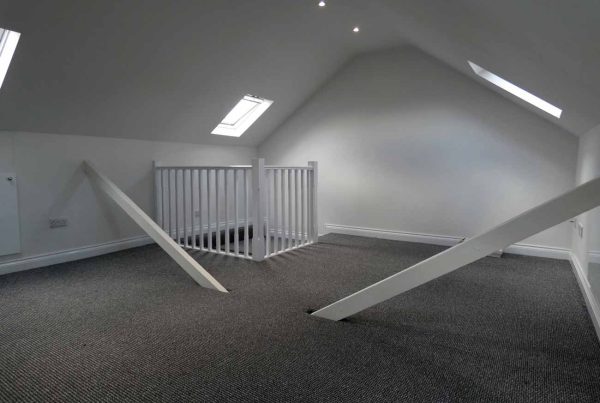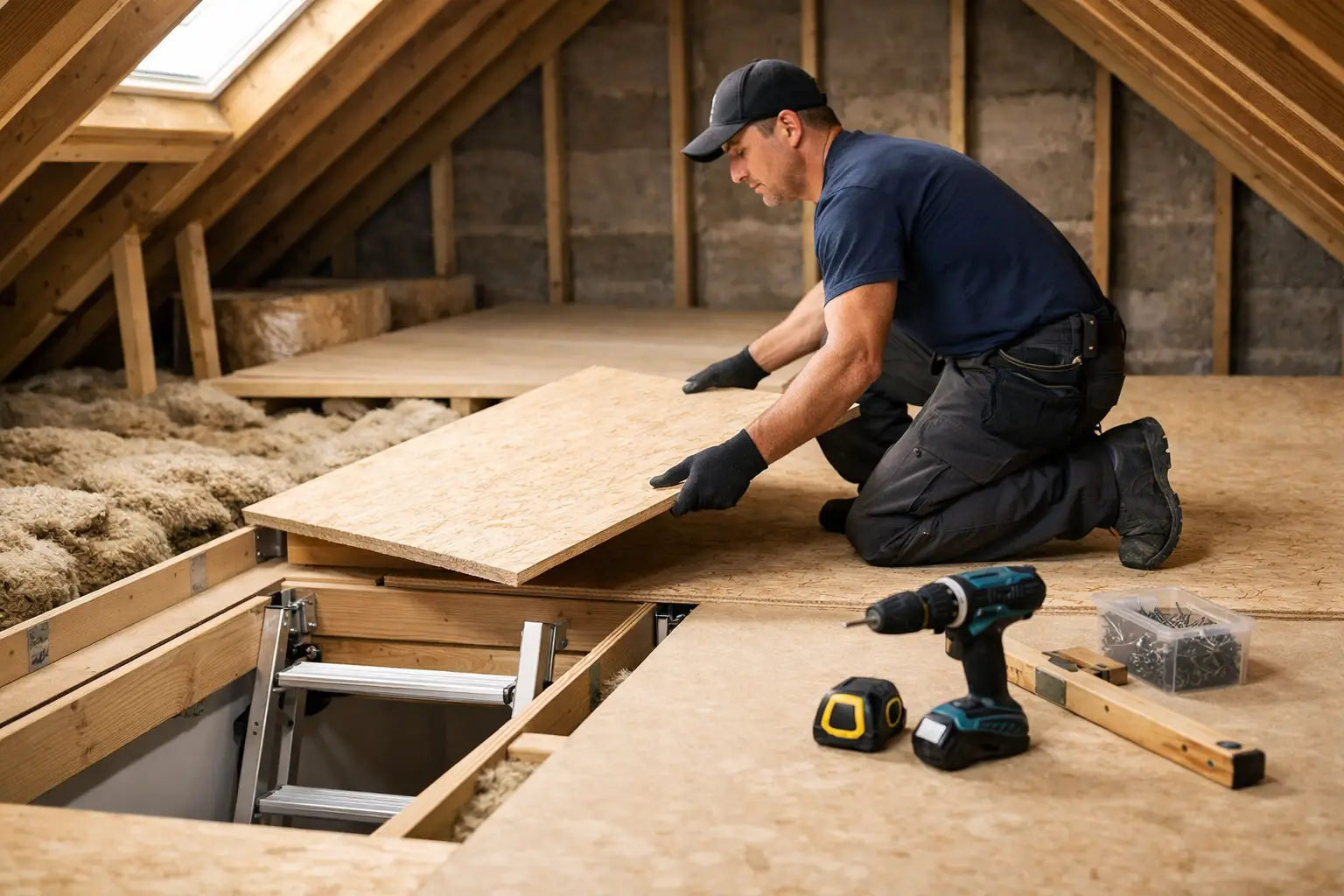
A loft that only holds a few boxes balanced on ceiling joists is wasted space. Good loft boarding installation turns that awkward, underused area into practical storage you can rely on, without compromising insulation or putting unnecessary strain on the structure.
That sounds straightforward, but the details matter. The wrong approach can squash insulation, reduce energy efficiency, create condensation issues, and in some homes even affect warranty compliance. The right approach gives you a clean, stable storage area, safer access, and a result that feels like a genuine upgrade rather than a temporary fix.
What loft boarding installation actually involves
At its simplest, loft boarding installation means creating a boarded storage platform in your attic or loft space. In practice, a professional installation is more than laying boards across joists.
The installer first needs to understand how your loft is built, what type of insulation is already in place, how much load the area should carry, and whether access is safe. In many modern homes, the best solution is a raised loft boarding system. This lifts the boarding above the insulation so airflow and thermal performance are protected.
That raised system is often the difference between a short-term storage fix and a long-term improvement. If boards are laid directly onto joists where insulation needs depth, the insulation gets compressed. Once that happens, it cannot perform as intended. Homeowners usually notice the storage benefit immediately, but the energy loss and moisture risks show up later.
Why raised systems matter in modern homes
Most homeowners want two things from their loft – more storage and no problems later. Raised systems are designed to deliver both.
Current insulation standards often mean loft insulation sits higher than the joists themselves. If you board straight over the joists, you either flatten the insulation or leave no room for the depth required. A raised support system creates a gap above the joists, allowing the insulation to remain effective while supporting the boards above.
This is especially important in newer properties. Some new-build homes come with warranty considerations around alterations to the loft area. Using an approved raised system can help protect compliance where relevant. It is not a one-size-fits-all rule, because housebuilders and warranty terms vary, but it is exactly the kind of issue that should be checked before work starts.
Older homes have their own considerations. Roof structures, joist spacing, existing insulation, and ventilation can all differ from one property to another. A solution that works well in a 2019 detached house in Bristol may not be right for a 1930s semi in Cardiff.
DIY loft boarding vs professional installation
Some homeowners consider boarding the loft themselves, especially if they are comfortable with basic home improvement jobs. That can be tempting, but loft work is one of those areas where hidden mistakes are common.
Walking on plasterboard ceilings between joists is risky. Measuring around uneven roof lines takes time. Electrical cables, pipework, downlights, and ventilation paths all need to be accounted for. Then there is the bigger question of load-bearing suitability. A loft intended for light storage is not the same as a converted living space, and treating it like one can cause problems.
Professional loft boarding installation brings more than speed. It brings assessment, system choice, proper fitting, and a finish that is built for real use. It also means related upgrades can be handled at the same time, such as a stronger hatch, a safer ladder, improved lighting, or extra insulation where needed.
For many households, that joined-up approach is what makes the loft genuinely useful. Storage space is only convenient if you can reach it safely and see what you are doing when you get there.
What a good installation should include
A quality loft boarding job starts with a survey, not a sales pitch. The loft should be assessed for structure, insulation depth, access, usable footprint, and any restrictions caused by the roof design or services running through the space.
From there, the specification should suit the property. In some homes, partial boarding is the right answer because it creates ample storage without overloading the area or blocking ventilation. In others, a larger raised boarded section makes sense, particularly for growing families who need room for seasonal items, keepsakes, or business stock.
The boards themselves should be fitted securely and evenly. Gaps, rocking boards, or awkward cut-ins around access points usually point to rushed work. A professional finish should feel stable underfoot and planned around how the homeowner will actually use the space.
Good installers also think about the whole journey into the loft. If the hatch is too small, the ladder feels unsafe, or lighting is poor, the storage area will never be used as often as intended. That is why homeowners often benefit from treating the project as a loft upgrade rather than a simple boarding job.
Loft boarding installation and insulation performance
This is the point many homeowners miss until they speak to a specialist. A loft is part of your home’s thermal envelope. Changes made there can affect comfort and running costs below.
Proper loft boarding installation should work with the insulation, not against it. If insulation is missing, thin, or poorly fitted, that can often be improved before the boarding goes down. If insulation is already at the correct depth, the boarding system needs to accommodate it.
Ventilation matters too. Loft spaces need airflow to help manage moisture. Blocking eaves or reducing ventilation paths can increase the risk of condensation, especially in winter. That does not mean loft boarding is a bad idea. It means the installation needs to respect how the roof space functions.
This is one reason specialist loft companies tend to outperform general handymen on this kind of work. They are looking at storage, access, insulation, airflow, and compliance together.
How long the job takes and what to expect
One of the main reasons homeowners choose loft boarding over a full conversion is speed. A storage-focused loft upgrade can usually be completed far more quickly and with far less disruption than major building work.
Exact timing depends on the size of the area, the condition of the loft, and whether extras such as ladders, hatches, lighting, or insulation are included. A straightforward installation may be completed in a day, while more involved projects can take longer. The benefit is that the process is still relatively contained. Most of the work happens above the ceiling line, with limited impact on the rest of the house.
You should expect a clear plan before work begins. That includes what area will be boarded, what system will be used, what access improvements are recommended, and what the finished result is designed to support. Light domestic storage is the usual aim, and that should be stated plainly.
Cost depends on more than square footage
Homeowners often ask for a price per square meter, but loft boarding is rarely that simple. Size matters, of course, but so do access, insulation depth, loft shape, existing hatch size, and whether a raised system is required.
A cheap quote can be expensive later if it ignores those details. Direct-to-joist boarding may cost less upfront, but if it compresses insulation or creates problems with moisture and heat loss, the saving disappears quickly. The better comparison is value over time – safe storage, preserved energy efficiency, and a finish that does not need revisiting.
A tailored quote based on a survey is usually the most reliable route. It reflects the actual property rather than an average price that may not apply to your home.
Choosing the right installer
The best loft boarding installers are transparent about what your loft can and cannot do. They will not present basic boarding as a full loft conversion, and they will not gloss over structural limits or insulation requirements.
Look for clear explanations, approved systems where appropriate, and a service that covers more than the boards alone. Guarantees also matter. They show confidence in the installation and give homeowners reassurance that the work is intended to last.
For households in South Wales and the South West, working with a specialist such as Loft Ins Space often makes the process simpler because the survey, recommendations, and installation are built around local housing types as well as modern compliance expectations.
The real test of any loft project is what happens a month later. Are you using the space easily? Does it feel safe? Are the decorations, suitcases, and Christmas boxes finally out of the way without creating a new worry overhead? When loft boarding installation is done properly, the answer is yes – and that is when the loft starts earning its place in the house.